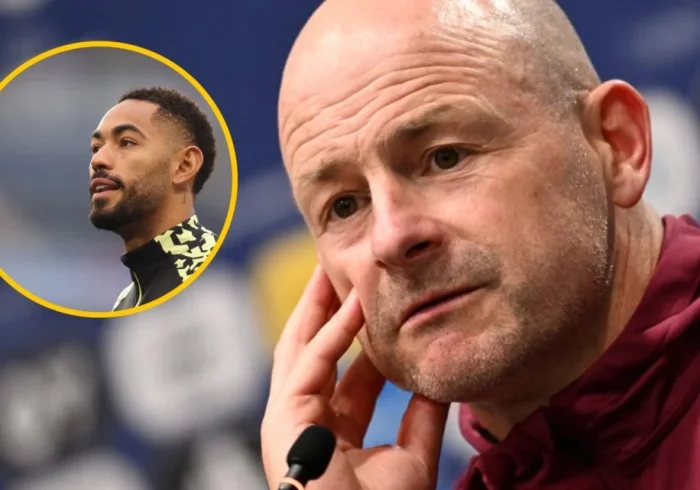
The goalless draw between Leeds United F.C. and Brentford F.C. at Elland Road may not have delivered goals, but it certainly ignited a major talking point—one that is rapidly becoming a growing concern across the game: tactical time-wasting.
At the center of the controversy is former referee chief Keith Hackett, who has urged football’s governing bodies, including FIFA and International Football Association Board (IFAB), to take decisive action against what he sees as an increasingly abused loophole in the sport.
The Incident That Sparked the Debate
The flashpoint came in the 70th minute of the match when Brentford goalkeeper Caoimhin Kelleher went to ground, appearing to require treatment. While such situations are not uncommon in football, what followed drew significant criticism.
During the stoppage, Brentford coach Keith Andrews was seen gathering players and delivering tactical instructions—a move that Leeds supporters and officials felt crossed the line from legitimate injury treatment into gamesmanship.
Leeds, clearly frustrated, even took to social media during the match to express their dissatisfaction, highlighting how the pause disrupted their momentum in a game where they had been the more dominant side statistically.
Hackett’s Strong Warning
Hackett did not mince his words when addressing the issue. He described these scenarios as “tactical stoppages,” where injuries—particularly involving goalkeepers—are used as a pretext to halt play and reorganize.
He emphasized that referees are placed in a difficult position. By the laws of the game, officials must stop play for injuries, especially when a goalkeeper is involved. However, this obligation is now being exploited, creating a grey area that teams are increasingly willing to use to their advantage.
According to Hackett, the problem goes beyond a single match. It reflects a broader trend that risks damaging the integrity and flow of the game. Matches are being interrupted more frequently, reducing tempo and frustrating both players and fans.
Impact on the Match
From a purely statistical perspective, Leeds were the better side. They registered more shots, more touches in the opposition box, and controlled possession for large spells of the game. Yet, despite their dominance, they were unable to find a breakthrough.
For manager Daniel Farke and his players, the repeated stoppages appeared to disrupt rhythm and intensity—two crucial elements for breaking down a well-organised defense.
Brentford, on the other hand, executed their approach effectively. Whether intentional or not, the stoppage allowed them to regroup, reset defensively, and see out a valuable point away from home.
What Can Be Done?
The big question now is what FIFA and International Football Association Board can realistically do to address the issue.
Potential solutions have been floated, but none are without complications. Introducing punishments—such as bookings for feigned injuries or for coaching during stoppages—could deter the behavior, but enforcing such rules consistently would be challenging.
Another possibility is implementing stricter medical protocols, ensuring that injured players must leave the pitch for a longer period before returning. This would reduce the incentive to fake injuries, as it would temporarily disadvantage the team numerically.
However, these solutions must be balanced carefully. Football’s governing bodies must ensure that genuine injuries are still treated with the seriousness they deserve, without discouraging players from seeking necessary medical attention.
A Growing Concern for the Game
Beyond fairness, there is also the issue of entertainment. The Premier League prides itself on being one of the most exciting competitions in the world. Frequent stoppages and perceived gamesmanship risk undermining that appeal.
Fans want fluid, high-tempo football—not prolonged interruptions that break the spectacle.
Hackett’s comments, therefore, resonate beyond just Leeds and Brentford. They touch on a fundamental question about the direction of the sport and whether its rules are keeping pace with modern tactical innovations.
Conclusion
The draw at Elland Road may ultimately be remembered less for the result and more for the controversy it sparked. As teams continue to search for every possible edge, the line between clever tactics and unsporting behavior becomes increasingly blurred.
For Leeds United F.C., it was a frustrating afternoon. For Brentford F.C., it was a job well executed. But for football as a whole, it was another reminder that the game’s laws may need to evolve.
And if voices like Keith Hackett are anything to go by, that conversation is only just getting started.