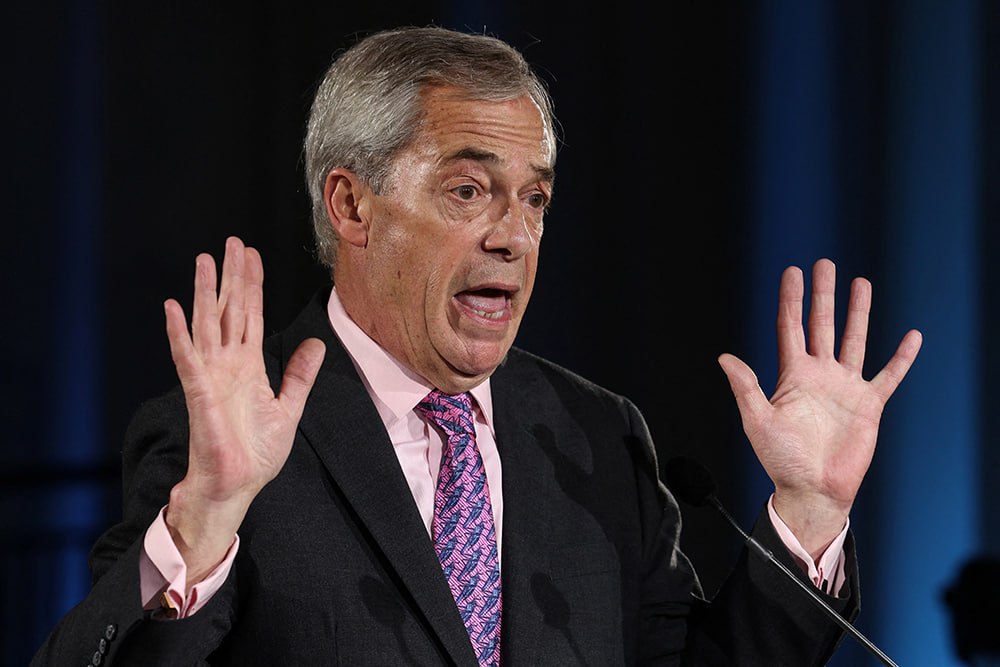
Ipswich Town have found themselves at the centre of an unexpected and uncomfortable controversy following a high-profile visit from Nigel Farage to Portman Road—a moment that has sparked fierce debate among supporters and raised serious questions about the club’s decision-making.
What may have initially appeared to be a routine stadium booking quickly escalated into a public relations headache, with Farage using the visit as a backdrop for political messaging. Photos of him posing with a customised Ipswich shirt and touring key areas of the stadium circulated widely online, turning the club into an unwilling participant in a broader political narrative.
A Situation That Spiralled Quickly
Reports suggest that the initial booking may not have explicitly identified Farage or his political affiliation, potentially placing the club in a difficult position at the outset. However, the controversy does not centre on the booking itself—but rather on what happened next.
Once Farage arrived at Portman Road, it became immediately clear who he was and the nature of the visit. The presence of cameras, security personnel, and an entourage indicated that this was far from a standard stadium tour.
At that moment, critics argue, Ipswich had a decision to make.
Allowing the visit to proceed—particularly into sensitive areas like dressing rooms—effectively enabled the stadium to become a stage for political imagery. That decision, whether deliberate or passive, is now at the heart of the backlash.
Fan Reaction: Divided but Intense
Supporters have responded strongly, though not uniformly.
Some fans expressed deep frustration, feeling the club had compromised its identity. For a club that prides itself on community values and inclusivity, the association—however indirect—with a political campaign struck a nerve.
Others, however, have urged restraint. They argue that if the booking was made through standard commercial channels, refusing access could itself have been interpreted as a political stance. From this perspective, the club may have been navigating an already delicate situation with no easy outcome.
Both viewpoints highlight the complexity of the issue—and underline why clearer judgement at the time could have prevented the situation from escalating.
The Line Between Football and Politics
Football clubs frequently host public figures, including politicians. Matchday hospitality, stadium tours, and media appearances are all part of modern football’s commercial landscape.
But this case appears to have crossed an unspoken line.
There is a clear distinction between a politician attending a match as a guest and using club facilities as a backdrop for political promotion. By allowing the latter, Ipswich inadvertently blurred the boundary between sport and political campaigning.
In today’s hyper-connected media environment, such moments can quickly spiral beyond the club’s control—something Ipswich are now experiencing firsthand.
Silence Has Amplified the Issue
Perhaps the most significant criticism directed at the club has been its lack of response.
In situations like this, silence is rarely neutral. Without a clear explanation of what happened, when decisions were made, and what protocols were followed, speculation has filled the gap.
A simple, transparent statement could help reset the narrative—clarifying whether the club was misled, what staff knew at the time, and how similar situations will be handled in the future.
Instead, the absence of communication has allowed the story to grow, intensifying scrutiny and frustration.
Lessons for Ipswich Moving Forward
This episode serves as a cautionary tale—not just for Ipswich Town, but for football clubs more broadly.
Modern football operates at the intersection of sport, business, and media. That intersection can sometimes overlap with politics, intentionally or otherwise. When it does, clubs must be prepared to act decisively.
For Ipswich, the priority now is damage control.
That means addressing supporter concerns, reaffirming the club’s values, and implementing clearer guidelines on the use of club facilities. Transparency will be key—not only in explaining what happened, but in rebuilding trust with a fanbase that feels blindsided.
A PR Misstep That Didn’t Need to Happen
Ultimately, this situation may not have been entirely avoidable—but it was certainly manageable.
Ipswich Town did not need to take a political stance. What was required was awareness and judgement—recognising when a routine booking had become something more, and acting accordingly.
Instead, the club now finds itself navigating a controversy that could have been prevented with firmer decision-making at a critical moment.
As the dust settles, one thing is clear: in modern football, perception matters as much as reality—and Ipswich Town are now dealing with the consequences of both.