Ipswich Town have issued an official statement after facing intense criticism from supporters following a controversial visit by Nigel Farage to Portman Road.
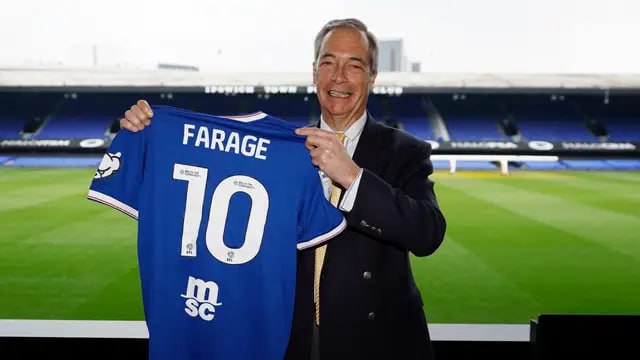
The Championship club found itself at the centre of a growing storm after Farage, leader of Reform UK, shared images and videos from inside the stadium on social media. The posts showed him touring facilities, entering the dressing room, and posing with a shirt bearing his name—mimicking a typical player signing announcement.
Social Media Posts Ignite Controversy
Farage’s posts quickly gained traction online, accompanied by a caption that read: “I’ve never been too bad on the right wing.” He also joked about potentially becoming Ipswich’s next manager, adding a light-hearted tone that nonetheless triggered serious backlash.
Many fans were quick to express anger and disappointment, arguing that the club had allowed itself to become associated with political messaging—something they believe should remain separate from football.
Criticism ranged from accusations of poor judgement to concerns about the club’s identity as an inclusive, community-focused institution.
Ipswich Town’s Official Response
After remaining silent initially, Ipswich Town released a statement addressing the situation.
The club emphasised that it did not invite Farage directly and clarified that the booking had been made through its events arm, which handles private stadium tours. Importantly, Ipswich stressed its long-standing position of political neutrality.
In the statement, the club said it has hosted representatives from various political parties over the years and does not endorse any individual or organisation. It also reaffirmed its commitment to being “inclusive, diverse and welcoming” to all members of the community.
Fans Unimpressed by Statement
Despite the clarification, the response has done little to calm the situation.
A significant portion of the fanbase has labelled the statement as insufficient, with some describing it as “weak” and lacking accountability. Critics argue that while the club may not have directly invited Farage, it still had control over how its facilities were used once his identity and intentions became clear.
Others, however, have taken a more measured view, acknowledging the complexities of managing commercial bookings and the potential implications of refusing access based on political affiliation.
The Challenge of Staying Apolitical
This incident highlights the increasingly difficult position football clubs find themselves in when navigating political neutrality in a highly visible and digital age.
Ipswich Town’s stance—that they are apolitical and open to engagement across the political spectrum—is not unusual. Many clubs operate similar policies as part of their role within local communities.
However, the distinction between hosting a guest and providing a platform for political imagery has become a key point of contention.
For many supporters, allowing access to high-profile areas like dressing rooms—combined with the subsequent social media posts—crossed a line, regardless of the club’s intentions.
Timing Adds to Pressure
The controversy comes at a crucial point in the season for Ipswich.
Currently sitting third in the Championship, the club are pushing for promotion to the Premier League. On the pitch, momentum is building—but off it, attention has shifted to an issue that risks overshadowing their progress.
Ipswich are set to return to action against Birmingham City on April 6, and how the club manages the fallout from this situation could influence the atmosphere around the team.
A Lesson in Modern Football PR
In today’s media landscape, moments like this can escalate rapidly.
What may have begun as a routine commercial booking quickly turned into a viral controversy, amplified by social media and public scrutiny. Ipswich Town’s experience serves as a reminder of how quickly clubs can lose control of a narrative once images and messaging spread online.
What Happens Next?
While Ipswich have now broken their silence, questions remain.
Some fans are calling for greater transparency around internal decision-making, including what staff knew at the time of the visit and whether any steps were considered to limit its scope.
Others are urging the club to introduce clearer guidelines to prevent similar situations in the future.
Conclusion
Ipswich Town’s statement may have clarified their position, but it has not fully resolved the issue.
The club now faces the challenge of rebuilding trust with sections of its fanbase while maintaining its commitment to neutrality and inclusivity.
As the season enters its निर्णing phase, Ipswich will hope that focus can return to football—but the fallout from this episode shows just how quickly off-field events can shape the narrative around a club.