Leeds United’s battle to secure Premier League survival has been made even more difficult in recent weeks, not just because of performances on the pitch, but due to a string of controversial refereeing decisions that have left the club and its supporters increasingly frustrated. Manager Daniel Farke has been vocal about his concerns, and recent developments suggest his anger may be more than justified.
Over the past month, Leeds have found themselves repeatedly on the wrong end of key decisions in crucial moments. These incidents have not only disrupted games but, arguably, have cost the team valuable points at a time when every result is vital. As the relegation battle tightens, such moments take on even greater significance.
One of the most recent flashpoints came during Leeds’ clash with Sunderland AFC, where the Whites were denied what has since been acknowledged as a legitimate penalty. Defender Pascal Struijk was clearly impeded inside the box, yet the referee failed to award a spot-kick, and VAR did not intervene. The decision sparked outrage at the time, and it has now been confirmed as an error by the Premier League’s Key Match Incidents panel.
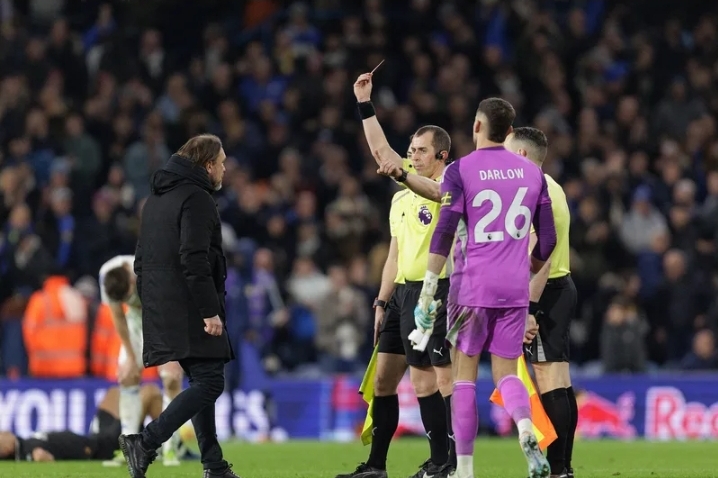
That admission has only intensified frustration within the club, especially as it is not an isolated case. In another controversial moment, Leeds were reduced to ten men during a difficult away fixture against Crystal Palace. Defender Gabriel Gudmundsson was shown a second yellow card for a challenge that has since been deemed harsh. The same review panel concluded that the contact involved was minimal and did not warrant a dismissal, describing the challenge as careless rather than reckless.
The impact of that decision was immediate and significant. Playing an entire half with ten men against a strong Premier League side placed Leeds at a severe disadvantage, effectively limiting their chances of getting a result from the game. For a team already struggling for consistency, such setbacks can be devastating.
Beyond refereeing calls, Leeds have also had to contend with what many perceive as gamesmanship from opponents. In a recent match against Brentford, goalkeeper Caoimhin Kelleher went down with an apparent injury during a period of sustained Leeds pressure. The pause in play allowed interim coach Keith Andrews to relay tactical instructions, breaking the momentum Leeds had built. While such incidents fall into a grey area of the game, they have added to a growing sense of injustice around the club.
Farke’s frustrations have not gone unnoticed. The Leeds boss has already faced disciplinary action this season, including a sending-off during a match against Manchester City after protesting decisions. His reactions reflect a broader concern—that his team is not being treated fairly in critical moments.
As the season approaches its climax, these decisions could have lasting consequences. Points dropped due to officiating errors are points that cannot be recovered, and in a relegation fight, even a single result can determine a club’s fate. The denied penalty against Sunderland and the controversial red card against Crystal Palace are not just isolated incidents; they represent missed opportunities that could have altered Leeds’ position in the table.
There is now a growing belief that the club may need to take a stronger stance. While refereeing errors are part of the game, repeated mistakes that consistently disadvantage one team raise serious questions. Leeds United will be hoping for greater consistency and accountability from officials in the remaining fixtures.
Ultimately, while Leeds must still take responsibility for their performances, the role of officiating in their recent struggles cannot be ignored. With survival on the line, the club can ill afford further setbacks—especially those beyond their control.