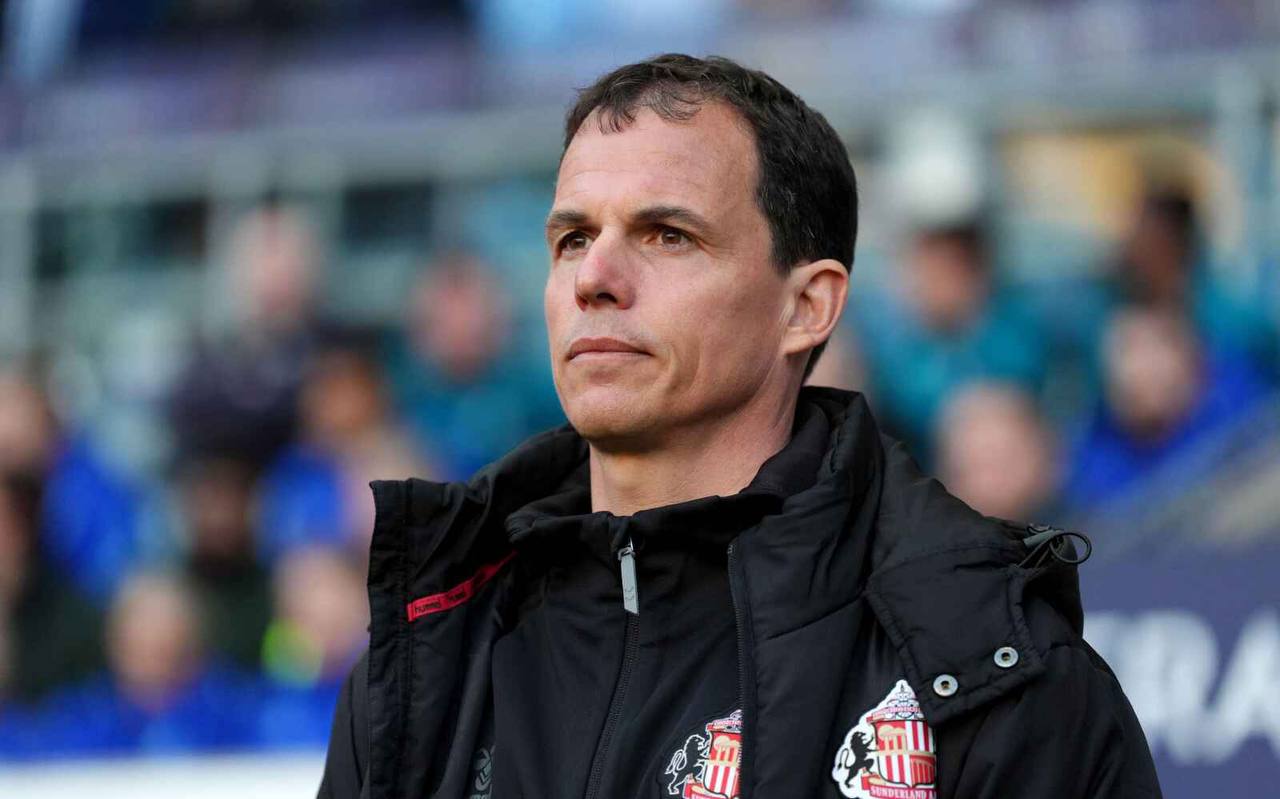
Wearside is still celebrating, but beneath the noise of a famous derby victory, a deeper conversation is beginning to take shape around Régis Le Bris and his overall performance as Sunderland AFC manager.
Sunday’s dramatic 2-1 comeback win over Newcastle United at St. James’ Park was more than just another three points. It was a statement. Goals from Chemsdine Talbi and Brian Brobbey overturned an early strike from Anthony Gordon, sealing a memorable result that not only completed a league double over their fiercest rivals but also extended Sunderland’s unbeaten league run in the Tyne-Wear derby to a remarkable 11 games.
For fans, it was a moment of pure pride. For Le Bris, it was another highlight in what has been a largely impressive tenure since his appointment in July 2024. However, when the emotion settles, the statistics present a more complex picture.
A Season That Defies Expectations
Sunderland’s return to the Premier League has exceeded most expectations. With 43 points already secured and seven games still to play, the Black Cats have comfortably avoided relegation fears and even maintain an outside shot at European qualification—an extraordinary achievement for a newly promoted side.
Much of that success is down to Le Bris’ structured approach. Sunderland have proven difficult to beat, registering just 10 defeats in the league—one of the lowest tallies in the division. Their resilience has been a defining trait, allowing them to compete consistently against more established sides.
Yet, that same resilience has also contributed to a surprising statistic: Sunderland have drawn 10 matches this season. While avoiding defeat is valuable, those dropped points have ultimately impacted Le Bris’ overall win percentage.
The Win Rate Debate
Following the victory over Newcastle, Le Bris’ win rate across all competitions stands at 40.7%. When compared to his Premier League counterparts, that figure places him in the lower half of the table.
Managers like Pep Guardiola and Mikel Arteta continue to dominate the rankings with win rates exceeding 60%, while even mid-tier managers such as Unai Emery and Marco Silva sit comfortably above Sunderland’s boss.
Closer to home, Eddie Howe—despite the derby defeat—still boasts a stronger win percentage at 49.1% with Newcastle. That comparison is particularly significant given the rivalry between the two clubs.
Le Bris finds himself level with experienced figures like David Moyes, while only narrowly outperforming managers such as Andoni Iraola and Nuno Espírito Santo.
Context Matters
While the raw numbers may not immediately impress, they do not tell the full story. Le Bris inherited a team that had just battled through the Championship play-offs, and his first task was simply to ensure survival in one of the most competitive leagues in the world.
There was also a noticeable dip in form toward the end of the 2024/25 campaign, which impacts his overall record. However, focusing solely on win percentage risks overlooking the broader progress Sunderland have made under his leadership.
This season, the Black Cats have demonstrated tactical discipline, defensive organization, and a strong team identity. They may not win every game, but they are rarely outplayed—a quality that has laid the foundation for their stability in the Premier League.
A Manager Building Something Sustainable
Perhaps more importantly, Le Bris appears to be building a side with long-term potential. Sunderland are not reliant on moments of brilliance alone; instead, they function as a cohesive unit capable of adapting to different challenges.
Their derby victory over Newcastle is a perfect example. Falling behind early could have derailed them, but they responded with composure and belief—traits that reflect the manager’s influence.
For supporters, that matters more than percentages. Results like Sunday’s win are what define seasons, create memories, and strengthen the bond between team and fans.
The Bigger Picture
As the season enters its final weeks, Sunderland’s immediate focus will remain on finishing as high up the table as possible. A push for European qualification may still be unlikely, but it is no longer unthinkable—a testament to how far the club has come in a short period.
For Le Bris, the conversation around his win rate is unlikely to disappear. In modern football, numbers often shape narratives. But at Sunderland, context, progress, and identity carry just as much weight.
The derby win may not dramatically alter his statistical standing among Premier League managers, but it reinforces something arguably more important: belief.
And right now, at Sunderland AFC, belief is growing stronger with every passing game.