The Boston Celtics have spent much of the season defying expectations. What initially looked like a poorly balanced roster—particularly in the frontcourt—has surprisingly stabilized, even turning into a relative strength. But as the playoffs approach, a new concern has quietly taken center stage—one that could ultimately make or break their title ambitions.
From Weakness to Strength in the Frontcourt
Earlier in the season, Boston’s lack of reliable size raised serious doubts. Moves at the trade deadline only added to the uncertainty, with proven bigs like Xavier Tillman Sr. and Chris Boucher failing to carve out consistent roles before being moved.
Yet somehow, the Celtics adapted. Contributions from Neemias Queta and Luka Garza helped steady the position, and the addition of Nikola Vučević gave Boston a dependable presence in the paint. What once looked like a glaring flaw has turned into a workable, even productive, rotation.
The Real Problem: A Thin Backcourt
However, that frontcourt fix came at a cost.
In acquiring Vučević, Boston parted ways with Anfernee Simons—their primary bench scorer and one of the few reliable guards in the rotation. Now, the Celtics find themselves alarmingly thin in the backcourt at the worst possible time.
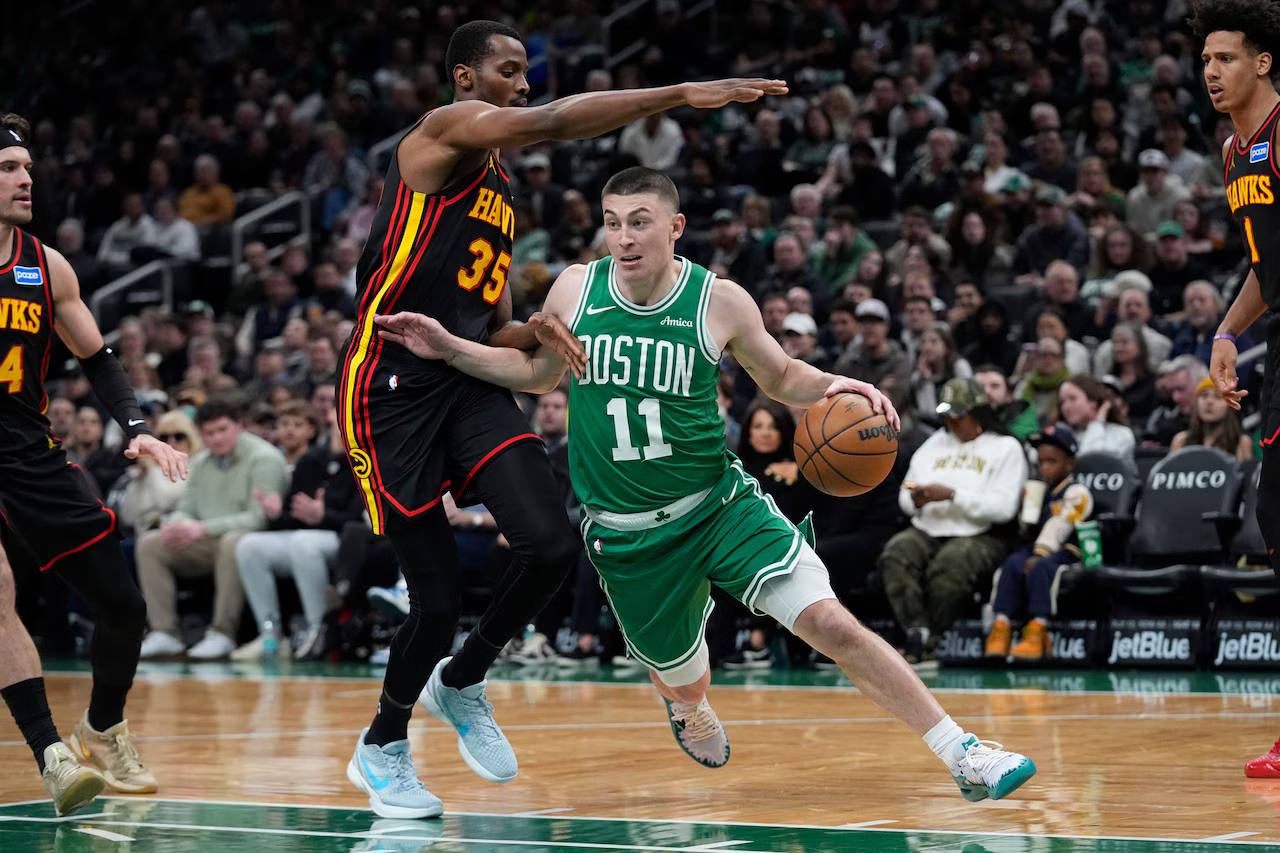
The team leans heavily on Derrick White as the starting point guard, with Payton Pritchard serving as the only proven backup. Beyond that, options are extremely limited, with rookie Max Shulga unlikely to play meaningful playoff minutes.
It’s a risky setup—one injury or cold stretch away from becoming a serious liability.
Trusting the System
Despite the lack of traditional guard depth, Boston isn’t panicking—and there’s a clear reason why: Brad Stevens.
The Celtics’ architect has fully embraced positionless basketball, building a roster that prioritizes versatility over conventional roles. In this system, players aren’t confined to positions—they’re expected to adapt.
That philosophy is embodied by stars like Jayson Tatum and Jaylen Brown, who can effectively function as ball-handlers and playmakers despite being natural wings. Add in players like Baylor Scheierman, who can facilitate offense in spurts, and Boston believes it has enough flexibility to compensate.
A Calculated Risk or Fatal Flaw?
On paper, the Celtics’ lack of guard depth is concerning—especially in a playoff environment where depth and adaptability are often tested. But Boston is betting on its stars, its system, and its identity to carry them through.
The reality is simple: the ball will be in the hands of White, Pritchard, Tatum, and Brown when it matters most. If they deliver, the guard shortage may never become an issue.
But if cracks begin to show, this overlooked weakness could quickly turn into the defining storyline of Boston’s season.
For a team with championship aspirations, it’s a gamble—one that could either validate their bold approach or expose a flaw they can no longer hide.