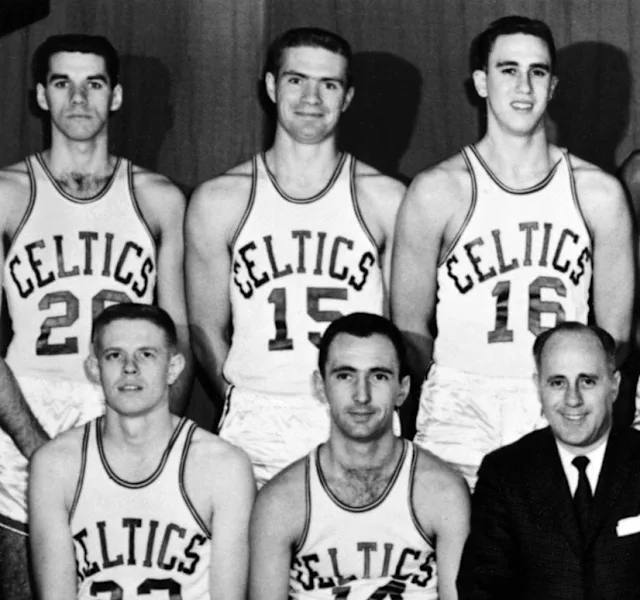
March 31 marks a meaningful date in the history of the Boston Celtics, combining key milestones, notable figures, and important roster decisions that helped shape one of the NBA’s most storied franchises.
One of the most significant historical notes tied to this day is the birth of Don Barksdale in 1923 in Oakland, California. Barksdale was not just a talented player, but also a pioneering figure in basketball history. During his collegiate career at UCLA, he broke barriers by becoming the first African American player to earn All-American honors in NCAA history—an achievement that underscored both his skill and his importance in advancing racial equality in sports.
Barksdale’s impact extended beyond college basketball. He went on to represent the United States at the 1948 Olympic Games, where he made further history as the first African American to win a gold medal in Olympic basketball. This accomplishment cemented his legacy as one of the sport’s early trailblazers.
After his success on the international stage, Barksdale transitioned into professional basketball. He initially played for local teams before joining the Baltimore Bullets, a franchise that no longer exists and is not connected to the modern team now known as the Washington Wizards. His time with the Bullets was short-lived, as he was soon traded to the Boston Celtics.
During his stint with the Celtics, Barksdale played two seasons and contributed solid numbers. He averaged 9 points, 6.6 rebounds, and 1.8 assists per game, showcasing his all-around ability on the court. Unfortunately, his career was cut short due to persistent ankle injuries, which forced him to retire earlier than expected. Despite the brevity of his playing days, his influence on the game—both statistically and historically—remains significant.
In addition to Barksdale’s birth, March 31 is also tied to a landmark achievement for the Celtics as a franchise. On this day in 1948, Boston secured its first-ever playoff victory. The win came against the Chicago Stags in the Basketball Association of America (BAA), a league that would later evolve into the modern NBA. The Celtics edged out the Stags with a narrow 81–77 victory in the postseason. Although Boston ultimately lost the series 2–1, that single win represented an important step in the early development of the franchise, laying the groundwork for the dominance they would later achieve.
Another key event associated with this date is the 1959 NBA Draft, which was held in Cincinnati, Ohio. This draft proved to be a productive one for the Celtics, as they added players who would go on to contribute to the team’s success during a golden era.
With the eighth overall pick, Boston selected John Richter out of NC State. While Richter’s time with the Celtics was relatively brief—lasting just one season—he still played a role in the team’s championship success. As a reserve player during the 1960 season, he helped Boston secure an NBA title. Over the course of that season, Richter averaged 4.3 points and 4.7 rebounds per game, providing depth and support to a strong roster.
Later in the same draft, the Celtics used the 16th pick to select Gene Guarilia from George Washington University. Unlike Richter, Guarilia enjoyed a longer tenure with the team, spending four seasons in Boston. During his time with the Celtics, he played the small forward position and was part of an incredibly successful period for the franchise. Remarkably, Guarilia won an NBA championship in each of his four seasons with the team. While his individual statistics—3.2 points and 2.3 rebounds per game—may not stand out, his presence contributed to a winning culture and a dynasty that dominated the league.
Taken together, these events highlight the rich and layered history of the Boston Celtics. From groundbreaking individuals like Don Barksdale to early playoff milestones and impactful draft decisions, March 31 serves as a reminder of the many moments that have defined the franchise.
The Celtics’ legacy is built not only on championships, but also on the players and pioneers who helped shape the game itself. Whether through historic firsts, key victories, or smart roster moves, each of these moments has played a role in establishing Boston as one of basketball’s most iconic teams.