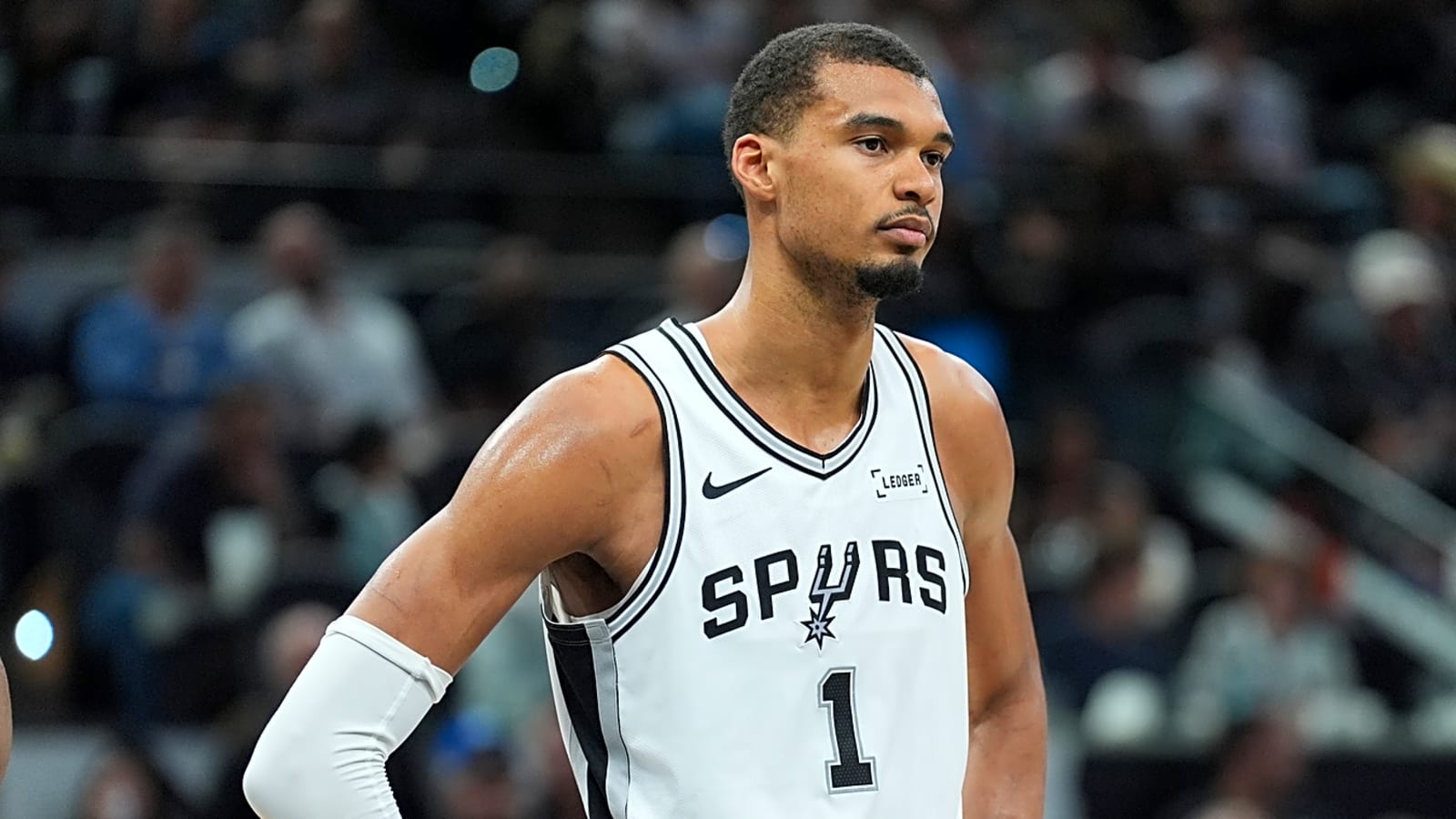
The debate surrounding Victor Wembanyama and his MVP credentials has taken a dramatic turn—and at the center of it lies an argument that may not hold up under scrutiny. Critics have pointed to his total minutes played this season as a reason to downplay his candidacy. But history, and the numbers themselves, tell a very different story.
The comparison that immediately jumps out is Giannis Antetokounmpo’s 2019–20 MVP season. Giannis played just over 30 minutes per game and appeared in only 63 contests, yet still won the award in dominant fashion. His impact on both ends of the floor was undeniable, and voters had no hesitation in rewarding efficiency and dominance over sheer volume. Fast forward to today, and suddenly, similar logic is being used against Wembanyama rather than in his favor.
That inconsistency is what fuels the current controversy. Wembanyama’s influence on games goes far beyond traditional statistics. While some critics focus on his raw totals, the more telling metrics highlight just how impactful he is on a per-minute basis. In fact, there is a strong argument that no player in the league provides more value per possession.
Even when compared to elite contemporaries like Shai Gilgeous-Alexander, the numbers remain strikingly close—if not tilted in Wembanyama’s favor when adjusted for time played. Both players rank among the league leaders in plus-minus, but Wembanyama achieves similar impact in fewer minutes. That’s not a weakness; it’s efficiency at the highest level.
Then there’s Nikola Jokic, widely regarded as one of the most complete players in modern basketball. While Jokic’s playmaking as a center has redefined expectations for the position, it also highlights another flaw in the anti-Wembanyama narrative. Critics have occasionally pointed to Wembanyama’s assist numbers as a limitation—but historically, that has never been a defining measure for big men. Judging him by that standard ignores both precedent and positional context.
What truly separates Wembanyama is the subtle, game-altering impact he brings. His defensive presence alone changes how opponents approach possessions. Players hesitate to attack the rim, adjust their shots, or avoid certain areas of the floor entirely. Offensively, he creates gravity without even touching the ball—drawing defenders, opening space, and elevating teammates in ways that don’t always show up on stat sheets.
This kind of influence mirrors the off-ball threat posed by players like Stephen Curry, whose movement and presence warp defenses. Wembanyama achieves a similar effect, albeit in a completely different style—combining size, length, and skill in a way the league has rarely seen.
Ultimately, the MVP conversation should come down to value—what a player contributes to winning, possession by possession. If that is truly the معیار, then penalizing Wembanyama for playing fewer minutes becomes not just inconsistent, but contradictory.
The reality is simple: if reduced minutes haven’t disqualified MVPs in the past, they shouldn’t now. And if anything, Wembanyama’s ability to dominate in limited time should strengthen his case, not weaken it.