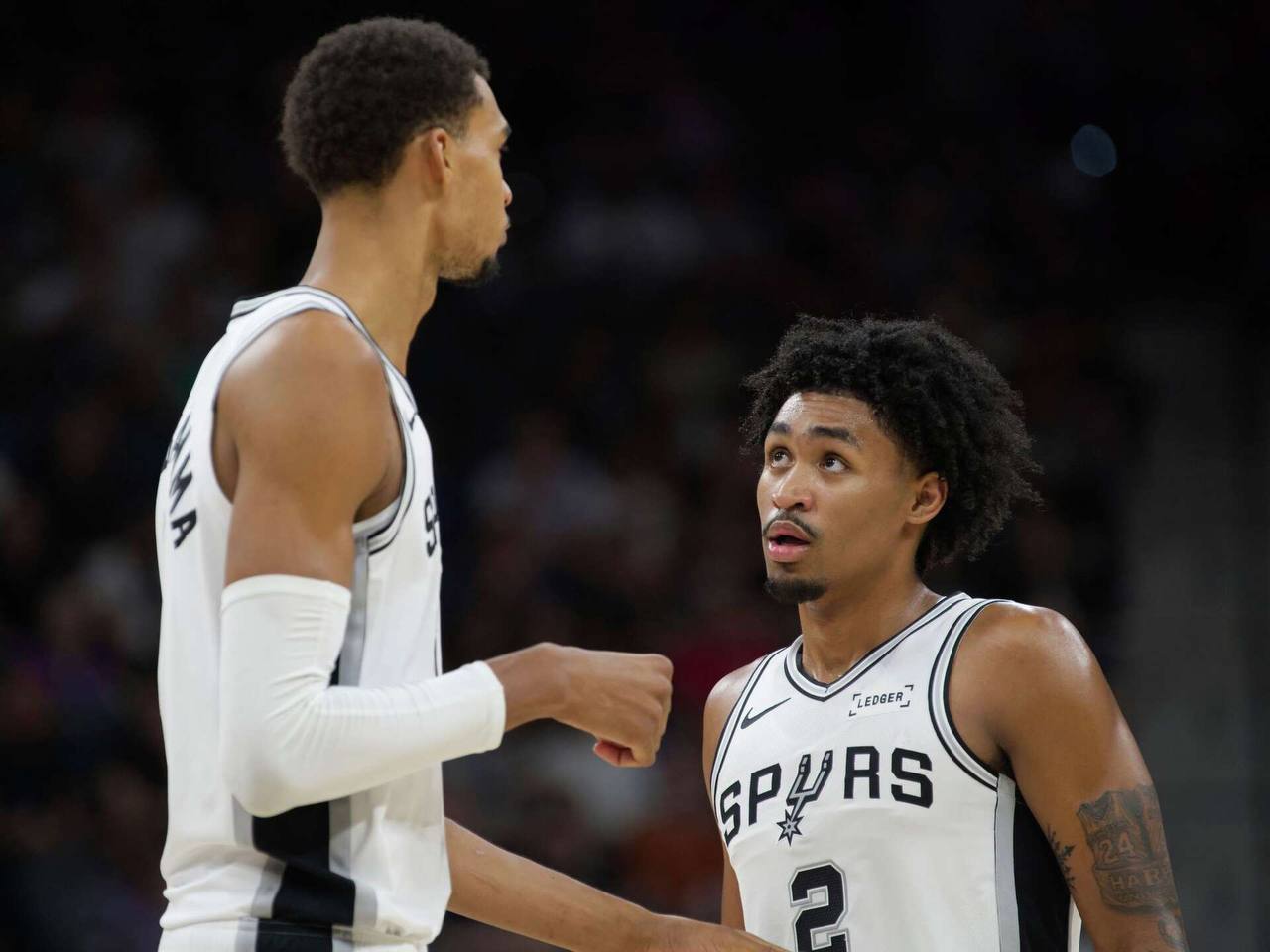
The San Antonio Spurs may have found something far more dangerous than expected this season—and his name is Dylan Harper.
While much of the spotlight naturally falls on generational talent Victor Wembanyama, a quieter but equally disruptive force is emerging behind the scenes. Harper, still just 19, is not only adjusting to the NBA—he’s breaking one of its most consistent developmental patterns.
Defying the Rookie Learning Curve
Historically, young guards struggle with efficiency when they first enter the league. The speed, size, and physicality of NBA defenses typically force a period of adaptation. Even stars like Shai Gilgeous-Alexander and Anthony Edwards needed time to refine their scoring efficiency, particularly when attacking the rim.
But Harper? He’s skipping that phase entirely.
Instead of battling inconsistency, the rookie is finishing at the basket with an efficiency that rivals seasoned veterans. His ability to navigate traffic, absorb contact, and convert difficult attempts has become a defining feature of his game—and a serious problem for opposing defenses.
A Constant Offensive Threat
What makes Harper’s rise even more impactful is his role within the Spurs system. Coming off the bench as a lead guard, he ensures there is no offensive drop-off when starters rest. Whether it’s initiating plays or attacking the rim, Harper keeps the pressure on defenses at all times.
Paired with the dynamic presence of Wembanyama—whose spacing and versatility stretch defenses to their limits—Harper finds himself operating in ideal conditions. But make no mistake: the opportunities may be created by the system, but the execution is all his.
Defenders know what’s coming, yet they still struggle to stop it.
Echoes of Greatness
For longtime Spurs fans, Harper’s style brings back memories of Tony Parker. Like the Hall of Fame point guard, Harper thrives in the paint, using control, timing, and composure to finish among bigger defenders.
While he may not yet possess Parker’s elite speed, his poise and decision-making at such a young age suggest a similarly high ceiling. In today’s more complex defensive landscape, that makes his early success even more impressive.
Building a Dangerous Core
Zoom out, and the bigger picture becomes even more intriguing. The Spurs are quietly assembling a young core that includes Harper, Wembanyama, and rising talent Stephon Castle. Each brings a unique dimension—scoring, playmaking, defensive disruption—and all are still developing.
Harper’s emergence adds another layer to this foundation. His ability to consistently break down defenses and generate high-percentage looks doesn’t just elevate his own game—it unlocks opportunities for everyone around him.
A Problem the NBA Must Solve
If Harper continues on this trajectory, the Spurs won’t just be a promising young team—they’ll be a legitimate long-term threat.
Because what he’s doing isn’t normal.
Rookies aren’t supposed to dominate efficiency metrics. They aren’t supposed to look this comfortable attacking NBA defenses. And they certainly aren’t supposed to become one of the best finishers in the league this early in their careers.
Yet here he is, rewriting expectations in real time.
And if the rest of the NBA hasn’t taken notice yet, it won’t be long before they have no choice.