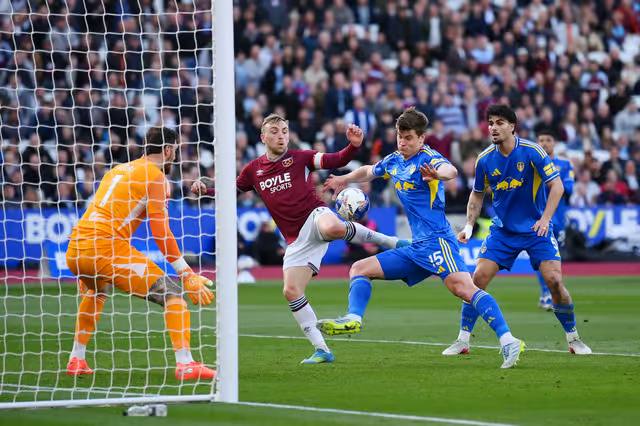
The FA Cup clash between West Ham and Leeds United had everything — late goals, disallowed strikes, injuries, and, unsurprisingly, major VAR controversy. But beyond the chaos and drama, the biggest talking point remains the officiating decisions that shaped the outcome of a rollercoaster encounter.
Leeds eventually progressed with a 4-2 penalty shootout victory after a breathless 2-2 draw, but the match could have taken a very different turn if key calls had gone the other way.
The most debated moment came in the 33rd minute, when Leeds midfielder Anton Stach was taken out by Max Kilman after getting his shot away. Despite what looked like clear late contact, no penalty was awarded — a decision that left players, fans, and analysts stunned.
Even after a VAR review, officials ruled it as a “natural coming together,” a verdict that has since been heavily questioned. Former referee Andy Davies admitted the replays only reinforced the belief that a penalty should have been given, suggesting both the on-field decision and VAR’s refusal to intervene were incorrect.
It set the tone for a night where consistency in decision-making was under the microscope.
Later in the game, Leeds defender Ethan Ampadu found himself fortunate to escape with just a yellow card after bringing down Adama Traoré during a dangerous counterattack. While VAR upheld the referee’s call, the challenge itself sparked debate, with many arguing it bordered on a red-card offence due to its intent and risk.
Despite the controversy, some decisions were deemed correct. A penalty awarded to Leeds in the second half — after Kilman fouled Brenden Aaronson — was one of the clearer calls of the night and stood without dispute after a VAR check.
Still, the match will be remembered less for the correct calls and more for the ones that divided opinion.
West Ham thought they had completed a dramatic turnaround with two stoppage-time goals forcing extra time, only to see further heartbreak as two goals were later disallowed. Injuries added to the chaos, with goalkeeper Alphonse Areola forced off late on, paving the way for young debutant Finlay Herrick, who made an immediate impact by saving a penalty in the shootout.
Ultimately, Leeds held their nerve to advance, but the lingering question remains: did VAR get the biggest decisions right?
While officials followed protocol, the interpretation of key moments — especially the Stach incident — highlights the ongoing frustration surrounding VAR. For many, it’s not just about the technology, but how it’s applied in high-pressure situations.
In a match packed with drama, it was once again VAR that stole the spotlight — and not necessarily for the right reasons.