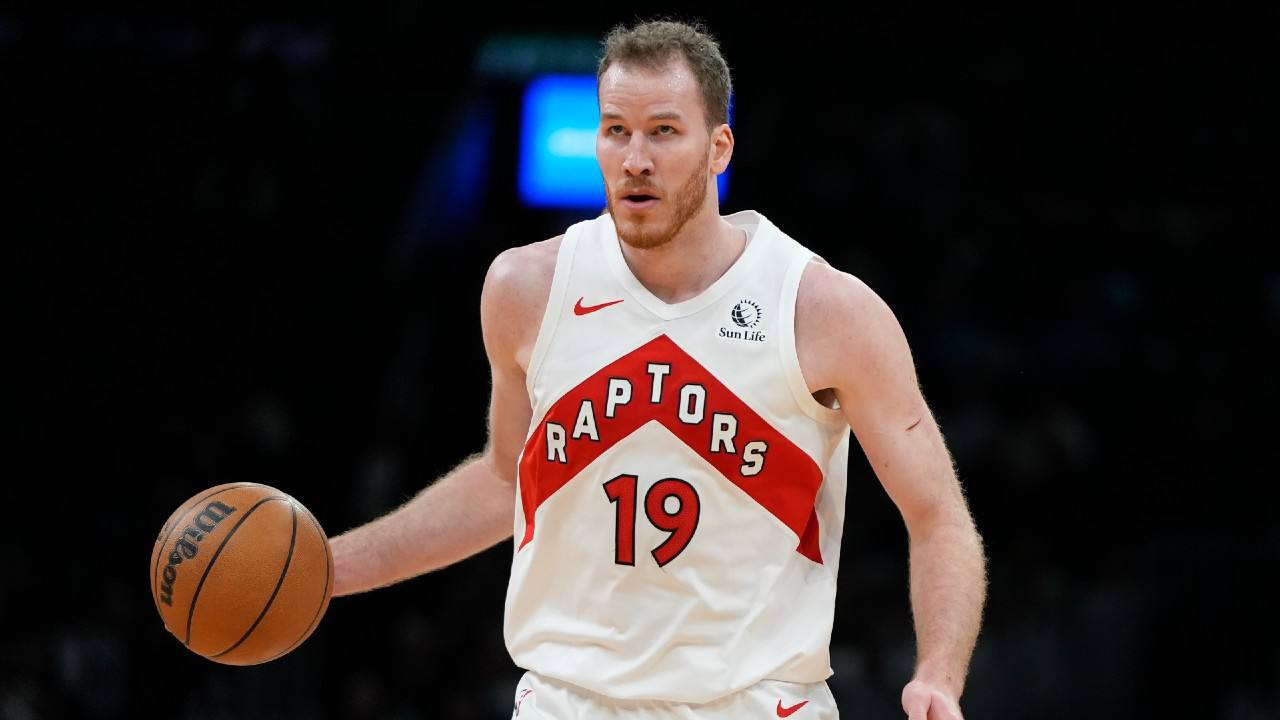
For much of the 2025/26 NBA season, Jakob Poeltl has been at the center of debate among fans of the Toronto Raptors. Questions surrounding his hefty contract, recurring injuries, and inconsistent availability have dominated the conversation. Yet beneath the criticism lies a revealing truth—one specific aspect of his game may be quietly dictating the team’s success.
That aspect is rebounding.
The Benchmark That Defines Success
Before the season began, assistant coach James Wade made a telling statement: Poeltl needed to grab at least 10 rebounds per game for the Raptors to be successful.
At first glance, that expectation might seem basic for a seven-footer. After all, rebounding is a fundamental responsibility for a center. But as the season has unfolded, Wade’s statement has proven to be more than just a guideline—it has become a clear indicator of Toronto’s performance.
When Poeltl reaches double-digit rebounds, the Raptors have posted an impressive 7–2 record. In contrast, when he falls short of that mark, their record drops to a middling 16–17.
That stark difference highlights a simple but powerful reality: Poeltl’s rebounding isn’t just a stat—it’s a barometer for winning.
A Decline in Production
Last season, Poeltl came close to meeting expectations, averaging 9.6 rebounds per game. This year, however, that number has dipped significantly to 7.3 rebounds per game.
The drop may not seem drastic at first glance, but in the context of Wade’s benchmark, it becomes critical. Those missing rebounds often translate into second-chance opportunities for opponents or missed chances for Toronto to control the tempo.
Rebounding is about more than just collecting the ball—it’s about possession, momentum, and physical dominance. When Poeltl is active on the boards, the Raptors tend to dictate the game. When he isn’t, they struggle to keep control.
Injuries and Inconsistency
A major factor behind Poeltl’s underwhelming numbers has been his ongoing battle with injuries. Limited to just 42 games this season, his availability has once again become a concern.
This isn’t a new issue. Over the past few seasons, Poeltl has consistently missed significant time, raising doubts about his long-term reliability. For a player earning a substantial salary, that lack of availability only intensifies scrutiny.
The Raptors’ front office likely envisioned a more durable presence when committing to his extension. Instead, they’ve had to manage around recurring absences, disrupting continuity and rhythm.
The Boston Game: A Low Point
If there was a moment that captured the concerns surrounding Poeltl’s season, it came in the Raptors’ recent loss to the Boston Celtics.
In that game, Poeltl managed just two rebounds—a shockingly low total for a player of his size and role. Toronto was out-rebounded 44 to 31, a deficit that proved decisive.
Performances like that raise legitimate questions. Not just about effort or form, but about whether Poeltl can consistently deliver the physical presence the team needs.
More Than Just Numbers
Despite the criticism, it would be unfair to dismiss Poeltl’s overall impact. His size, defensive positioning, and ability to anchor the paint still provide value to the Raptors.
However, the numbers don’t lie—his influence is maximized when he dominates the boards.
Rebounding sets the tone. It fuels transition play, limits opponents’ chances, and establishes control in the paint. For Toronto, Poeltl’s success in this area often determines whether they can impose their style of play.
A Contract Under the Microscope
Poeltl’s contract remains a major talking point. With earnings projected to reach as high as $29 million in the coming years, expectations are understandably high.
For many, the deal already looks risky given his injury history and fluctuating performances. But if Poeltl can consistently meet the 10-rebound benchmark, perceptions could shift.
Winning changes everything—and as the data suggests, his rebounding is closely tied to that outcome.
The Road Ahead
Looking forward, the Raptors face key questions:
- Can Poeltl stay healthy for a full season?
- Can he consistently reach double-digit rebounds?
- And can he justify his role as a cornerstone piece of the team?
The answers will shape not only his future but also the direction of the franchise.
Final Thoughts
Jakob Poeltl’s season may appear underwhelming on the surface, but a deeper look reveals a hidden influence that cannot be ignored.
When he rebounds effectively, the Raptors win. When he doesn’t, they struggle.
It’s that simple—and that significant.
For Toronto, unlocking consistent production from Poeltl on the boards could be the difference between mediocrity and meaningful progress.