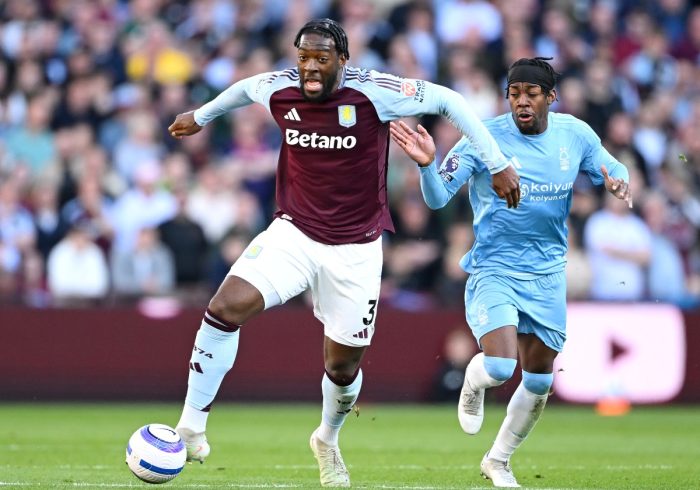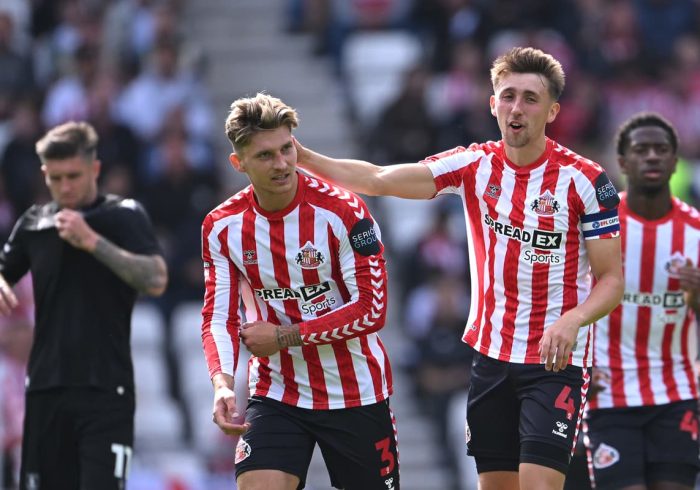
The Football Association (FA) has officially published its written reasons for handing Leif Davis a three-match suspension, following his controversial red-card offence against Caleb Okoli.
The incident, which occurred during a heated clash between Ipswich Town and Leicester City, saw Davis pull Okoli’s hair during an aerial challenge—an act that went unnoticed by match officials at the time but was later reviewed retrospectively.
Referee Report Sparked FA Investigation
Referee John Busby, who had already come under scrutiny after failing to award Ipswich a late penalty, alerted the FA via email days after the match. In his report, he confirmed that the incident had not been seen during play but warranted further review.
Following this, the FA launched an investigation and sought the opinions of three former referees—Eddie Wolstenholme, Michael Mullarkey, and Alan Wiley—all of whom agreed that the offence amounted to a straight red card for violent conduct.
Independent Panel Upholds Ban
An independent regulatory commission, chaired by Udo Onwere and including Stephen Bennett and Clarke Carlisle, reviewed the case in detail.
After examining footage multiple times, the panel concluded that Davis had used “considerable force” in pulling Okoli’s hair—enough to jolt the defender’s head backwards. The act was deemed invasive and clearly fell under violent conduct.
The commission also noted that similar incidents in recent seasons—such as those involving Michael Keane, Alfie May, and Jack Diamond—had all resulted in the same standard three-match suspension, reinforcing the need for consistency.
Ipswich and Davis Arguments Rejected
Despite Ipswich Town admitting the charge, the club—through general counsel Laura McCallum—argued that the punishment was excessive given the circumstances.
Davis himself issued a personal statement, insisting there was no intent to pull Okoli’s hair and describing the incident as accidental amid the chaos of defending a corner.
However, the commission dismissed these claims, stating that while his disciplinary record was noted, neither his explanation nor the club’s arguments provided sufficient grounds to reduce the standard punishment.
FA Defends Retrospective Action
Ipswich also challenged the principle of retrospective punishment, arguing that matches should not be “re-refereed” after full-time. The commission rejected this stance, backing the FA’s long-standing policy of reviewing unseen incidents of violent conduct.
The panel emphasized that such reviews are necessary to maintain fairness and discipline across the game.
Frustration at Portman Road
The ruling has sparked visible frustration at Ipswich Town, with manager Kieran McKenna and chairman Mark Ashton both voicing their dissatisfaction.
The ban ruled Davis out of key fixtures against Sheffield Wednesday, Millwall, and Birmingham City—matches that could prove crucial in Ipswich’s campaign.
Final Verdict: No Exceptional Circumstances
Ultimately, the FA’s position was clear: the offence met the threshold for violent conduct, and there were no “truly exceptional” factors to justify reducing the punishment.
For Ipswich, the decision is a bitter pill to swallow—but for the FA, it reinforces a growing crackdown on off-the-ball incidents that might otherwise go unnoticed.