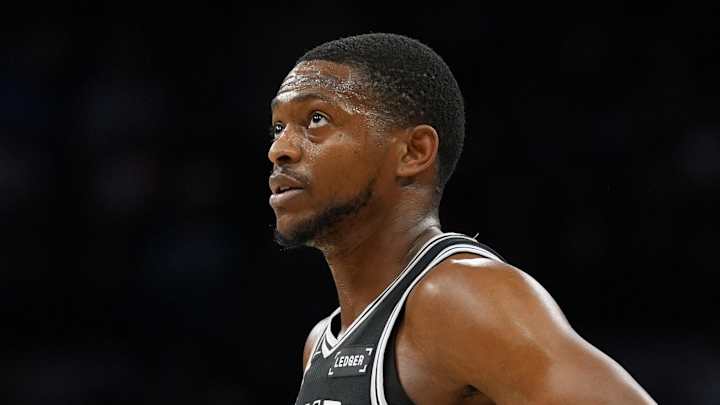
The San Antonio Spurs are built like a championship contender. Victor Wembanyama is already a generational force, De’Aaron Fox brings elite speed and scoring punch to the backcourt, and the young duo of Stephon Castle and Dylan Harper gives the team length, athleticism, and defensive versatility that most franchises can only dream about. On paper, this team looks untouchable.
But basketball is played on the court, not on paper—and right now the Spurs have one very visible, very fixable flaw that could end their playoff run before it really begins.
As of March 25, 2026, San Antonio ranks a mediocre 14th in the NBA in free-throw percentage, hitting just 78.5% from the stripe. In the regular season that number can be hidden inside blowouts and fast-paced track meets. In the playoffs, it becomes a spotlight that doesn’t turn off.
The problem starts with the guards. Fox, Castle, and Harper have all been relentless attacking the rim this season—exactly what you want from a modern backcourt. The downside? All three are currently shooting below 80% from the free-throw line on high volume. When the game slows down and the whistles still blow, those misses start to feel enormous.
Even Wembanyama, who is converting at a respectable 81.9% on a team-high 6.9 attempts per game, has looked shaky in crunch time. For a 7-foot-4 big man who’s still only in his early 20s, the percentage itself is actually encouraging. The clutch struggles, however, are not. A single missed free throw in the final minute of a one-possession game can turn a potential series-clinching win into an early flight home.
We’ve already seen it happen repeatedly this season. Leads that looked safe have evaporated because the Spurs couldn’t cash in at the line. In a regular-season game against the Indiana Pacers on March 21, for example, those same issues were on display as the Spurs tried to close out another winnable contest.
Playoff basketball is a different animal. Defenders play with zero fear of foul trouble in the same way they do in January. Physicality ramps up. Every possession feels heavier. Against teams like the Houston Rockets or Oklahoma City Thunder—both built to bang and switch everything—getting to the line will be one of the Spurs’ best paths to points. But only if they can actually make them.
The math is simple and unforgiving. In a seven-game series, the difference between shooting 78.5% and 83–85% from the line can easily equal 10–15 points across 48 minutes of high-stakes basketball. That’s often the margin between advancing and going home.
Nobody is saying the Spurs aren’t good enough to make a deep run. They absolutely are. But perfection isn’t required in the regular season. It is required in the postseason, where one or two missed free throws can turn a promising campaign into “wait till next year.”
The good news? This is a fixable problem. The talent is already there. The aggression at the rim is already there. What’s left is the mental and mechanical work at the line—work that championship teams have always been willing to put in when the lights get brightest.
Right now the Spurs are one of the most exciting teams in the league. They just need to make sure that when the referee’s whistle blows in the fourth quarter of a Game 7, the only sound left in the arena is the swish of the net.