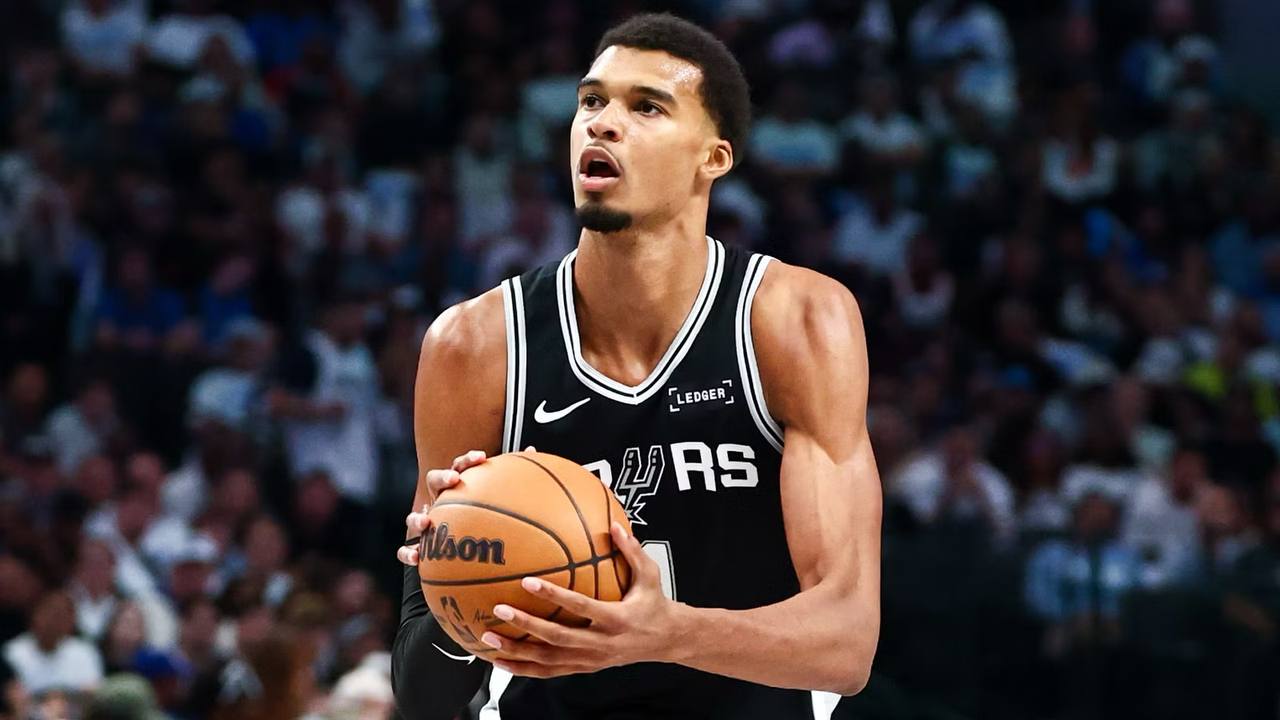
The race for the NBA’s Most Valuable Player award has taken an unexpected turn, as Victor Wembanyama encounters a critical hurdle at the most decisive stage of the season. The San Antonio Spurs recently ruled their young superstar out of a key matchup against the Los Angeles Clippers due to right ankle injury management, raising concerns not just about his health—but about his eligibility for the league’s top individual honor.
A Season on the Brink of History
Wembanyama has been nothing short of extraordinary this season. At just 22 years old, he has delivered one of the most dominant two-way campaigns in recent memory, averaging 24.7 points, 11.5 rebounds, and a league-leading 3.1 blocks per game. His defensive presence, in particular, has redefined expectations, earning him multiple monthly defensive honors and anchoring one of the NBA’s most disruptive units.
His recent performance against the Golden State Warriors only reinforced his MVP credentials. In that game, he erupted for 41 points and 18 rebounds in under 30 minutes—a display of efficiency and dominance rarely seen at any level.
Yet, despite these historic numbers, Wembanyama’s MVP hopes now hinge on a far less glamorous statistic: games played.
The 65-Game Rule Looms Large
Under current NBA rules, players must appear in at least 65 games to qualify for major awards, including MVP. Wembanyama has played 62 games so far, leaving him with virtually no margin for error. After missing the Clippers game, he can afford to sit out only one more contest for the remainder of the season.
This puts the Spurs in a difficult position. On one hand, protecting their franchise cornerstone ahead of a deep playoff run is the logical priority. On the other, limiting his minutes—or holding him out—could cost him a legitimate shot at basketball immortality.
Team Success Adds to the Narrative
San Antonio’s resurgence has been one of the league’s biggest stories. With a 58–18 record, the Spurs are firmly in contention for the top seed in the Western Conference, trailing only the Oklahoma City Thunder.
Wembanyama’s impact on that success is undeniable. His ability to control both ends of the floor has transformed the Spurs into a legitimate title contender, marking a dramatic turnaround for a franchise that has not seen playoff action since the 2018–19 season.
Even opposing coaches have taken notice. Following a loss, Warriors head coach Steve Kerr praised Wembanyama’s growth, noting his confidence and command of the game.
A Competitive MVP Race
While Wembanyama’s case is compelling, the MVP race is far from decided. Shai Gilgeous-Alexander has emerged as a strong favorite, leading his own team with consistency and elite performance throughout the season.
Still, Wembanyama’s ceiling—and his statistical dominance—make him a unique contender. If he meets the eligibility threshold, voters will face a difficult choice between sustained excellence and historic impact.
Legacy at Stake
Wembanyama has made it clear that MVP recognition matters to him—not just as an accolade, but as a milestone in building his legacy. He is chasing more than just a trophy; he is pursuing a place among the game’s all-time greats.
Should he win, he would become the youngest MVP in NBA history, surpassing Derrick Rose, who set the record in 2011.
The Final Stretch
As the regular season winds down, every game becomes critical—not only for playoff positioning but for individual recognition. For Wembanyama, the challenge is clear: stay healthy, stay available, and let his performance speak for itself.
In a season defined by brilliance, it would be a cruel twist if his MVP campaign were decided not by his play, but by his absence.