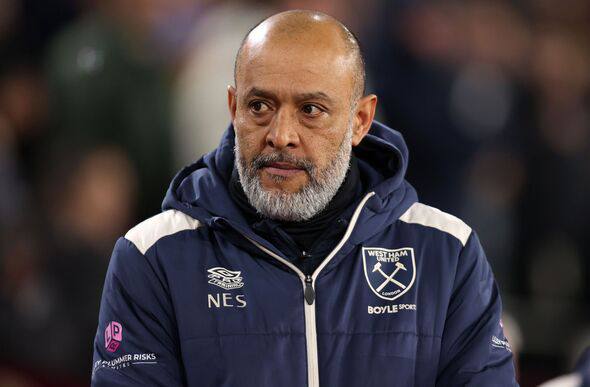
West Ham United are once again facing scrutiny over their transfer strategy after it emerged that the club have invested a staggering £255 million into their current squad—yet remain stuck in the lower end of the Premier League table.
Despite multiple rebuilds under different managers and recruitment figures, the Hammers find themselves languishing in 18th position, raising fresh concerns about how effectively that significant financial outlay has been used.
Over recent years, a number of key decision-makers—including David Moyes, Julen Lopetegui, Tim Steidten, Graham Potter, Nuno Espírito Santo, and club owner David Sullivan—have all had a hand in shaping the current squad. However, the results on the pitch have failed to justify the level of spending.
A breakdown of the squad’s transfer costs highlights just how much has been committed. In goal, Mads Hermansen arrived for £18 million, while the defence includes players such as Aaron Wan-Bissaka (£15m), Jean-Clair Todibo (£32.8m), and El Hadji Malick Diouf (£19m). Axel Disasi’s loan deal also adds to the tally, even if only the £1.7 million loan fee is counted.
Midfield reinforcements have not come cheap either, with Mateus Fernandes costing up to £42 million including add-ons, alongside Tomáš Souček at £19.1 million. In attack, further heavy spending is evident: Crysencio Summerville (£25m rising to £30m), Jarrod Bowen (£18m rising to £25m), Taty Castellanos (£26m plus add-ons), and Pablo Felipe (£21.8m) all contribute to the overall figure of approximately £254.7 million.
Yet despite this massive investment, the squad’s estimated market value sits at around £316.6 million, placing West Ham just 17th in the Premier League rankings according to Transfermarkt. Only a handful of clubs—including Leeds United, Wolves, and Burnley—are valued lower.
This stark contrast between spending and squad valuation has intensified debates among supporters about recruitment efficiency, long-term planning, and the club’s growing financial pressures. Questions are increasingly being asked about whether the current ownership model can sustain Premier League ambitions without better decision-making in the transfer market.
There is also a growing concern about debt levels, especially given the repeated need to rebuild the squad without achieving meaningful progress in the league standings. For many fans, the issue is no longer about how much is spent—but how wisely it is used.
However, there are small signs of optimism. The increasing integration of academy players into the first team suggests that West Ham may begin to rely more on internal development rather than expensive transfers. This shift could help address both financial concerns and squad cohesion over time.
Ultimately, West Ham’s situation highlights a deeper issue facing many modern clubs: heavy spending does not guarantee success. With their Premier League status under threat, the coming months will be crucial—not just for survival, but for determining whether this costly rebuild can finally deliver results.
If not, serious questions will continue to be asked at boardroom level about the direction of the club and whether a new approach is urgently needed.