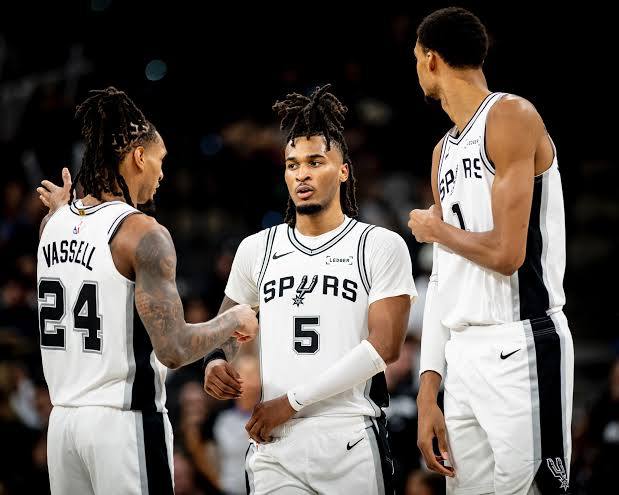
The San Antonio Spurs are quietly crafting one of the most intriguing team-building models in the NBA today, and it goes far beyond the headline-grabbing presence of their generational centerpiece. What truly sets this team apart is a bold and increasingly rare approach: relying on multiple rookies to play meaningful roles on a contending roster—and succeeding with it.
At the heart of this experiment are first-year players Dylan Harper and Carter Bryant, a duo that has quickly evolved from promising prospects into vital contributors. While most contenders cautiously limit rookie involvement, the Spurs have leaned into the unpredictability and energy of youth. The result is a dynamic blend of development and competitiveness that is fueling their rise in the Western Conference.
Harper has emerged as an offensive catalyst, showcasing confidence and creativity well beyond his years. Whether attacking the rim, creating space, or knocking down perimeter shots, his ability to inject life into the offense—often off the bench—has become indispensable. Meanwhile, Bryant is carving out a reputation as a future elite two-way player. His defensive instincts, combined with his growing ability to stretch the floor, give the Spurs a versatile weapon who can impact both ends of the court.
What makes their emergence even more remarkable is how rare this situation is. Historically, contenders might feature one standout rookie, but two playing significant roles is almost unheard of. The Spurs are essentially rewriting that narrative, proving that with the right structure and trust, young players can thrive under pressure.
A major reason for this success lies in the coaching approach. Mitch Johnson has struck a delicate balance that many coaches struggle to find—demanding performance while nurturing development. Instead of shielding his rookies from difficult assignments, he has done the opposite. Harper is tasked with growing his offensive consistency, particularly as a shooter, while Bryant is regularly matched against challenging defensive assignments.
This trial-by-fire method could easily backfire on a less cohesive team, but in San Antonio’s system, it is accelerating growth. Both players have shown noticeable improvement as the season progresses, particularly in their perimeter shooting efficiency. More importantly, they are gaining the kind of experience that cannot be replicated in practice or limited minutes.
Perhaps the most telling aspect of Johnson’s strategy is his long-term vision. These rookies are not being groomed solely for future seasons—they are expected to contribute in the playoffs. That level of trust speaks volumes about both their readiness and the organization’s confidence in its developmental system.
For Harper, postseason involvement seems inevitable given his role in the rotation. Bryant’s minutes may be more limited, but the intention to include him signals a commitment to continuity and growth, even in high-stakes situations. This approach could pay significant dividends, not just this season but in the years to come.
Ultimately, the Spurs are building something that feels both modern and refreshingly unconventional. By embracing youth without sacrificing competitiveness, they are laying the groundwork for sustained success. If Harper and Bryant continue on their current trajectory, this “rookie-driven contender” model may not just be an anomaly—it could become the blueprint for the next generation of NBA dynasties.