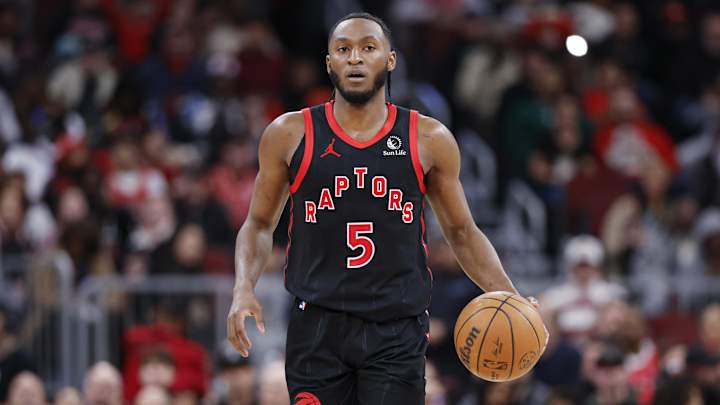
The Toronto Raptors are entering the first round of the playoffs facing an uncomfortable reality: their backcourt situation is far from settled, and Immanuel Quickley’s availability remains one of the biggest questions hanging over the series against the Cleveland Cavaliers.
Quickley, who has already battled through multiple injuries in the latter stages of the regular season, is now dealing with a hamstring issue on the same leg that previously suffered from plantar fasciitis. With Game 1 approaching rapidly, the Raptors are still uncertain about whether he will be fully fit, partially available, or forced to miss the opening game altogether.
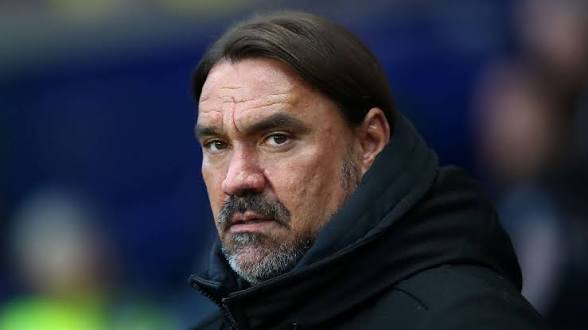
Head coach Darko Rajaković offered a cautiously optimistic but non-committal update following practice, confirming that Quickley is progressing but not yet integrated into full team activities.
“He’s doing well. Today, he participated in an individual workout,” Rajaković said. “He did not take part in a team practice, and he’s going to be day-to-day at this point.”
While the fact that Quickley is on the court at all is encouraging, the timing is far from ideal. With the playoffs demanding peak physical intensity and minimal recovery windows, any lingering hamstring issue could significantly limit his explosiveness, defensive mobility, and ability to handle heavy minutes.
Raptors’ offensive balance at risk without Quickley at full strength
Quickley’s importance to Toronto’s system goes beyond scoring. As one of the team’s primary floor spacers and secondary playmakers, he plays a crucial role in opening the offense for the Raptors’ core trio of Scottie Barnes, RJ Barrett, and Brandon Ingram.
When healthy, Quickley stretches defenses with his shooting ability and provides stability in pick-and-roll situations. Without him at full capacity, Toronto risks becoming easier to guard in half-court sets, forcing increased pressure onto Barnes and Barrett to generate offense against a disciplined Cleveland defense.
Even if Quickley is cleared to play, there is a strong possibility his usage will be carefully managed. That could mean fewer on-ball responsibilities, reduced minutes, or a more limited offensive role than usual.
However, even a limited Quickley presence could still influence the series. His shooting alone forces defensive spacing adjustments, potentially creating driving lanes for Toronto’s primary scorers and reducing congestion in the paint.
Bench depth suddenly becomes critical
If Quickley is unavailable or restricted, the Raptors will need immediate contributions from their younger backcourt options. Jamal Shead and Ja’Kobe Walter are expected to play larger roles, potentially making their postseason debuts under intense pressure.
Shead’s value lies in his defensive intensity and playmaking, particularly in managing possessions when the starters are off the floor. His ability to control tempo and limit turnovers will be crucial against a Cavaliers team that thrives on transition scoring.
Walter, meanwhile, represents Toronto’s most reliable volume shooting threat among the younger players. After shooting around 40% from deep during the season, his ability to hit open shots could be decisive in keeping the Raptors competitive offensively, especially if defenses collapse on Barnes and Ingram.
The challenge, however, is experience. Playoff basketball is significantly more physical, faster, and less forgiving than the regular season. For two young players stepping into their first postseason action, consistency will be difficult to maintain.
Cavaliers present a difficult opening test
Toronto’s concerns are amplified by the strength of their first-round opponent. The Cavaliers enter the series with a deep roster, strong guard play, and a physical interior presence that will test the Raptors’ defensive structure.
Even more challenging for Toronto is the uncertainty surrounding how their rotation will function if Quickley is limited. Cleveland will likely look to exploit any weakness in spacing or ball-handling depth, especially over a seven-game series where adjustments become increasingly targeted.
While Toronto has had success against Cleveland in past meetings, both teams have changed significantly since those games. Personnel shifts, tactical adjustments, and playoff intensity all make regular-season results far less predictive.
Fresh start, but fragile margin for error
Despite familiarity between the two teams, both camps have emphasized that past matchups mean little heading into the postseason. The Cavaliers in particular have added new pieces and reshaped their offensive identity, making them a more unpredictable opponent.
For Toronto, the message is simple: this is a reset, not a continuation.
But resets do not eliminate problems—and the Raptors’ most pressing issue remains unresolved. Quickley’s health will likely shape not only Game 1, but potentially the entire direction of the series.
If he is unable to perform at full strength, Toronto will need near-perfect contributions from its supporting cast to stay competitive. If he is ruled out entirely, the Raptors face an even steeper uphill battle against a Cavaliers team built for deep playoff runs.
Outlook
The Raptors are not without hope. Their core trio has shown the ability to compete with top Eastern Conference teams, and their wing size presents matchup challenges for Cleveland. But in a tightly contested playoff series, health often becomes the deciding factor.
Right now, Toronto’s biggest opponent may not be Cleveland—it may be the uncertainty surrounding one of their most important players.
Game 1 will not just test execution. It will test adaptability, depth, and resilience under pressure, with the Raptors hoping their injury concerns do not define their postseason before it even truly begins.