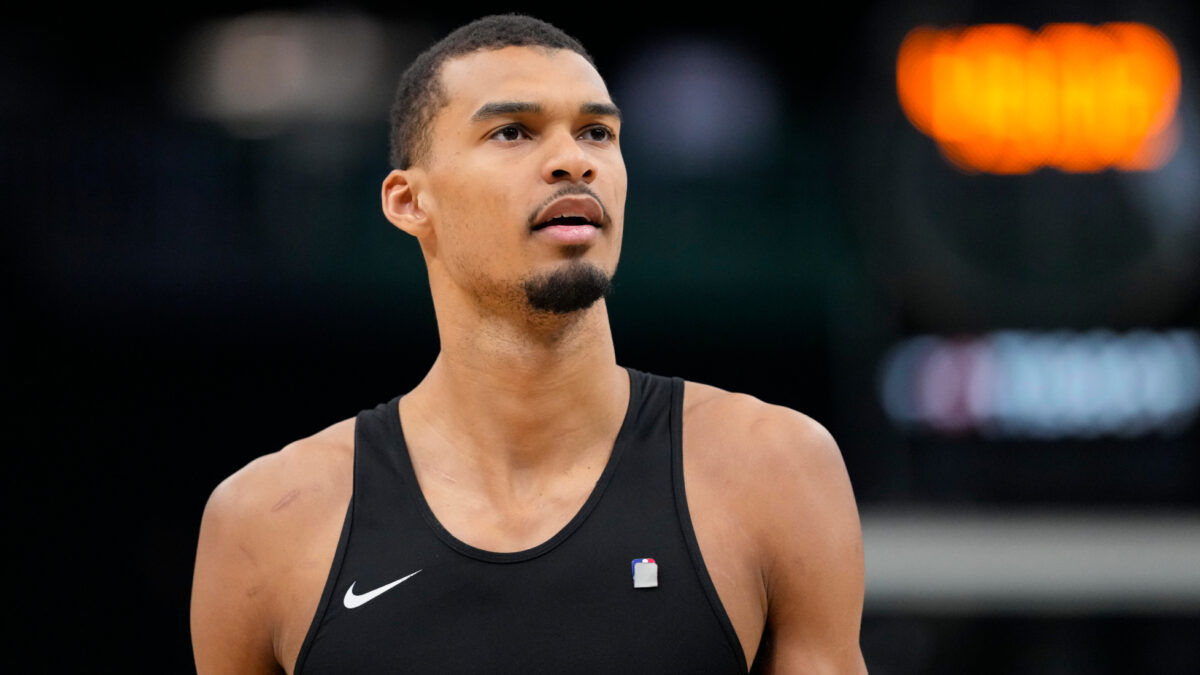
The NBA’s 65-game rule was supposed to bring clarity and fairness to end-of-season awards. Instead, it has created confusion, inconsistency, and a growing sense that the league may have unintentionally undermined its own system—leaving players like Victor Wembanyama caught in the middle.
At first glance, Wembanyama has done everything required. The San Antonio Spurs superstar met the 65-game threshold this season, officially qualifying for major honors such as All-NBA, Defensive Player of the Year, and even MVP consideration. For a young player still early in his career, that alone is a significant achievement.
But what should have been a straightforward path has quickly become complicated.
The NBA recently granted exceptions to Luka Doncic and Cade Cunningham—both of whom failed to meet the 65-game requirement. Their cases were considered valid due to specific circumstances, but the decision has raised a fundamental question: if exceptions can be made, how firm is the rule really?
That uncertainty is where the frustration begins.
For Wembanyama, the stakes go far beyond awards recognition. The implications stretch directly into contract territory, specifically the supermax extension structure. Under current rules, a player must meet strict award-related criteria across multiple seasons to qualify for the highest tier of earnings.
In Wembanyama’s case, that means he must earn All-NBA honors or win Defensive Player of the Year in consecutive seasons or in two out of three years. Missing out—even narrowly—could cost him tens of millions of dollars over the course of his next contract.
And here’s the issue: the same league that enforced a rigid 65-game rule has now shown it is willing to bend it.
That contradiction puts players in a difficult position. Imagine a scenario where Wembanyama plays 63 or 64 games next season due to minor injuries or load management. Under the original rule, he would be disqualified from awards consideration. But given recent exceptions, the decision could suddenly become subjective.
That kind of ambiguity is dangerous for players whose financial futures are tied to these outcomes.
It also creates ripple effects across the league. If Wembanyama were to miss out on a supermax deal due to technicalities, it would not only impact him but also benefit the Spurs financially by reducing long-term salary commitments. While that may help team-building flexibility, it raises concerns about fairness and competitive balance.
The broader issue is whether the 65-game rule, in its current form, actually achieves its intended purpose.
One proposed solution is to introduce a minutes-based alternative—allowing players to qualify by reaching a certain total minutes threshold, such as 2,000 minutes, instead of strictly playing 65 games. This approach would better reflect actual on-court contribution rather than arbitrary game counts.
For example, players who average heavy minutes per game could still qualify even if they fall slightly short of 65 appearances. Conversely, players on restricted minutes would still need to meet the higher game threshold, maintaining balance across different roles and usage levels.
As it stands, the rule feels incomplete.
Wembanyama, one of the league’s brightest young stars, now finds himself dependent not just on performance, but on interpretation. That’s not a position any player—or any league—should want to be in.
If the NBA wants to maintain credibility and consistency in its award system, adjustments may be necessary. Because right now, the line between qualification and exception is starting to blur—and players like Wembanyama are the ones paying the price.