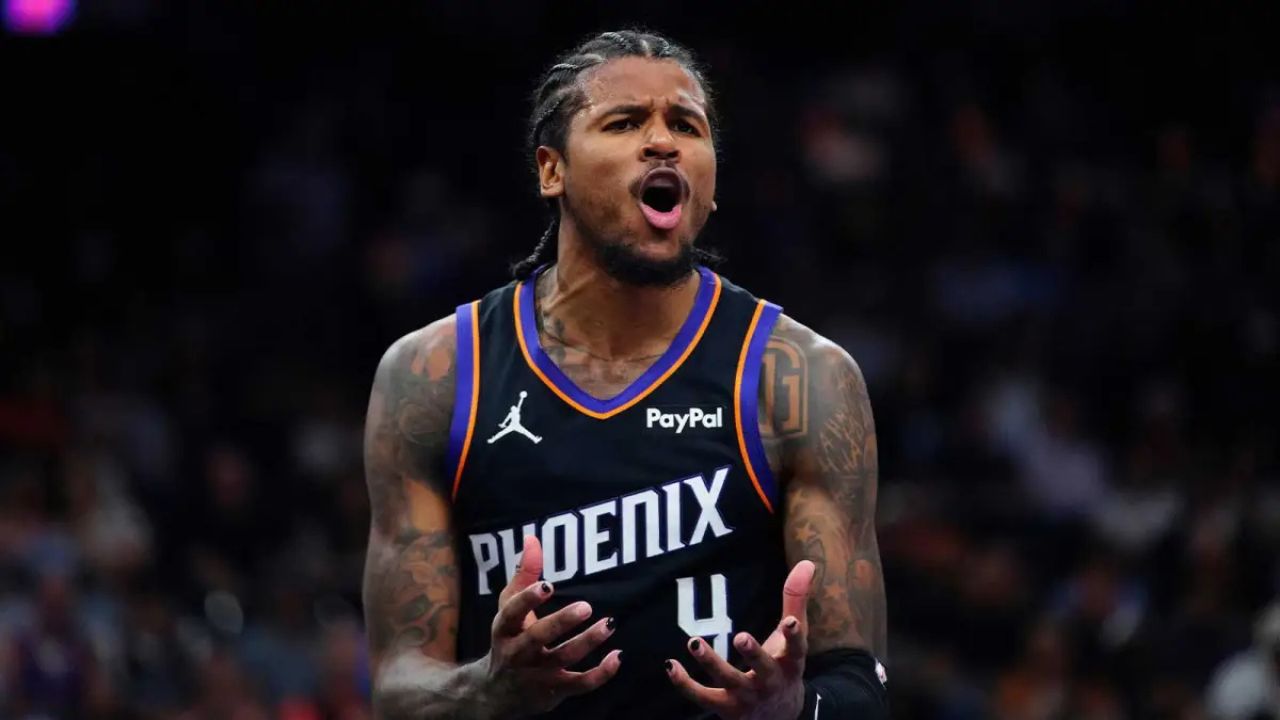
The Phoenix Suns walked into their playoff opener hoping to set the tone, but instead left with more questions than answers after a heavy defeat to the Oklahoma City Thunder. While the scoreboard told one story of dominance, postgame comments from Jalen Green added another layer of controversy to the night.
Green didn’t hesitate to address what he felt was inconsistent officiating that disrupted Phoenix’s rhythm, suggesting the whistle wasn’t being applied evenly on both ends of the floor. In his postgame remarks, he pointed to stretches where physical contact went uncalled on one side, while the Suns were penalized for similar defensive pressure.
“It has to be both ways,” Green said, emphasizing his belief that playoff intensity requires consistency from the officials. “You want to be aggressive, but you’ve got to know how it’s going to be called.”
Green finished the game with 17 points, but like much of Phoenix’s rotation, struggled to find offensive consistency against a Thunder defense that dictated the pace from the opening minutes. Oklahoma City’s physicality, switching schemes, and ability to force turnovers created constant disruption, making it difficult for the Suns to settle into any offensive rhythm.
Still, while the officiating became a talking point, the numbers told a more grounded story. The Thunder controlled key areas of the game—forcing 17 turnovers, winning the battle in transition, and generating far more clean looks off defensive pressure. Phoenix, meanwhile, struggled to protect the ball and convert possessions into meaningful scoring runs.
The Thunder’s star guard Shai Gilgeous-Alexander once again found ways to impact the game despite inefficient shooting, getting to the free-throw line repeatedly and keeping Oklahoma City’s offense afloat during slower stretches. His ability to draw fouls has become a defining feature of his game, and he addressed it calmly after the win, pointing to his aggressive driving style as the natural cause.
For Phoenix, though, the concern goes beyond officiating. The Suns were outworked in key hustle categories and looked uncomfortable dealing with Oklahoma City’s defensive intensity. The lack of ball security and half-court execution ultimately outweighed any external factors.
Still, Green’s frustration reflects a broader tension that often surfaces in playoff basketball—where physicality increases, margins shrink, and interpretations of contact become part of the narrative. Whether the Suns can adjust to that reality will likely define how competitive this series becomes moving forward.
Game 2 now looms as a chance for Phoenix to respond, but if the opener proved anything, it’s that talent alone won’t be enough—the Suns will need control, composure, and cleaner execution if they want to shift momentum against a Thunder team already in command.