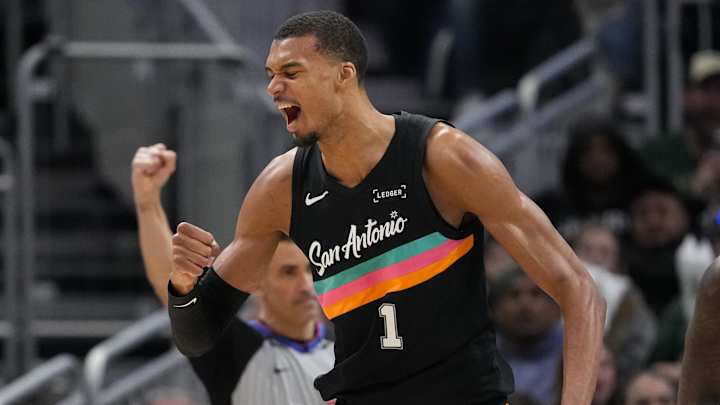
The collective intake of breath at the Frost Bank Center was audible as Victor Wembanyama headed to the locker room late in the first half of Game 2. Following the confirmation of a concussion, the San Antonio Spurs must now navigate the treacherous waters of a playoff road trip to Portland without their cornerstone. But while the loss of the NBA’s first unanimous Defensive Player of the Year is immense, this is a Spurs team that has already proven it can thrive in the face of the “Wemby-less” void.
During the regular season, San Antonio defied expectations by posting a 12-6 record without Wembanyama. More importantly, they went 2-1 against these very Portland Trail Blazers in games he missed. As the series shifts to the hostile environment of the Pacific Northwest, the blueprint for a Game 3 victory is clear: lean on unique preparation and a “by committee” defensive stand.
Filling the Defensive Crater
When Wembanyama sits, the Spurs don’t just lose a player; they lose a vertical fortress. Portland will undoubtedly look to exploit the lack of rim protection early.
The Interior Defensive Plan:
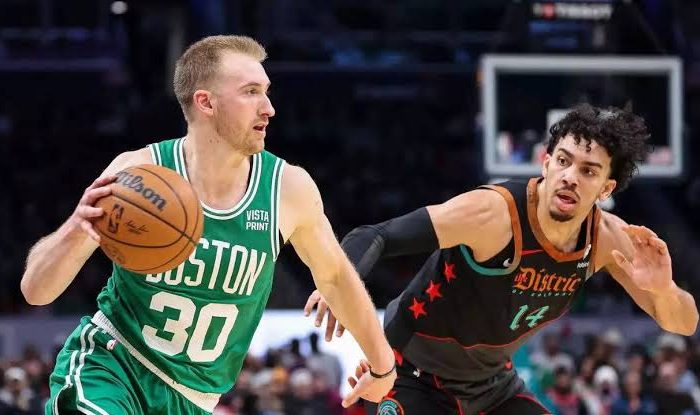
- The Kornet Wall: Luke Kornet becomes the primary line of resistance. While he lacks Wembanyama’s 8-foot wingspan, his positioning in the fourth quarter of Game 2 showed he can be an effective “wall” if the perimeter defenders stay disciplined.
- Point-of-Attack Pressure: The Spurs cannot afford to let Portland’s guards get a full head of steam. Stopping the drive before it reaches the paint is no longer a luxury—it’s a necessity.
The Carter Bryant Small-Ball Revolution
One of the most intriguing developments from Mitch Johnson’s post-game comments was the potential for rookie Carter Bryant to operate as a small-ball big. Bryant has already flashed elite defensive versatility by hounding perimeter players, but his length and athleticism make him a viable “center” in a switch-heavy lineup.
However, the “Bryant-at-the-5” experiment comes with a significant caveat: Rebounding. The Spurs surrendered 15 offensive boards in Game 2. If San Antonio goes small to maintain their defensive speed, they must engage in “gang rebounding” to prevent second-chance opportunities from sinking their chances.
The Fox and Vassell Offensive Takeover
With the 35 points Wembanyama provided in Game 1 now off the table, the scoring burden shifts to the veteran-rookie backcourt of De’Aaron Fox and Devin Vassell.
De’Aaron Fox spent much of the season playing a sacrificial role to aid the development of Castle and Harper, but the Spurs now need “Postseason Fox”—the aggressive, downhill threat that terrorized defenses in 2023. Efficiency is key; Fox must eliminate the turnovers (three in Game 2) that fueled Portland’s transition game.
Devin Vassell, meanwhile, is looking for a bounce-back. After an 0-for-5 showing from deep in Game 2, Vassell’s ability to create his own shot will be the barometer for the Spurs’ offensive success on Thursday night.
A Familiar Territory
The Spurs aren’t panicking because they’ve been here before. They have spent the last six months building a system that doesn’t just rely on one individual, but on a collective defensive identity and balanced scoring. Portland may be the underdog, but they are aggressive; if San Antonio can weather the initial punch with Kornet’s size and Bryant’s versatility, they have every reason to believe they can return from Oregon with the series lead.