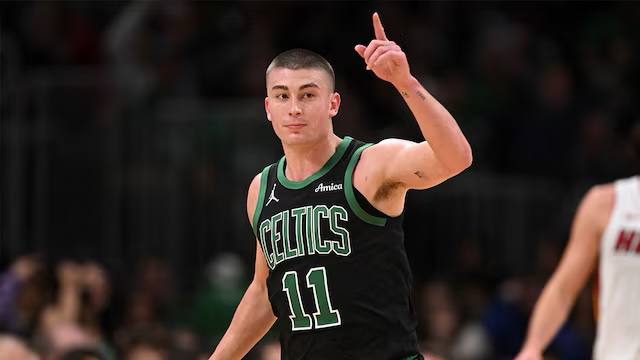
The Boston Celtics walked into Game 2 expecting to level their playoff series with the Philadelphia 76ers — instead, they ran straight into one of the most unusual shooting performances of their season.
Despite generating clean looks throughout the night, Boston suffered a shocking cold spell from deep in their 111-97 defeat, a result that left even the numbers telling a rare story.
Open looks, zero rhythm
The Celtics repeatedly created quality three-point opportunities, but failed to convert at an alarming rate. Boston finished just 6-of-24 on wide-open attempts — shots taken with at least six feet of separation from the nearest defender.
That 25% conversion rate stands in stark contrast to their regular-season dominance in similar situations, where they typically converted above 40%.
What made the performance even more striking is how uncharacteristic it was. Across the league this season, no team has consistently struggled to such an extent on clean perimeter looks — making Boston’s dip feel like an outlier rather than a trend.
Game flow turned against Boston
The impact of those missed shots went far beyond the box score.
Boston finished 13-of-50 from three-point range overall, shooting just 26% from deep. Those empty possessions opened the door for Philadelphia to control momentum, particularly in transition.
Once the 76ers found rhythm, the game shifted quickly. Runs became easier to build, confidence grew, and Boston found itself constantly chasing the game instead of dictating it.
“We got great looks — we just missed them”
Head coach Joe Mazzulla pointed to shot quality rather than shot selection, stressing that Boston generated the looks it wanted but simply failed to finish.
In a tight contest, those misses proved costly. As Philadelphia strung together key runs late in the game, Boston’s inability to respond offensively placed additional strain on its defense.
Jayson Tatum echoed the sentiment, noting that missed shots directly influenced the team’s defensive struggles as the game wore on.
A make-or-miss reality hits hard
Basketball often comes down to shooting variance, and Game 2 was a clear example of that reality.
As misses piled up, Boston’s rhythm faded, and execution began to suffer. The psychological weight of repeated missed open looks made it increasingly difficult to reset on each possession — even for a veteran-heavy roster.
Philadelphia capitalised, finishing the game strongly with a decisive late surge that Boston could not match.
Why Boston isn’t panicking yet
Despite the disappointing result, there is a major reason for optimism: this level of shooting drop-off has been extremely rare for the Celtics.
Throughout the regular season, Boston consistently ranked among the league’s most efficient teams from beyond the arc, particularly on open looks.
If Game 2 proves to be an anomaly rather than a trend, the Celtics will back themselves to respond quickly — especially with the same shot quality likely to return in Game 3.
For now, the series is shaped by one overwhelming takeaway: Boston didn’t get outplayed in shot creation — they simply got buried by one of their coldest nights of the season.