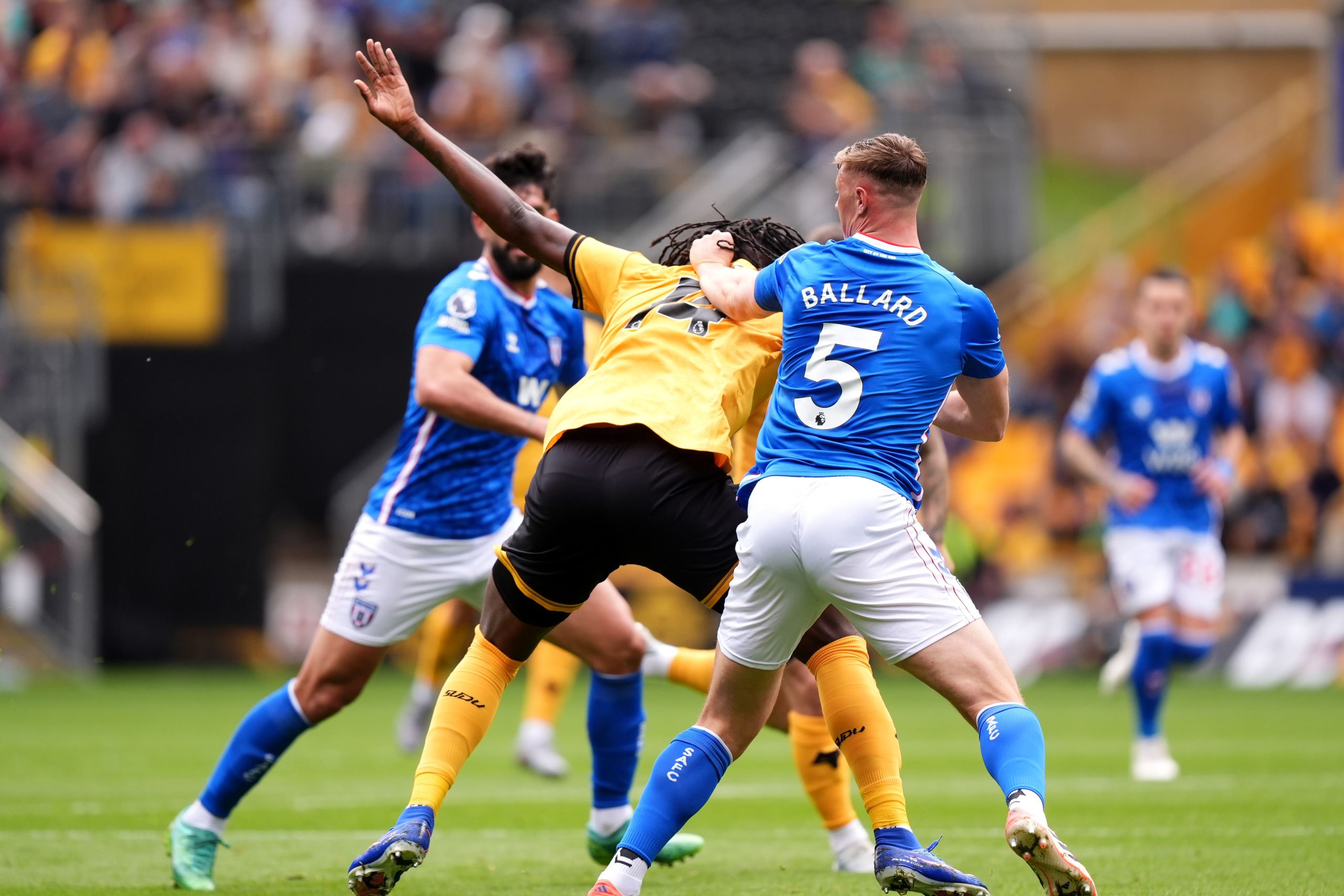
Sunderland’s 1–1 draw with Wolverhampton Wanderers at Molineux will be remembered less for the football played and more for yet another flashpoint involving VAR and officiating decisions that continue to divide opinion across the game.
At the center of the controversy was Dan Ballard, whose first-half dismissal shifted the momentum of a match that Sunderland largely had under control. The defender’s red card, awarded after an apparent hair-pulling incident involving Tolu Arokodare, felt harsh in context. While the letter of the law leaves little room for leniency—hair pulling is deemed a red-card offense—the lack of clear intent raised familiar questions about how rigidly the rules should be applied.
A Game Overshadowed by Officiating
Before the dismissal, Sunderland looked composed and capable. They had taken the lead through a well-worked set-piece, finished by Nordi Mukiele, and were facing a Wolves side lacking urgency and confidence. The home crowd’s frustration was evident, with ironic cheers reflecting a team enduring a disappointing campaign.
Ballard’s sending-off, however, altered the narrative. Reduced to ten men, Sunderland were forced into a more cautious approach, and although they remained organized, the numerical disadvantage inevitably gave Wolves a route back into the match.
That equalizer came via Santiago Bueno, who capitalized on defensive lapses from another set-piece. It was a preventable goal and one that highlighted Sunderland’s ongoing vulnerability in such situations.
Lack of Cutting Edge Costs Sunderland
Despite the adversity, Sunderland still looked the more structured side for large spells. Substitutes like Habib Diarra and Wilson Isidor injected energy, with Isidor’s movement in behind offering a glimpse of what could have been. One moment in particular—where he mistimed a run onto a precise long ball—summed up Sunderland’s afternoon: promising buildup undone by a lack of clinical execution.
Creatively, the team struggled. Chemsdine Talbi was among the few bright sparks, but overall, Sunderland’s attack lacked the sharpness required to capitalize on Wolves’ fragility.
Bigger Picture: Progress with Frustration
The result ensures Sunderland’s Premier League status for another season, a significant achievement in itself. However, with European qualification still mathematically possible, this felt like a missed opportunity—particularly given the quality (or lack thereof) of the opposition.
There are positives to take. The team showed resilience after going down to ten men, and the reaction from players like Granit Xhaka at full time suggests a squad fully invested in pushing for more.
Yet the recurring theme remains: inconsistency in officiating and VAR decisions continues to influence outcomes in ways that frustrate players, managers, and fans alike.
Conclusion
In the end, Sunderland leave Molineux with a point that secures safety but leaves lingering questions. Questions about decision-making, about attacking quality, and about what might have been had the game remained eleven versus eleven.
With three matches left, the dream of Europe is still alive—but Sunderland will need sharper execution and perhaps a bit more fortune if they are to turn that possibility into reality.