The Oklahoma City Thunder enter their second-round matchup against the Los Angeles Lakers as clear favorites on paper, but one persistent statistical weakness could give the series a far more dangerous edge than expected.
Despite dominating the Lakers across the regular season and finishing 4-0 against them—including a commanding 123-87 win—Oklahoma City’s vulnerability at the three-point line remains a tactical concern heading into the postseason clash.
Thunder’s defensive strength comes with one trade-off
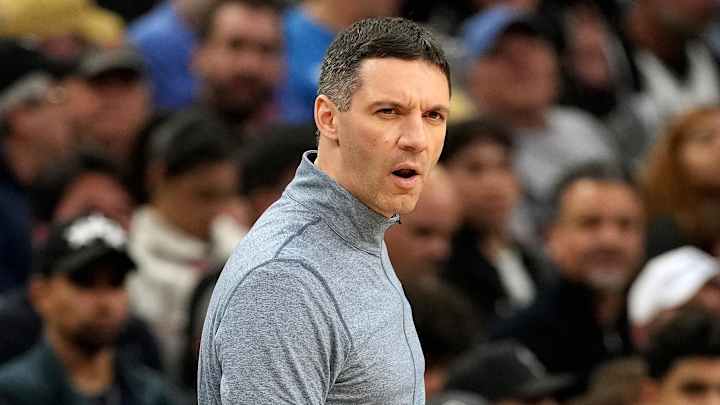
Under head coach Mark Daigneault, the Thunder have built one of the most disruptive defensive systems in the NBA. Their ability to pressure ball handlers, collapse driving lanes, and contest shots at the rim has made them one of the league’s most difficult teams to score against.
However, that same aggressive interior focus often forces opponents to operate from the perimeter—where Oklahoma City has shown a clear vulnerability.
During the regular season, Thunder opponents shot 36.9% from three-point range, ranking near the bottom of the league. They also allowed one of the highest volumes of three-point attempts, a reflection of their willingness to protect the paint at all costs.
Lakers’ biggest path to contention is beyond the arc
The Lakers’ offensive identity entering the series is not built on overwhelming interior dominance, especially in a matchup where scoring inside will be heavily contested.
Instead, their most realistic path to keeping the series competitive lies in perimeter efficiency. Through their early playoff games, Los Angeles has been shooting 38.6% from three-point range, one of the best marks in the postseason.
That level of shooting places them among the most efficient perimeter teams in the field, even if those numbers are unlikely to remain consistent over a full series.
Volatility could decide the series
The key question is whether the Lakers can sustain that shooting level against a Thunder defense designed to force difficult, contested perimeter looks.
Oklahoma City’s scheme often dares opponents to beat them from deep, relying on rotations, length, and rim protection to discourage drives. If shots fall, teams can stay competitive. If they don’t, games tend to swing heavily in the Thunder’s favor.
Historically, such reliance on three-point variance introduces unpredictability into playoff series—something Oklahoma City will want to avoid against a team capable of catching fire.
Thunder still hold the upper hand
Even with this concern, the Thunder remain firmly in control of the matchup on paper. Their defensive consistency, depth, and previous dominance over Los Angeles all point toward them being the more complete team.
But playoff basketball is rarely decided by regular-season trends alone. If the Lakers’ shooting holds up, Oklahoma City’s one statistical weakness could become the most important storyline of the series.
For a team chasing a deep postseason run, that margin for error is thin—and increasingly worth watching.