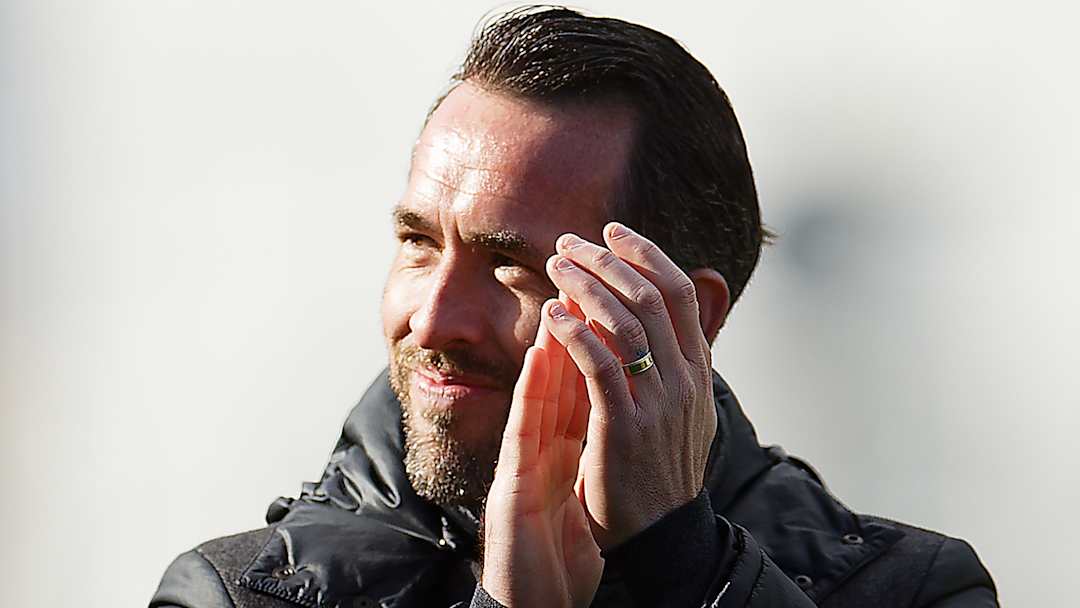
Leicester City faces a critical summer reset as they prepare for life in the third tier. With the club requiring a complete overhaul of the playing squad and a manager capable of unifying a fractured environment, the search for a successor to Gary Rowett has taken an intriguing turn. While names like Dick Schreuder and Darren Ferguson have been frequently discussed, a sentimental favorite has recently moved to the forefront of the conversation: Premier League-winning legend Christian Fuchs.
From Terrace Dream to Serious Contender
What began as fan speculation has gained significant journalistic weight. On May 5, BBC Sport officially linked Fuchs with the vacancy at the King Power Stadium. The former Austria captain has transitioned into management with notable success at Newport County, where he recently orchestrated a high-pressure 2-1 victory over Barrow to secure the club’s League Two status.
The achievement at Newport—described as “incredible” given the stakes—has proven that Fuchs can handle the unique pressures of the EFL. His ability to instill belief in his squad has caught the attention of the Leicester hierarchy as they look to move away from a string of failed appointments.
The Case Against the Traditional Route
The alternative to a “rookie” hire like Fuchs is the seasoned EFL veteran Darren Ferguson. While Ferguson boasts multiple League One promotions with Peterborough United, his candidacy is met with lukewarm reception among the Foxes’ faithful for several reasons:
- Underwhelming Appeal: He is viewed as a “safe” but uninspiring choice who may struggle to unite a disillusioned fanbase.
- Track Record: Ferguson has historically found success primarily at London Road, leading to doubts about his ability to manage a “sleeping giant” like Leicester.
- A Pattern of Failure: Following the disappointing tenures of managers like Steve Cooper, Ruud van Nistelrooy, and Gary Rowett, supporters are wary of appointments that feel like “more of the same.”
Embracing the “Foxes DNA”
Choosing Fuchs would represent a “reset” in every sense of the word. While some critics argue it is a brash jump from League Two survival to a League One promotion charge, supporters point to his deep connection to the club’s “DNA.”
Unlike Rowett, who struggled to form a bond with the stands, Fuchs remains a beloved figure from Leicester’s most celebrated era. Proponents of the move argue that his passion and existing relationship with the club could provide the spark needed to revitalize the institution as it navigates the challenges of the third tier. With the “Blue Army” eager for a manager they can truly get behind, the prospect of a favorite son returning to Filbert Way is fast becoming the dominant narrative of the summer.