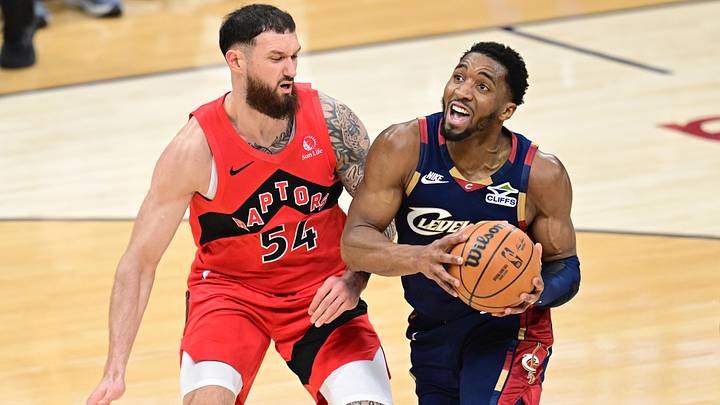
The Toronto Raptors put together a beautifully unexpected campaign, battling through a rash of starter injuries to secure a top-five finish in the East and dragging the Cleveland Cavaliers to seven games in the first round. But as general manager Bobby Webster shifts his focus to the offseason, the grueling financial reality of the modern NBA is about to hit the front office like a freight train.
According to a breaking report from Sports Illustrated’s Jeremy Brener, backup big man Sandro Mamukelashvili is almost certain to decline his bargain $2.8 million player option to test the open market.
Because of a brutal collective bargaining agreement loophole, Toronto finds itself completely powerless to stop a bidding war for the breakout star of their second unit—a reality that threatens to completely derail the franchise’s offseason draft and development plans.
The Anatomy of a Career Year
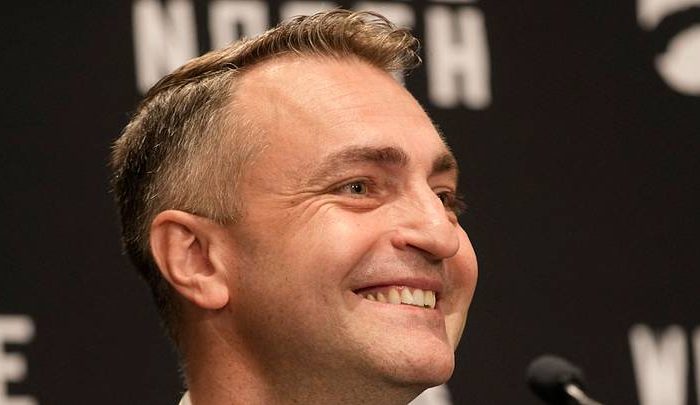
Signed last summer to a modest two-year, $5.26 million value deal, Mamukelashvili completely shattered expectations to become the premier steal of the 2025 free agency class. Under head coach Darko Rajaković, the 26-year-old Georgian big man weaponized his high-IQ playmaking and perimeter gravity to transform Toronto’s bench into a lethal weapon.
The numbers from his breakout campaign outline exactly why he has dramatically outgrown his current contract:
| Stat | 2024-25 (with Spurs) | 2025-26 (with Raptors) |
|---|---|---|
| Points Per Game | 6.3 | 11.2 |
| Rebounds Per Game | 3.1 | 4.9 |
| 3-Point Percentage | 37.3% | 38.9% |
| Minutes Per Game | 11.2 | 21.9 |
Operating as an elite stretch-center and offensive hub, Mamukelashvili posted a blistering 63.7% true shooting percentage. His impact was so profound that the Raptors outscored opponents by a staggering 9.2 points per 100 possessions whenever he anchored the floor.
The Cap Loophole Leaving Toronto Stranded
In a normal scenario, a franchise would simply pay up to retain a vital piece of their core. However, because Mamukelashvili has only spent one season north of the border, the Raptors do not hold his Bird rights.
This means Toronto is legally barred from exceeding the salary cap to re-sign him. Webster is entirely restricted to offering Mamukelashvili a slice of the mid-level exception (MLE) or the bi-annual exception (BAE). With a tightening cap environment and massive long-term money already committed to the core roster—alongside looming extension talks for RJ Barrett—the Raptors cannot match aggressive external suitors.
Rival front offices with full mid-level exceptions to burn, including the Indiana Pacers, Miami Heat, and Orlando Magic, are reportedly licking their chops. Aggressive suitors can easily offer Mamukelashvili three to four times the salary he earned this past season. While “Mamu” has expressed a genuine desire to stay in Toronto’s competitive environment, the financial gap will likely be too massive to ignore.
The No. 19 Pick Domino Effect
If Mamukelashvili walks for nothing, the structural damage to Toronto’s asset sheet will be immediate.
Instead of using the No. 19 overall pick in the 2026 NBA Draft to secure a high-ceiling developmental wing or a plug-and-play guard to grow alongside Scottie Barnes, Bobby Webster will be forced to execute a frantic, draft-night pivot. The front office will have no choice but to use that valuable first-round asset on a replacement big man just to keep Rajaković’s system functioning.
Losing the top-performing value contract on the entire roster won’t just weaken the bench depth; it leaves a rising Eastern Conference contender scrambling to replace elite, near-40% three-point efficiency with absolutely zero financial flexibility to work with.
The Front Office Reality: The Raptors are about to learn the cruelest lesson of the NBA’s cap structure. Developing a diamond-in-the-rough player on a one-year residency often means watching a rival team reap the long-term benefits.