The second apron of the NBA collective bargaining agreement was built to destroy dynasties. Now, it has set its sights directly on the Boston Celtics.
Following a stunning, unceremonious first-round exit at the hands of the Philadelphia 76ers, the Celtics have officially arrived at the most dangerous crossroads in franchise history. For years, the front office laughed off any suggestion of splitting up their All-NBA wing tandem. But behind closed doors, a cold, hard financial reality—combined with a massive shift in team dynamics—has forced Brad Stevens into a corner.
According to NBA insider Brian Windhorst, the Celtics are no longer evaluating if they should alter this roster. They are strategically analyzing whether keeping Jayson Tatum and Jaylen Brown together is a form of team-building suicide.
The “Refreshing” Exit Interview That Sparked Panic
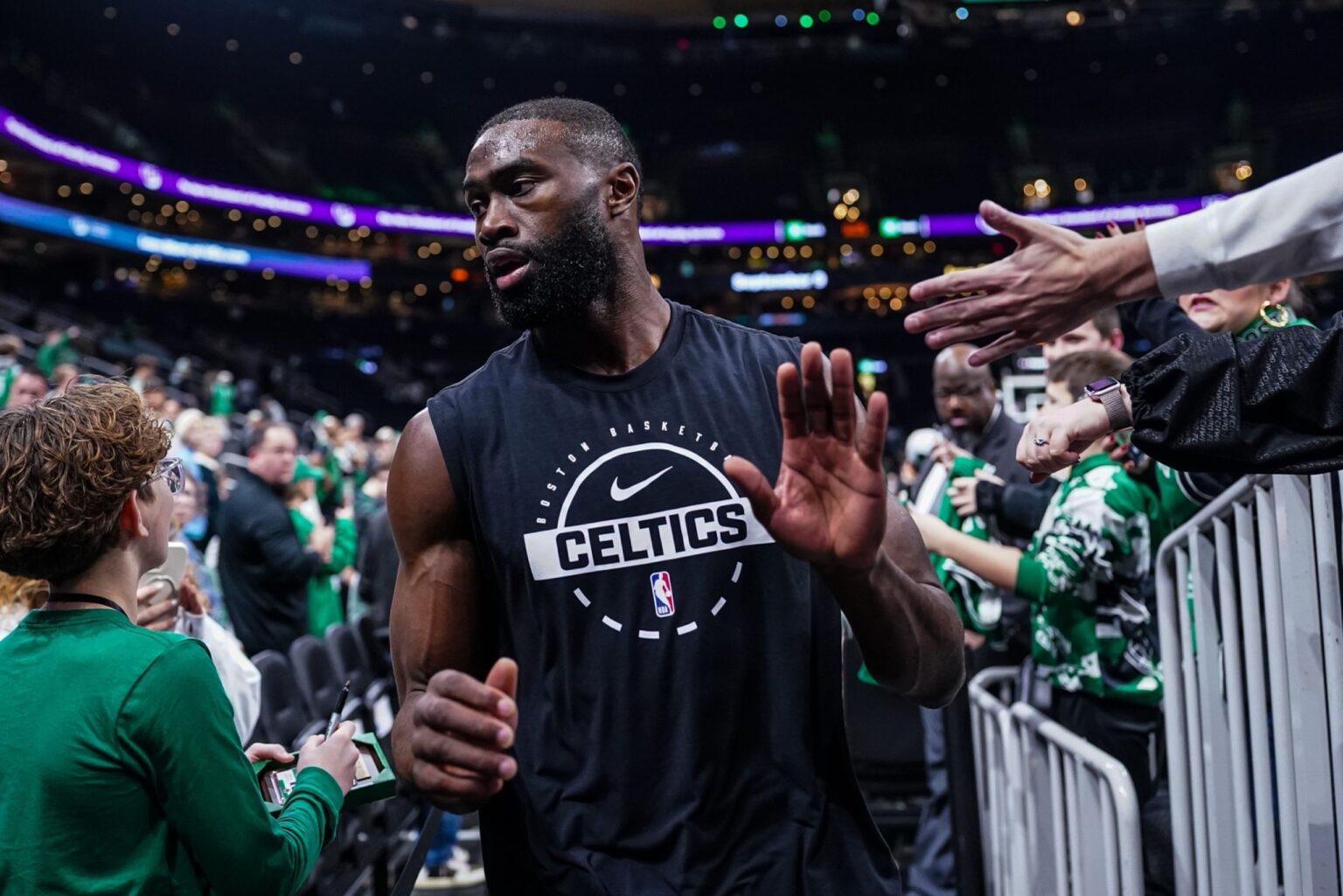
The smoke began billowing immediately after the 76ers eliminated Boston. Jaylen Brown raised eyebrows across the league when he strangely declared the 2025-26 campaign his “personal favorite season,” despite the early playoff exit. Fans and media immediately assumed Brown was subtly celebrating his freedom from sharing the spotlight.
While Windhorst downplayed the idea of a locker-room mutiny on SiriusXM NBA Radio, he revealed that the true problem is far more dangerous than an ego clash:
“I never took what Jaylen said about enjoying this season the wrong way. I felt that he was not talking about getting free of Jayson Tatum… But, I think, in general, the Celtics are at an interesting point where they have to evaluate their roster, and decide: is Jaylen Brown and Jayson Tatum together, earning $600 million on their contract, the way to go forward in the league, in the apron era, to have everything tied up in two players that are so similar? From a basketball team-building strategic standpoint, does that make sense?”
The Achilles Shadow and Changed Dynamics
To understand why Boston is suddenly sweating, you have to look at how the roster’s hierarchy completely flipped over the last 12 months.
With Tatum sidelined recovering from his Achilles injury, Brown exploded into an unguardable alpha, averaging a blistering 28.7 PPG, 6.9 RPG, and 5.1 APG. But when a compromised Tatum returned to a roster that had grown accustomed to Brown’s solo dominance, the on-court chemistry completely stalled.
Now, with calls for change reaching a fever pitch, Brad Stevens has to look at the single most terrifying spreadsheet in sports.
The $600 Million Mathematical Cage
In the modern NBA, depth is no longer a luxury—it is the entire ballgame. Under the league’s punitive tax apron rules, teams with two supermax contracts are completely stripped of their ability to sign quality role players, execute uneven trades, or use mid-level exceptions.
| Boston’s Core Investment | Contract Status | Total Value | Financial Impact |
|---|---|---|---|
| Jayson Tatum | 2nd Year of Supermax | $314 Million | Locks up over 35% of the active cap |
| Jaylen Brown | Middle of Supermax | $285 Million | Paralyzes any mid-level free agency flexibility |
| Combined Total | The Wing Duopoly | $599 Million | Leaves zero room for a tier-one supporting cast |
Paying nearly $600 million to two players who occupy the exact same position, require the exact same spacing, and play an identical isolation-heavy style is a massive gamble. Doing it when one of those stars is recovering from an Achilles injury is flat-out irresponsible.
If Boston wants to restore the elite roster depth that originally made them champions, their only logical path forward is to orchestrate a blockbuster, league-altering trade involving one of their two foundational pillars.