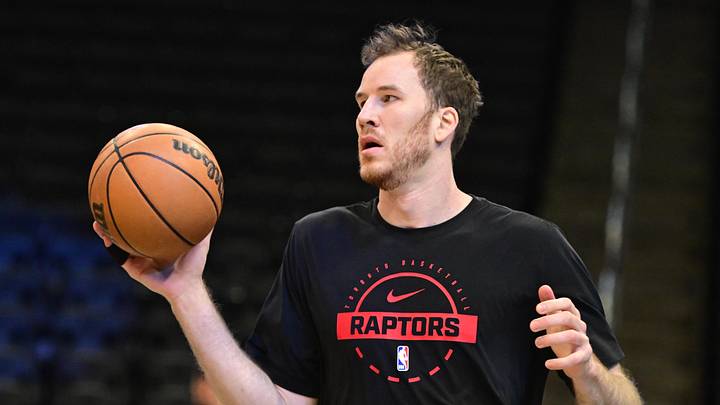
The Toronto Raptors are facing a brutal reality that every front office dreads: they are officially stuck in a salary-cap prison of their own making. As the NBA gears up for a high-stakes offseason, the spotlight in Toronto is fixed on Jakob Poeltl—a player who was once seen as the missing piece of the puzzle, but has now transformed into what many league analysts are calling the “worst contract in the NBA.”
The “Underwater” Contract Disaster
The situation has reached a breaking point. Poeltl, now entering the back-end of his career, is battling recurring back issues that have sapped his effectiveness and left him looking like a shell of the player who averaged a productive double-double just one season ago. With Scottie Barnes driving the team’s new timeline, Poeltl’s presence on the roster—and his massive, long-term deal—has become a massive financial anchor.
In a recent episode of the Game Theory Podcast, NBA insider Sam Vecenie painted a grim picture for Raptors fans. When discussing the possibility of moving Poeltl, Vecenie didn’t hold back: “The Poeltl deal is just really underwater, and I do wonder if a team would even take [a first-round pick] to take Poeltl.”
The prospect of having to attach a high-value first-round draft pick just to convince another team to swallow Poeltl’s contract is a bitter pill for Toronto. It signifies a complete failure in asset management: the team would essentially be paying someone else to take away a problem they created themselves.
The “Accept the Mistake” Reality
So, what is the plan? According to Bryce Simon, the Raptors may have no choice but to admit defeat and live with the consequences. The “Renaissance” that fans were hoping for—a return to his 14.5 points, 9.6 rebounds, and elite defensive rim protection from the 2024-25 season—seems increasingly unlikely as age and injury management take their toll.
Instead, the organization is looking at a “managed minutes” strategy. The hope is that by limiting Poeltl to 20 minutes a night, the team can protect his back while allowing emerging stars like Collin Murray-Boyles to take center stage. It’s an expensive insurance policy, but it may be the only way to keep the locker room competitive without blowing up the team’s long-term financial flexibility.
A Cautionary Tale for the NBA
This situation serves as a stark reminder of the perils of panic-signing. The Raptors, in their haste to secure a starting center, ignored the long-term implications of a massive contract for a player whose game relies heavily on physical durability. Now, they find themselves in a stalemate: they are too over-leveraged to sign impact upgrades, and too handcuffed by the contract to find a trade partner.
For Toronto fans, the upcoming season will be less about what Poeltl does on the court and more about how the front office navigates the fallout of this deal. Can they find a tanking team desperate for draft assets to take the contract off their hands? Or are they resigned to watching one of the league’s most expensive role players navigate his twilight years on a rebuilding team?