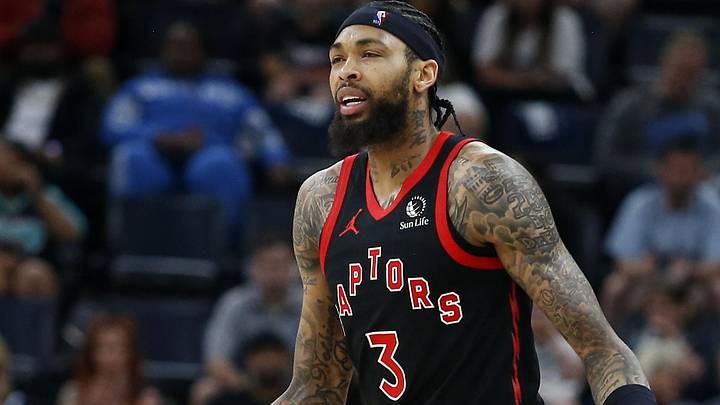
The Toronto Raptors are coming off a 2025-26 season that defied all expectations. Predicted by many to struggle, the team instead surged to 45+ wins, secured a top-five seed, and pushed the Cleveland Cavaliers to a grueling seven-game series in the playoffs. Yet, if you spend five minutes on social media, you’d think the season was an utter disaster—and the primary target of this fan rage is Brandon Ingram.
After a disappointing playoff exit—marred by a struggle to find his rhythm and an unfortunate injury—a toxic narrative has taken hold: that Ingram “quit” on the team and wasn’t “built for the moment.” It’s a knee-jerk reaction that ignores the reality of how the team was built and the impossible position Ingram was placed in from Day One.
The “Savior” Trap: Setting BI Up for Failure
The biggest mistake in this saga wasn’t Ingram’s performance; it was the front office’s marketing. When Bobby Webster traded for the former Pelicans star, the narrative pushed by the media and the team was that Ingram was the “savior”—the missing first option.
But here is the cold, hard truth: Brandon Ingram was never meant to be “The Guy.”
Throughout his career, Ingram has proven to be an elite second or third-option—a high-level scorer who thrives when the pressure of being the primary engine is shared. By forcing him into a role that doesn’t fit his natural skill set, the front office set him up for a fall. The burden of leadership, the spotlight, and the pressure of “The Savior” should have always belonged to Scottie Barnes. Scottie is the heartbeat of this rebuild, the homegrown two-way stud, and the player whose shoulders this team is built upon.
Zero Spacing, Zero Help, Zero Chance
Let’s look at the actual basketball logic: Can the current Raptors roster make life easy for a midrange creator like Ingram? The answer is a resounding no.
Toronto’s lack of floor spacing allowed the Cavaliers to tighten their defense, send double teams at Ingram, and physically bully him. In the playoffs, when the game slows down and you need that late-shot-clock isolation scoring, Ingram was essentially on an island. He had no reliable pick-and-roll partners to free him up and no spacing to prevent the defense from collapsing on him.
Ingram was asked to be a hero in a system that offered him no weapons. When you look at the 82-game grind, he was the reason they reached the postseason in the first place. Throwing that away after one season of growing pains is not just short-sighted—it’s bad business.
The Future of Toronto Basketball
The Raptors have historically struggled to lure major free agents to Toronto. Brandon Ingram is a rare, established star who actually wants to be there. In a league where player movement is dictated by superstars, chasing a player like Ingram out of town over a “bad stretch” sends a dangerous message to the rest of the NBA.
The Raptors don’t need a scapegoat; they need a better supporting cast. If the front office wants to reach the next level, they need to build around the Scottie Barnes-Brandon Ingram duo properly, rather than blaming the player who took the gamble to play in Canada.