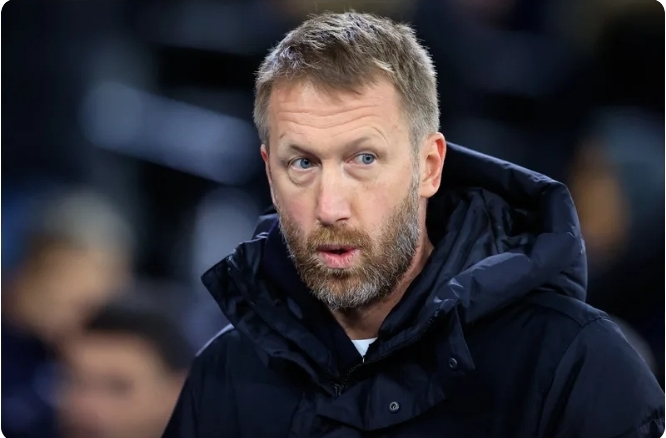
Few managerial careers in the modern era have been as turbulent as Graham Potter’s. In the span of just nine months, the 51-year-old has gone from the heartbreak of being sacked by West Ham United—a tenure that ended in relegation and a shattered reputation—to the pinnacle of international management, preparing to lead Sweden into the 2026 World Cup.
It is a redemption arc that has stunned the footballing world. Speaking candidly to The Guardian ahead of this summer’s tournament in North America, Potter opened up about the “painful” reality of his time in East London and how hitting rock bottom ultimately turned him into a better manager and a stronger person.
The West Ham “Mess”: A Futile Rebuild?
For the Hammers faithful, Potter’s reign—which began in January 2025—is a chapter most would prefer to forget. Tasked with rebuilding a club in transition following Julen Lopetegui’s departure, Potter struggled to find his footing. In 25 matches at the helm, he managed only six victories. By September, the club was mired in a dismal start to the 2025/26 season, and the hierarchy had no choice but to pull the plug.
”After West Ham, I could have done two things,” Potter admitted. “I could have sat around and done media. Or you can go and work.”
Choosing the path of resilience, Potter returned to his roots in Sweden, where he had originally established his coaching credentials at Östersund. The decision proved inspired. He not only steadied the ship but led the Swedish national team through a grueling Nations League playoff campaign, securing a coveted spot in a World Cup Group F that features footballing powers like the Netherlands, Tunisia, and Japan.
Dealing with Failure: The Hardest Learnings
When asked about his time in the Premier League—specifically the crushing disappointments at both Chelsea and West Ham—Potter didn’t shy away from the scrutiny.
”You have to deal with the failure,” Potter reflected. “I think you become a better person for it. Sometimes in football, you just can’t rationalise it. You just go: ‘Maybe it wasn’t meant to be.’ Then you try to move on with your life. The learnings you take from these experiences, they’re painful. I won’t share my learnings with you because it’s hurt me to get them. I think it should because that’s how you improve.”
Potter’s ability to divorce his self-worth from public perception has been vital to his comeback. “If I worry about what people think about me, that’s a miserable life,” he added.
What’s Next for the Hammers?
While Potter prepares for the world stage, West Ham United is navigating the difficult reality of Championship football. Following Potter’s departure, Nuno Espírito Santo took the reins. While Nuno was unable to save the club from the drop, the board has made the bold—and arguably sensible—decision to back the Portuguese manager to lead an immediate bounce-back effort.
It is a rare show of consistency from a board often criticized for erratic decision-making. With Nuno’s pedigree in the Championship, there is a quiet optimism emerging from the London Stadium that last season’s relegation might serve as a necessary, albeit brutal, reset.
For Graham Potter, the “Potter mess” at West Ham is now firmly in the rearview mirror. Whether he succeeds or fails on the global stage this summer, one thing is certain: he is a man who has learned the hard way that in football, the only way out is through.