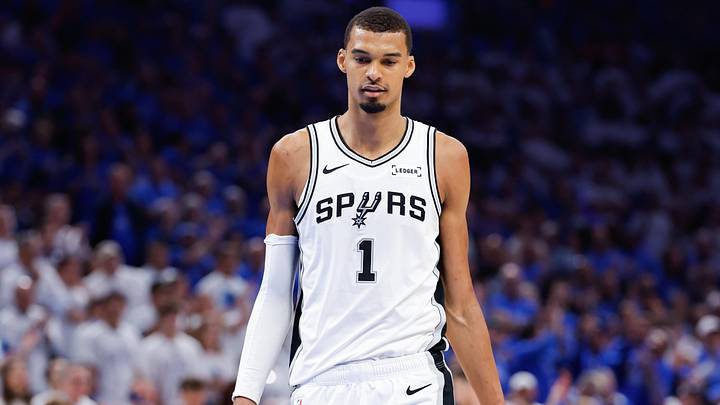
The 2026 NBA Finals were supposed to be the coronation of Victor Wembanyama. After a spectacular season that saw the San Antonio Spurs evolve from a lottery-bound project into a defensive juggernaut, the world expected the young phenom to take the final step. Instead, following a heartbreaking Game 2 loss to the New York Knicks, the Spurs find themselves in an 0-2 hole, staring into the abyss of a potential series sweep.
The headlines are currently ablaze with critiques of Wembanyama’s late-game turnover and his clumsy foul on Jalen Brunson. Wembanyama has stood tall, shouldering the blame in post-game interviews, admitting, “I messed up.” But while the star is taking the heat, a far more critical tactical disaster—one that actually sealed the game’s fate—is being completely ignored by the mainstream media.
The “Foul to Give” Catastrophe
With the game tied and the clock ticking down, San Antonio Spurs head coach Mitch Johnson made a decision that will haunt him throughout the offseason. It is a mistake so common in the NBA that most fans and analysts simply accept it as a standard coaching procedure, but in the white-hot intensity of the NBA Finals, it was pure negligence.
Johnson ordered a “foul to give” when Jalen Brunson began to initiate the Knicks’ penultimate possession. The logic is simple: burn the clock, reset the defense, and force the opponent to execute a fresh play. But in practice, it was a tactical suicide mission. By utilizing that foul before the bonus, Johnson effectively stripped his team of its defensive margin for error.
Once that foul was burned, the referees’ whistle became a lethal weapon for the Knicks. Fighting through screens, bodying an opponent for a rebound, or even the slightest bump now carried the weight of a trip to the free-throw line. By forcing Stephon Castle to commit that “pointless” foul twenty seconds earlier, Johnson essentially set the stage for the game-deciding blunder that followed.
Wembanyama Was Set Up to Fail
Yes, Wembanyama’s pass to Castle was a mistake, and the subsequent bump on Brunson was a moment of panicked execution. But those errors only became “catastrophic” because of the tactical corner Johnson had already painted his team into.
Without that earlier, forced foul, the Knicks would have been forced to play a standard half-court possession with the game tied. Wembanyama and the league’s most “smothering” defense would have had the chance to force a stop and head to overtime—or even secure a final buzzer-beating shot to win it. Instead, Brunson was handed the game on a silver platter at the free-throw line.
The Coaching Battle: Johnson vs. Brown
Credit where it is due: Mitch Johnson has been a revelation this year, transforming a young roster into a legitimate title contender. But in the NBA Finals, you are only as good as your last decision. He is currently losing a high-stakes chess match against veteran coach Mike Brown, who has systematically exploited San Antonio’s late-game rigidity.
As the Spurs prepare to head back to the locker room, the narrative needs to shift. Wembanyama is 22 years old; he will make mistakes. He will turn the ball over. He will panic. That is part of the development process. But the coaching staff must be the stabilizing force that prevents those individual errors from becoming match-ending collapses.
If San Antonio has any hope of clawing their way back into this series, the first adjustment shouldn’t be about Wembanyama’s passing—it should be about Mitch Johnson trusting his defense to get a stop without handing the opponent free points.