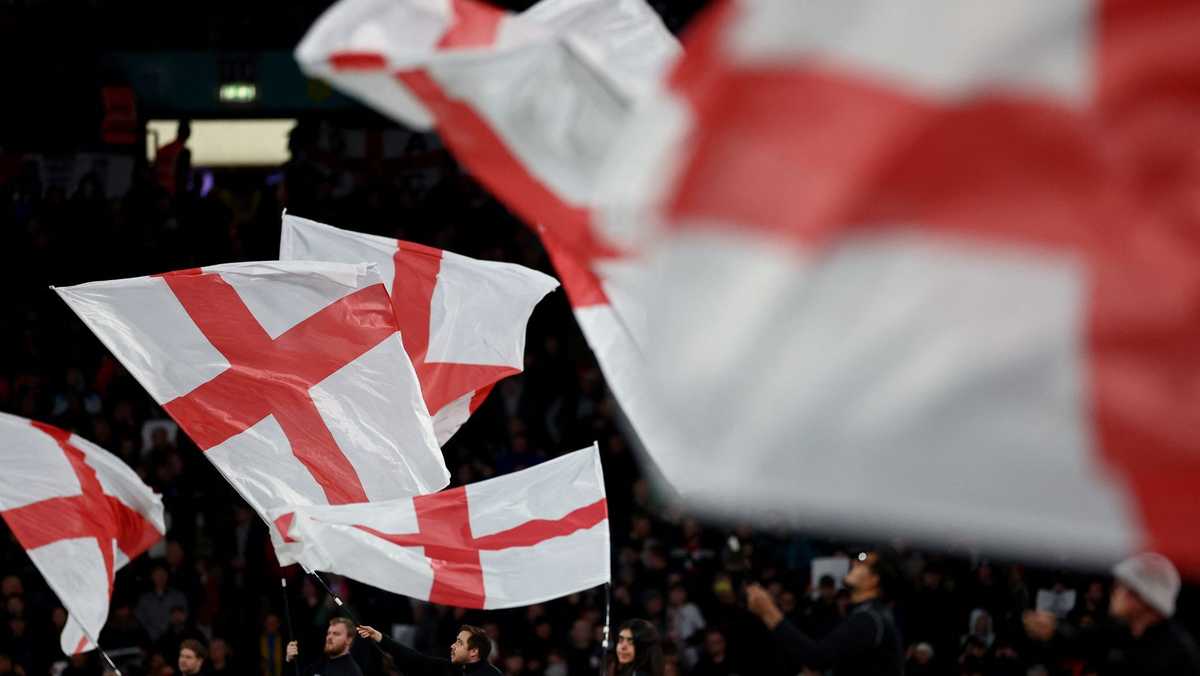
As the 2026 FIFA World Cup kicks off across the United States, Canada, and Mexico, excitement in England is reaching a fever pitch. With Thomas Tuchel’s squad—featuring a controversial 26-man roster that notably excludes stars like Phil Foden and Cole Palmer—gearing up for their Group L campaign against Croatia, Ghana, and Panama, the country is preparing for a summer of national pride. However, amidst the fervor, the UK government has issued a timely reminder to fans back home: the way you display your support could land you in significant legal and financial trouble.
The “Flying Flags” Regulations
While millions of supporters will likely drape their homes, cars, and businesses in the St. George’s Cross to back the Three Lions, many remain unaware of the strict legislative framework governing flag displays. The UK Government’s “Flying Flags Guide” outlines specific rules that must be followed to avoid enforcement action from local councils.
The regulations specify that there are nine particular flags—including the St. George’s Cross—that do not require express consent to be flown on buildings. However, the technicalities of how and where they are displayed are where fans often fall foul of the law.
For instance, if a flag is flown from a flagpole on a roof, it is generally permitted; if two flags are flown on the same pole, the national flag must occupy the superior position. Furthermore, there are “controlled areas” where height restrictions are strictly enforced—often limited to 0.3m to 0.75m in height—particularly when flags are attached to furniture or lampposts. The government also explicitly prohibits the flying of any flag that obstructs transport signage, public safety equipment, or official company advertisements.
The Financial Risk
The penalties for failing to adhere to these guidelines are not merely administrative. If a local council receives a report regarding a flag violating these rules, they will first issue advice or a warning. Should a homeowner or business fail to comply with that guidance, they face a graduated scale of punishment. Fines start at £100, but in extreme or persistent cases, they can escalate rapidly, reaching as high as £2,500. While the prospect of a “six-figure fine” is largely inflammatory social media rhetoric, the reality of a £2,500 penalty is a significant burden for any fan simply trying to support their country.
High Hopes for the Three Lions
The urgency behind the government’s reminder highlights the sheer scale of support expected for this tournament. England, a team that has endured nearly 60 years of “near misses”—including consecutive heartbreaking Euro finals and semi-final exits in the 2018 and 2022 World Cups—is desperate to end their major trophy drought.
Thomas Tuchel, appointed in October 2024 following the departure of Sir Gareth Southgate, has overseen a period of tactical transition. His decision to leave behind household names has sparked national debate, but the focus now shifts entirely to the pitch. As the intense North American heat poses a challenge to players and staff, the national team will be hoping for a summer to remember, where their support can be showcased in the spirit of the tournament, without the complication of unwanted legal notices or personal financial punishments.