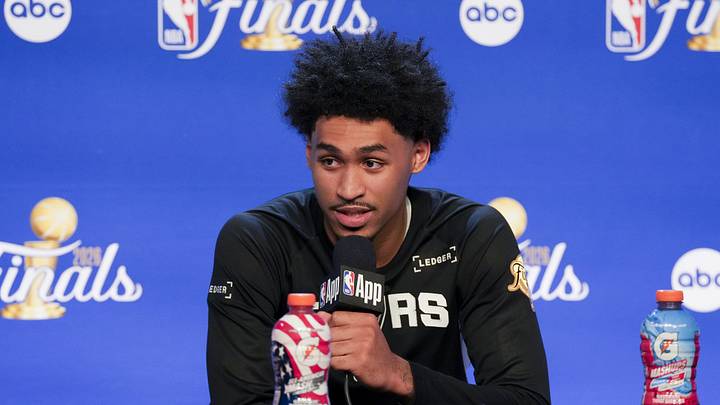
The San Antonio Spurs just wrapped up a breathtaking 2025/26 NBA campaign that fell mere inches short of a Larry O’Brien trophy. But behind the scenes of their elite, near-championship run, a massive roster dilemma was quietly brewing.
According to ESPN’s Michael C. Wright, sensational rookie guard Dylan Harper officially voiced his displeasure early in the season regarding his limited minutes and bench role.
While the situation stabilized as the year progressed, Harper’s explosive postseason performance has set up a massive summer standoff for general manager Bryant Wright and head coach Mitch Johnson.
The Friction: A No. 2 Pick Refusing to Wait His Turn
It is entirely understandable why friction occurred. Harper entered the league as the clear-cut No. 2 overall pick in a loaded draft class. Backed by supreme competitive confidence, the rookie was vocal about coming off the bench and playing a restricted support role of roughly 20 minutes per game.
Fortunately for the Spurs, as Harper’s developmental track advanced and San Antonio cemented itself as an elite championship contender, his frustration dissipated. He eventually embraced his role, culminating in an absolute masterclass of a postseason run—shining brightest under the blinding lights of the NBA Finals.
But that elite playoff breakout now leaves the Spurs front office in a severe tactical predicament. Harper proved he is a star right now, and he knows it.
The Backcourt Conundrum: The Starting Dilemma
If Harper demands a promotion to the starting lineup for the 2026/27 season, coach Mitch Johnson faces a logistical nightmare. San Antonio’s current backcourt is highly successful, expensive, and structurally rigid:
- De’Aaron Fox: The veteran guard commands a maximum contract. While Harper may possess a higher technical ceiling, Fox is currently the more well-rounded, battle-tested floor general.
- Stephon Castle: Castle serves as the team’s premier point-of-attack defensive anchor. Because he lacks consistent perimeter shooting range, he cannot easily transition off the ball to accommodate Harper as the primary playmaker.
- Devin Vassell: Vassell is fresh off a career-best season as a do-it-all wing and stands as the definitive best shooter in the backcourt.
Relegating any of these three to the bench to appease Harper risks damaging locker room chemistry or severely compromising the team’s defensive and spacing architecture.
The Ultimate Solution: A Super-Sub Campaign or a Blockbuster Trade?
The best-case scenario for San Antonio is convincing the second-year guard to embrace an upgraded “Super Sixth Man” role. Acting as the definitive primary bench option and high-stakes closer would allow Harper to naturally expand his game without forcing structural changes. It would also make him the immediate betting favorite for the NBA’s Sixth Man of the Year award.
| Potential Paths Forward | Tactical Pros | Structural Cons |
|---|---|---|
| The Super-Sub Route | Preserves starting lineup chemistry; protects defensive structure. | Risks further player discontent if minutes don’t match expectations. |
| The Blockbuster Trade Route | Clears the runway for Harper by trading veteran De’Aaron Fox. | Extremely risky to move an elite max-contract veteran during a title window. |
If Harper rejects a bench role, the once-unthinkable option of trading De’Aaron Fox this offseason suddenly becomes a concrete reality. While moving on from an elite veteran guard directly after a Finals appearance feels incredibly dangerous, protecting and keeping a future franchise pillar like Harper happy is the franchise’s absolute highest priority.
The Spurs have already achieved the hardest part of an NBA rebuild by compiling championship-caliber talent. Now, the front office must figure out who is willing to sacrifice—or who must be sacrificed—to push San Antonio over the finish line.
Should the Spurs trade De’Aaron Fox to clear a starting spot for Dylan Harper, or should they force the sophomore guard to stay on the bench? Sound off in the comments below!