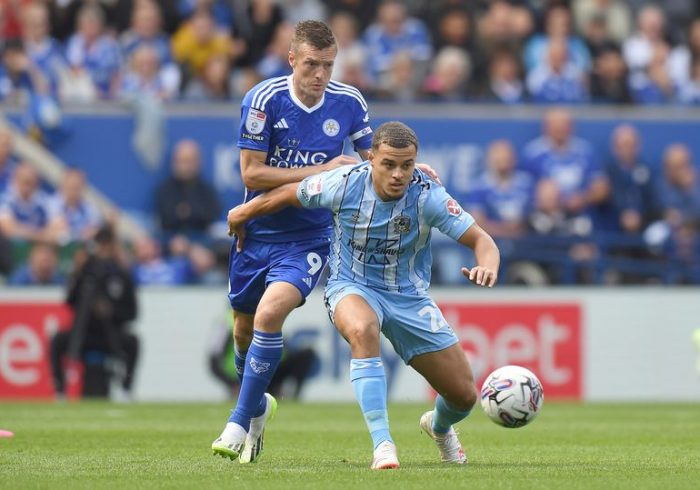
In football, timing is everything—but sometimes, a player’s own words can come back to haunt them faster than a blistering counter-attack. Anthony Gordon, the electrifying winger who captivated St James’ Park with his high-octane intensity, has found himself at the center of a brewing storm following a pre-match comment that has left Newcastle United supporters bewildered and questioning his high-profile move to Barcelona.
The 18-Word Comment That Started the Fire
Ahead of England’s tense, goalless draw against Ghana, Gordon took to the microphone to discuss his adaptation to life under Thomas Tuchel. While attempting to praise the current England setup, he delivered a line that, in hindsight, feels like a massive misstep:
“We want to play an athletic style of football. We want to play a Premier League style of football which I think suits me and my strengths.”
Read those 18 words again. They are the words of a man who knows exactly where he thrives. At Newcastle, under the tutelage of Eddie Howe, Gordon was the tip of the spear. He was encouraged to press, to sprint into space, and to utilize his world-class pace to dismantle defenses in transition. It was an environment tailor-made for his “athletic style.”
Yet, by forcing a £70 million move to Barcelona, Gordon has walked away from the very ecosystem that nurtured his rise to international stardom. The question now echoing across Tyneside is simple: If your strengths are defined by the raw, high-intensity nature of the Premier League, why would you choose to ply your trade in a system that demands a fundamentally different approach?
Barcelona: A Different Beast Entirely
There is no denying the allure of the Camp Nou. The “dream” of playing for Barcelona, the prestige of the badge, the Spanish sun, and a salary that arguably justified the massive transfer fee—these are factors few players can resist. But reality is now setting in. Under Hansi Flick, Barcelona remains a club defined by patient, possession-based football. It is a technical, cerebral, and methodical style of play—a far cry from the relentless, transitional warfare that allowed Gordon to flourish at Newcastle.
The cracks were already visible during the England vs. Ghana fixture. Gordon, tasked with bringing the same spark he showed in black and white, was largely anonymous. He struggled to break down a rigid Ghana defense and was eventually hauled off just after the hour mark. It was a performance that left the Spanish press—famously unforgiving—brutally critical, and it served as a sobering preview of the challenges he faces ahead.
The “Stepping Stone” Warning
Gordon’s struggle to make an impact is causing a ripple effect of concern, not just for the player, but for the future of Newcastle United itself. As the Magpies shift their transfer strategy, fans are becoming increasingly anxious that their biggest stars are viewing the club merely as a “stepping stone” to the European elite. If a player as integral as Gordon leaves, only to find himself miscast in a system that doesn’t utilize his best attributes, it begs the question: is it truly a step up, or a massive risk to his own career trajectory?
Anthony Gordon is a fighter, and he may well adapt, evolve, and silence the doubters at Barcelona. But when a player admits—on the record—that his game is built for the Premier League, watching him struggle to fit into a European giant’s puzzle is a painful reminder that the grass isn’t always greener. For now, the “Barcelona Dream” looks a lot more like a tactical crossroads, and for the Newcastle faithful, it’s a cautionary tale of what happens when you leave the perfect system behind.