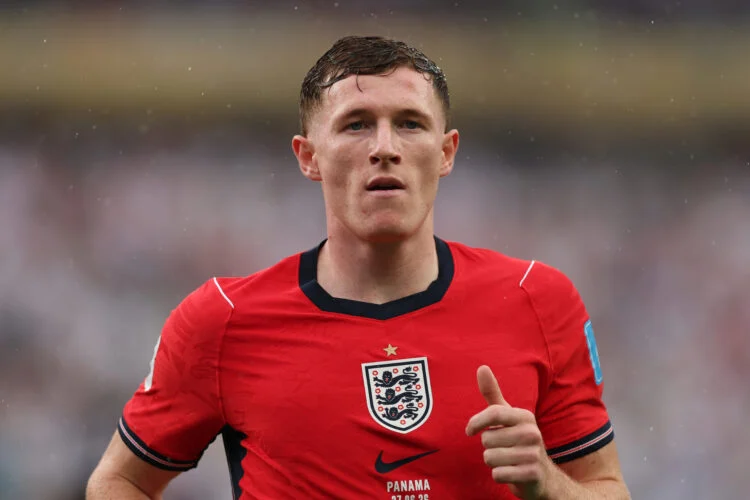
The football world is currently transfixed by the 2026 World Cup, but the transfer market continues to hum in the background, dominated by one seismic move: Nottingham Forest midfielder Elliot Anderson is closing in on a record-breaking £116 million transfer to Manchester City. As the 23-year-old shines on the international stage, helping England storm through the group stages, his imminent arrival at the Etihad Stadium represents a watershed moment for the club. However, not everyone is convinced that this high-stakes gamble is the tactical masterstroke it appears to be on paper.
A Record-Breaking Pursuit
The deal, which will shatter City’s previous transfer record set by the £100 million acquisition of Jack Grealish, marks a bold statement of intent. For incoming manager Enzo Maresca, Anderson is viewed as the “first pillar” of a new regime, a dynamic and tireless operator capable of bridging the gap between defense and attack. Forest, despite the “bitter sporting blow” of losing their standout performer, are set to bank an unprecedented windfall that will allow them to reshape their own squad before the new season begins.
Yet, amid the fanfare, Manchester City veteran Kyle Walker has emerged as a voice of caution. While acknowledging Anderson’s obvious quality and his remarkable rise from Bristol Rovers loanee to a World Cup mainstay, Walker has raised legitimate concerns about the “problem” of integrating such an expensive arrival into an already congested midfield.
The Tactical Tug-of-War
Walker’s skepticism centers on a fundamental footballing question: How do you fit an elite £116 million midfielder into a setup that is already anchored by a Ballon d’Or winner? “Listen, Elliot Anderson is a great player, and he’s had a good season at Nottingham Forest. To pay that kind of money, I’ll still stand on what I said, that he’s going to want to start now,” Walker noted in a recent discussion.
The crux of the issue lies in the overlap with Rodri. Walker points out that with Bernardo Silva departing for Real Madrid, a gap has opened up, but Anderson and Rodri share distinct defensive and playmaking responsibilities. “Where does everyone play? Rodri’s going to want to play, Elliot Anderson’s going to want to play. Does he push one of them forward? Does he sit with a two?”
Adapting to the Maresca Method
Despite the concerns from the locker room, the club’s recruitment team remains steadfast. They see Anderson not as a replacement for any single player, but as a “quintessential long-term partnership profile” for Rodri. His aggressive tackling, explosive driving runs, and ability to transition the ball into dangerous areas are traits that Maresca prizes above all else.
Anderson’s intelligence and adaptability—having navigated four different head coaches in a whirlwind eight months at Forest—suggest he is more than capable of handling the tactical fluidity required at the Etihad. Whether he operates as a No. 6, No. 8, or No. 10, the intention is clear: City wants to be faster, more aggressive in the press, and more direct in their pursuit of goals.
A New Chapter for the Young Star
For Anderson, the move is the ultimate test of his rapid ascent. Leaving his comfort zone in Nottingham—where he became a legend after his stunning Conference League goal in 2023—is a risk, but it’s one he seems ready to take. As he prepares for England’s high-stakes Round of 32 clash against DR Congo, the focus remains on the tournament. But once the dust settles, he will step into the most intense, demanding, and high-pressure environment in English football.
The question remains: will the tactical puzzle pieces fall into place, or will City find themselves with a “problem” that even the most talented midfield can’t solve? One thing is for certain—the Premier League’s most expensive British footballer has arrived, and the spotlight has never been brighter.