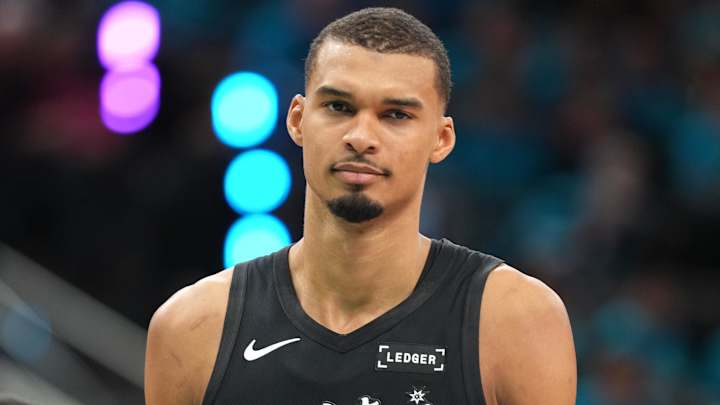
The San Antonio Spurs’ 2026 offseason has been a masterclass in patient roster building, but the biggest move of the summer isn’t a trade or a free-agent signing—it’s the looming contract extension for generational superstar Victor Wembanyama. As the league’s brightest light becomes extension-eligible, a fascinating financial narrative has emerged: a scenario where the Spurs might actually benefit if their superstar doesn’t win every individual award next season.
The Math Behind the Mega-Deal
Wembanyama is currently staring down the barrel of a massive 5-year, $251 million extension. However, due to the league’s “supermax” rules, that number is not static. If Wembanyama repeats as Defensive Player of the Year, captures the league MVP, or secures another All-NBA selection, that contract could balloon to a staggering $300 million.
The difference? A cool $50 million over the life of the deal.
In a salary-cap world, that is the difference between keeping a championship-caliber rotation player and losing them to free agency. While it sounds blasphemous to suggest that a team would want their best player to play fewer games or earn fewer accolades, the cold, hard reality of NBA economics is that even a slight dip in Wembanyama’s statistical qualification could save the franchise roughly $10 million in annual cap space. For a team looking to build a dynasty around Wembanyama, Stephon Castle, and incoming talent like Dylan Harper, that $10 million is the difference between “good” and “great.”
The “Jalen Brunson” Effect: Will Wemby Take a Discount?
The blueprint for building a champion has recently shifted. Following the New York Knicks’ championship run, the sports world watched as Jalen Brunson famously took a significant pay cut to ensure the team had the flexibility to surround him with elite talent. The question now is whether Wembanyama, who has consistently displayed a selfless, team-first mentality, will look to follow that same path.
There are several ways this could play out. Wembanyama could potentially decline the language that triggers a supermax escalation, locking himself into a “standard” $251 million deal. Or, he could go even further, potentially negotiating a total package closer to $225 million. Such a move would be unprecedented for a player of his standing, but it would solidify his status as the ultimate teammate—someone who values hardware and banners over an extra zero on his paycheck.
The Oklahoma City Blueprint: Do You Really Need a Pay Cut?
Of course, expecting a player of Wembanyama’s caliber to willingly leave money on the table is a massive ask. And, to be fair, there is evidence that it isn’t strictly necessary. Look at the Oklahoma City Thunder: they currently have Shai Gilgeous-Alexander on a supermax, along with max contracts for Jalen Williams and Chet Holmgren. They didn’t need their stars to take pay cuts to become title contenders; they simply managed their assets with surgical precision.
The Spurs, armed with a treasure trove of future pick swaps from teams like the Boston Celtics, Dallas Mavericks, and Sacramento Kings, are well-positioned to follow the OKC model. They don’t need Wembanyama to be underpaid, but having the extra flexibility would certainly make the path to a dynasty much smoother.
Whether Wembanyama takes the maximum bag or decides to surprise the world with a team-friendly deal remains the biggest storyline of the summer. Either way, the “Wemby Era” is officially here, and with him at the helm, the Spurs are back in the business of winning rings.
Do you think Victor Wembanyama should take a “team-friendly” discount to help the Spurs build a dynasty, or should he sign for every penny he’s worth? Is it realistic to expect an NBA superstar to leave $50 million on the table? Let us know your thoughts in the comments below!