When a runaway Mack truck barrels down the highway at full speed, trying to stand in its path is nothing short of suicidal. During his prime, defenders felt that exact same sense of helpless terror whenever LeBron James launched out on a fast break. Opponents always knew Michael Jordan was going to hunt down his favorite spot at the elbow for a signature midrange pull-up or carve out space on the low block for his unblockable fadeaway—yet stopping him was an impossible nightmare.
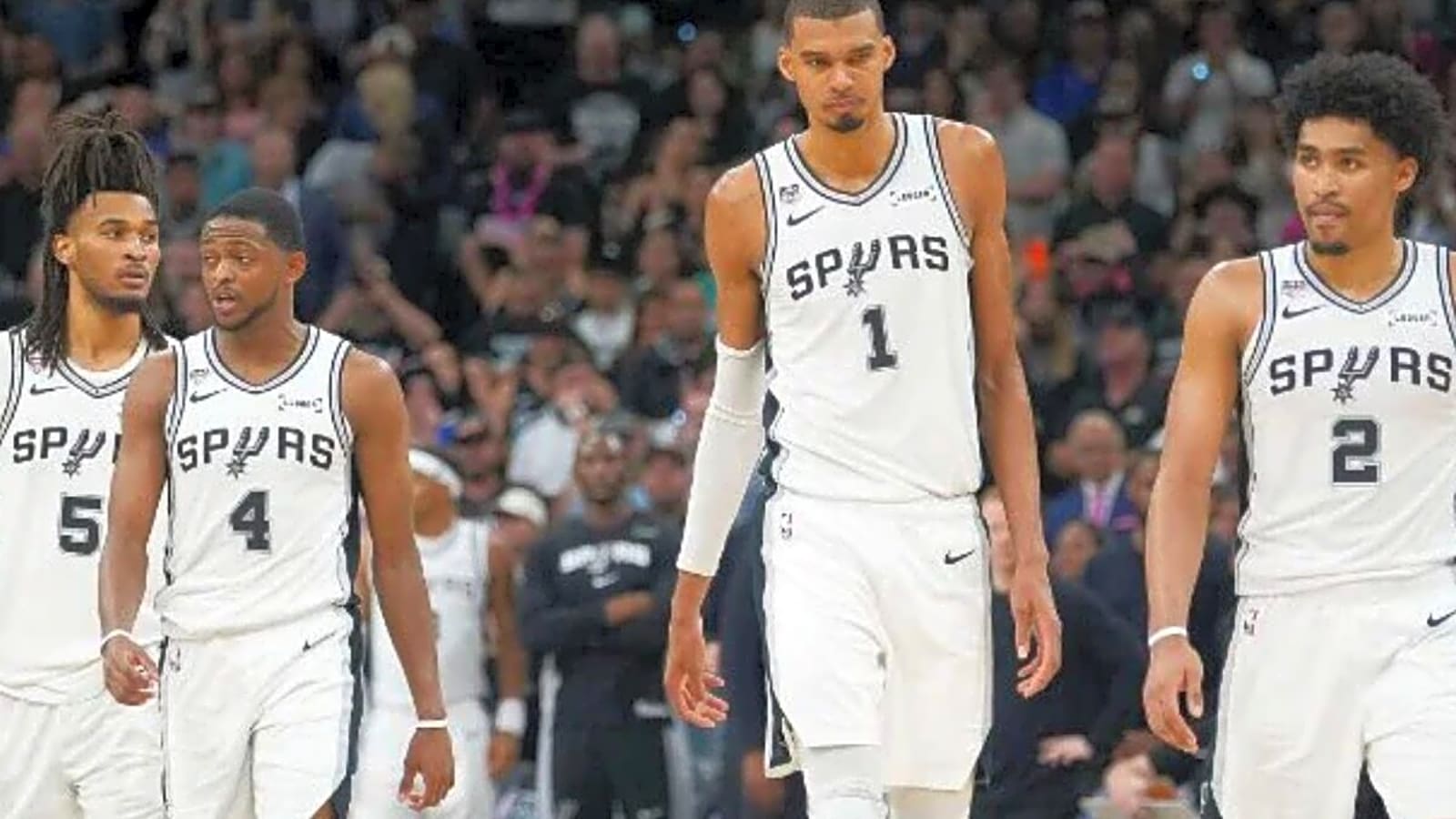
The annals of basketball history are overflowing with legendary superstars who weaponized a signature go-to move to conquer the league. Now, as San Antonio Spurs phenom Victor Wembanyama prepares for what promises to be a pivotal fourth season in the NBA, it is time for the 7-foot-4 French sensation to wake up to a harsh reality: his refusal to develop a go-to move is a glaring flaw in an otherwise alien skill set.
While the young superstar has previously argued that complete unpredictability is his greatest asset, perspective is everything—and he is looking at this situation completely the wrong way.
The Ultimate Weapon Against Exhaustion
The single most compelling reason Wembanyama must abandon his current mindset and master a signature shot is simple: surviving the brutal weight of fatigue.
Exhaustion proved to be Wembanyama’s fiercest and most relentless opponent during the postseason grind. Think back to the sheer intensity of the NBA Finals, where every single possession down the stretch of a fourth quarter feels like a wrestling match. Every drive demands a heavier physical toll, every defensive rotation requires an extra burst of energy, and every split-second decision takes a massive mental tax.
That is precisely the moment when elite franchise players stop burning precious energy searching for complicated answers and start relying on deeply ingrained habits repeated thousands of times in empty gyms.
A go-to move is never about limiting a player’s boundless creativity. Instead, it serves as a reliable emergency valve—a way to conserve vital mental and physical energy when an NBA championship hangs in the balance.
History Proves Predictability is a Myth
Wembanyama’s philosophy on avoiding a signature move is undoubtedly well-intentioned, but historical precedent proves he is wildly overthinking the science of superstardom.
- Tim Duncan demoralized opponents for decades with his automatic bank shot off the glass.
- Kobe Bryant carved his legacy by rising above double teams for his lethal midrange fadeaway.
- Kareem Abdul-Jabbar dominated an entire era using the unblockable skyhook.
Every single one of those icons captured multiple championships by leaning heavily on their signature weapons when the lights shone brightest and they needed a bucket most.
The common pushback is that having a go-to move makes a scorer predictable. But Wembanyama is forgetting a fundamental truth of postseason basketball: that element of familiarity happens whether you have a signature move or not. Over the course of a gruelling seven-game playoff series, opponent scouting departments memorize every tendency, counter, and preference a player possesses.
When the chess match is over, it ultimately comes down to pure execution—who is better, who can impose their will, and who refuses to be denied. Nobody gets magically “tricked” by a fancy, improvised new move in June. If an elite player can effortlessly establish position in a favored sweet spot and couple it with a couple of sharp counters, they are completely unstoppable.
The Lesson of the Sombor Shuffle
We do not even need to look back through decades of history to see this principle in action. Spurs fans still carry the fresh, painful memory of a grueling late-season overtime battle against the Denver Nuggets. Denver ultimately escaped with a victory, but the single defining play etched into everyone’s mind was Nikola Jokić casually launching his signature Sombor Shuffle over the outstretched, gravity-defying arms of the reigning Defensive Player of the Year to seal the win.
Wembanyama should never stop being “The Alien.” His unprecedented blend of guard skills, shot-blocking prowess, and sheer length is what makes him a once-in-a-generation unicorn. But incorporating the hard-earned lessons of past basketball royalty is no longer optional if he wants to conquer the summit.
If the French superstar adds that lethal layer of consistency to his already terrifying offensive arsenal, the next time the San Antonio Spurs find themselves locked in the dying seconds of a hostile playoff series, he won’t have to guess. He will have a trusted, automatic answer ready to deploy when everything else breaks down—and the rest of the NBA won’t be able to do a single thing to stop him.