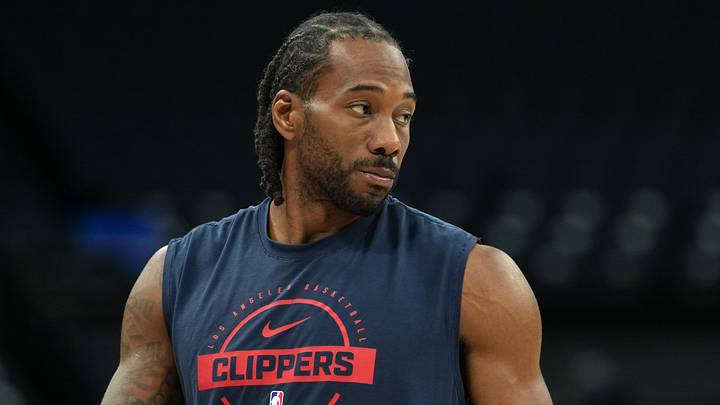
The potential blockbuster trade bringing Kawhi Leonard back to the Toronto Raptors has sent shockwaves of excitement through the fanbase. For a franchise that desperately lacked a reliable superstar scorer and a go-to closer last season, adding a talent of Leonard’s caliber instantly relieves the immense do-it-all burden resting on Scottie Barnes’s shoulders.
Yet, any move for the two-time Finals MVP comes with familiar caveats. Now 35 years old and carrying an extensive injury history, Leonard’s presence inevitably involves careful load management and missed games—not to mention the possibility of serving an impending suspension.
So, how can Toronto ensure they rack up enough regular-season wins to secure home-court advantage and a favorable playoff path when their marquee star is resting on the sidelines? The answer lies in doubling down on the gritty identity that already defines the franchise.
Relying on a Proven Defensive Identity
While Leonard will undoubtedly inject elite two-way tenacity into the lineup, the Raptors do not need him to construct a suffocating defense. The defensive foundation that carried Toronto to 46 hard-fought regular-season victories last year remains completely intact.
With elite defensive anchors like Scottie Barnes, Collin Murray-Boyles, Jamal Shead, and Ja’Kobe Walter still patrolling the floor, Toronto boasts some of the most versatile and aggressive stoppers in the Eastern Conference. When Leonard is sidelined, the Raptors can deploy truly terrifying defensive lineups that rely on collective effort rather than individual heroics.
Replacing Leonard’s nearly 30 points per game is an uphill battle, particularly for an offense that struggled with consistency last season. Because replicating that elite offensive output overnight is nearly impossible during his absences, Toronto must lean heavily into the formula that kept them competitive: locking down opponents, forcing high volumes of turnovers, and punishing teams in transition.
Feasting in Transition and Controlling the Pace
The one statistical category where the Raptors genuinely dominated the league last season was fast-break scoring, where they led the entire NBA with an astonishing 18.9 fast-break points per game. Coupled with a top-two ranking in opponent turnovers forced per game, transition offense is the ultimate equalizer.
Even when Leonard is unavailable, a core rotation featuring Scottie Barnes, RJ Barrett, Collin Murray-Boyles, Immanuel Quickley, Jakob Poeltl, Ja’Kobe Walter, and Jamal Shead—supplemented by savvy minutes from Kyle Anderson and Allen Graves—has more than enough athleticism and motor to push the pace.
If Toronto can consistently generate stops and turn them into easy run-out points, the pressure on Barnes, Barrett, and Quickley to create in the half-court will plummet. By turning defensive intensity into high-octane transition offense, the Raptors can easily outscore opponents without needing to exhaust their marquee superstar for all 82 games.
As the front office finalizes the details of a potential Leonard blockbuster, the path forward is crystal clear. With a superstar closer to finish games and a suffocating defense ready to carry the load when he sits, the Toronto Raptors are building a roster equipped for a deep and sustainable run at the top of the East.