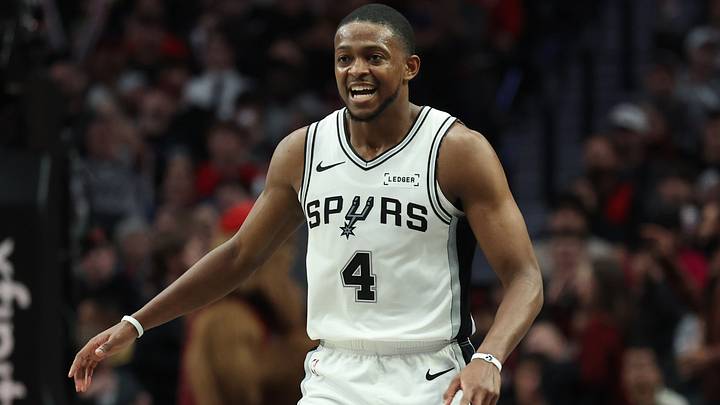
The NBA is a league of cycles, but the current discourse surrounding De’Aaron Fox and Chet Holmgren proves that sometimes, the “cold world” of professional basketball doesn’t care about logic—it only cares about the narrative. Both players have found themselves at the center of aggressive trade speculation, with fans of their respective franchises openly questioning their long-term value.
But while the internet seems determined to hand both stars their “walking papers,” the reality is far more nuanced. The parallels between the San Antonio Spurs and the Oklahoma City Thunder are growing: both are built on homegrown strategies, stockpiled assets, and a relentless focus on future championships. Yet, the reasons fans are souring on their respective stars couldn’t be more diametrically opposed.
Chet Holmgren: The “Wemby” Wall
For Chet Holmgren, the conversation is singular and brutal: he has a “Victor Wembanyama problem.”
It is a phenomenon that has baffled analysts and fans alike. In the first two rounds of the 2026 playoffs, Holmgren looked like a legitimate superstar, averaging 19 points, 9 rebounds, and 2 blocks on an efficient 70% true shooting percentage. He was the anchor of a Thunder squad that looked destined for a deep run. Then, they collided with the San Antonio Spurs—and specifically, Victor Wembanyama.
Against the Spurs, Holmgren looked like a ghost. It wasn’t just a “bad series”; it was a total breakdown in confidence. When a star player folds like a lawn chair every single time he faces a specific rival, the front office starts to ask tough questions. Since the Thunder are destined to battle San Antonio for Western Conference supremacy for the next decade, this isn’t just a blip—it’s a fatal flaw. If Chet cannot mentally or physically crack the “Wemby code,” OKC may have no choice but to break up their “Big Three” to find a player who isn’t rendered obsolete by the Spurs’ generational big man.
De’Aaron Fox: The Victim of “Bad Timing”
If Chet Holmgren is being criticized for performance, De’Aaron Fox is being criticized for something entirely different: bad timing.
Fox arrived in San Antonio with a clear mission—to help the Spurs win immediately. He largely succeeded, playing a pivotal role in the team’s resurgence. However, he is currently paying the price for a “problem” that he didn’t create. Enter Dylan Harper.
The number two overall pick was expected to be a solid contributor, but nobody anticipated that he would be this good, this fast. Suddenly, the Spurs have a surplus of elite guard talent. If Harper had been a “normal” rookie, nobody would be calling for Fox’s head. But because Harper is producing at an elite level on a cheap, rookie-scale contract, Fox’s salary and his ongoing recovery from an ankle injury have made him the odd man out in the eyes of the fanbase.
It’s an incredibly unfair narrative. Fox didn’t know the Spurs would land a superstar-in-waiting five months after acquiring him. He didn’t ask for a bad ankle, and he certainly didn’t stop playing hard. Yet, he is being labeled as “expendable” simply because the team found a cheaper, younger alternative.
The Verdict: Two Stories, Same Cold Result
The NBA is a business that rarely offers the luxury of patience. Chet Holmgren’s struggle against his direct rival is a genuine performance concern; De’Aaron Fox’s plight is a byproduct of pure, unadulterated bad luck and organizational growth.
Yet, the result for both is the same: trade rumors, social media hate, and a “what have you done for me lately” atmosphere. It’s a harsh reminder that in the modern NBA, even All-Stars can find themselves on the chopping block in the blink of an eye. Whether it’s “getting punked” by a rival or simply being outplayed by a rookie, the league doesn’t wait for anyone. The question remains: will the Thunder and Spurs pull the trigger, or will they realize that trade-blocking these stars might be the biggest mistake of their respective rebuilds? Stay tuned—the NBA trade market is rarely this volatile.