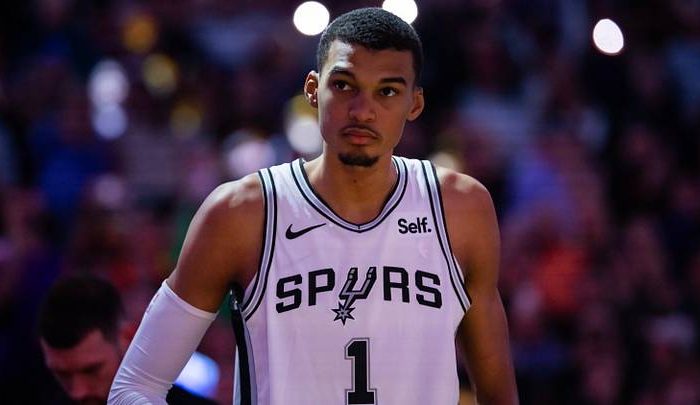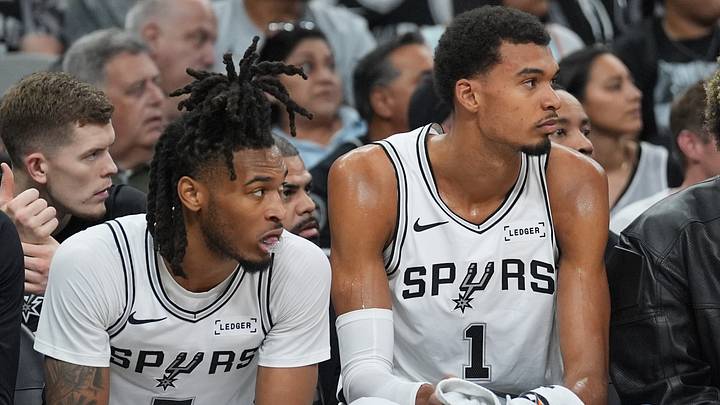
There is no denying the sheer amount of talent currently residing in the Lone Star State. Thanks to some masterclass roster-building by Brian Wright, the San Antonio Spurs boast a deeply stacked lineup capable of generating offense from virtually anywhere on the court.
Over the course of last season, that elite talent largely won out. By the time the regular season concluded, San Antonio’s offense ranked among the absolute best in the NBA, confounding opponents with their versatility and depth.
Yet, if you tuned in on a nightly basis, a persistent source of frustration lingered for observant fans and analysts alike. Despite finishing with a top-tier offense, the Spurs frequently made the game look entirely too difficult. Instead of ruthlessly exploiting glaring defensive mismatches, the team’s overwhelming self-belief in their own individual abilities occasionally got in the way of playing smart, high-percentage basketball.
The Problem with Rushing Greatness
Head coach Mitch Johnson has made it abundantly clear that he wants his squad playing at a fast, high-octane pace. But there is a vital, razor-thin line between executing a fast-paced offensive system and simply rushing possessions.
While pushing the pace is effective, it must be paired with patience once a favorable defensive breakdown has been engineered. The most glaring example of this recurring issue involves generational phenom Victor Wembanyama.
Picture this familiar scenario: Wembanyama finds himself matched up against a much smaller defender after a switch. He secures the ball in the post, looks to punish the mismatch, and kicks the ball out momentarily to reset his positioning against his overmatched opponent, expecting the ball to immediately swing back so he can go to work.
Instead, too often, the receiving teammate ignores the mismatch entirely. They either swing the ball to the opposite side of the floor or aggressively attack the paint themselves. Because of San Antonio’s immense talent, positive outcomes often still occur—whether it’s a tough made basket or a drawn foul. But structurally, it forces the team to play much harder basketball than necessary.
Working Smarter, Not Harder
Moving forward, the Spurs must develop the discipline to recognize and mercilessly exploit those golden opportunities. Whether it is Wembanyama, veteran addition Tobias Harris, or dynamic guard Stephon Castle commanding the floor, whenever a clear matchup advantage is created, the ball must find its way there almost every single time.
Making this tactical adjustment unlocks a massive secondary benefit: energy conservation.
San Antonio hangs its hat on playing suffocating, high-intensity defense. By executing more efficiently on offense and securing easier, high-percentage looks in the post or off simple mismatches, the players will expend far less exhausting energy trying to break down set defenses. That conserved stamina can then be channeled right back into maintaining an elite defensive standard over longer stretches of the game.
The Coaching Challenge
This is where coaching responsibility takes center stage. Mitch Johnson and his staff must instill the rigorous discipline required for players to scan the floor, spot the mismatch, and attack it deliberately.
Calling this out is hardly an indictment of a failing team; the Spurs were already brilliant last year, making these critiques more of a high-level nitpick for an aspiring title contender. But if San Antonio wants to bridge the gap between being a very good playoff team and an unstoppable juggernaut, they simply have to make life easier on themselves.
Streamlining their decision-making and hunting mismatches ruthlessly could be the missing piece that takes the Spurs from dangerous to elite!