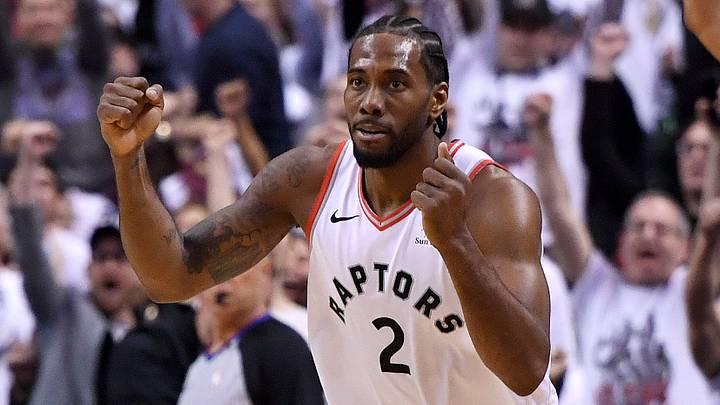
When the monumental news broke that Kawhi Leonard is reportedly making an sensational return to the Toronto Raptors following the resolution of the NBA’s investigation into the Los Angeles Clippers, the basketball world immediately went into a frenzy. Fans and analysts across the league instantly began debating the championship pedigree, elite two-way lockdown defense, and superstar shot-making the “Klaw” brings back to Scotiabank Arena.
Undeniably, acquiring a proven No. 1 option who finished seventh in MVP voting last season—averaging 27.9 points, 6.4 rebounds, 3.6 assists, and 1.9 steals per game—changes the entire landscape of the Eastern Conference. However, amidst all the justified excitement surrounding his leadership and clutchness, one extraordinarily lethal facet of his game is being shockingly overlooked: his elite, high-volume three-point shooting.
The Overlooked Perimeter Sniper
When people discuss Kawhi Leonard, conversations usually gravitate toward his devastating mid-range fadeaways, his massive hands, or his historic 2019 title run in Toronto. Yet, his perimeter efficiency has quietly evolved into one of the most lethal weapons in the modern NBA.
Last season, Leonard scorched the nets at a blistering 38.7 percent clip from beyond the arc while firing away at a heavy volume of 6.8 attempts per game. If you look even closer at his trajectory leading up to his MVP-caliber campaign, the numbers become downright terrifying for opposing defenses. Across the three previous seasons, Leonard shot an astonishing 41.6, 41.7, and 41.1 percent from downtown, comfortably maintaining high efficiency on nearly five attempts a night.
For a Raptors squad that finished a dismal 25th in three-pointers made last season and has wrestled with persistent floor-spacing issues throughout the Scottie Barnes era, adding a career 39.1 percent sniper from deep is nothing short of transformative.
Unlocking Scottie Barnes and Solving Toronto’s Spacing Woes
To truly understand why Leonard’s three-point gravity matters so much, you have to look at how it directly elevates Toronto’s young cornerstone, Scottie Barnes.
Barnes is at his absolute best when he is aggressively attacking the rim downhill, forcing defenses to collapse, and spraying the ball out to open shooters. Up to this point in his young career, Barnes hasn’t consistently played alongside a perimeter threat who demands the kind of defensive attention Leonard commands.
Imagine opposing defenses trying to help off Kawhi Leonard when Barnes drives into the paint. You simply cannot do it. Whether it is punishing rotating defenders on drive-and-kicks, pulling up ruthlessly in isolation, or draining high-stakes daggers as the shot clock winds down, Leonard provides the ultimate safety valve.
Furthermore, when the grueling physical grind of the NBA playoffs arrives, having a seasoned veteran who boasts a stellar 39.9 percent career three-point average in the postseason gives Toronto the exact type of reliable floor-spacer they desperately need to make a deep championship run.
The Final Verdict on a Blockbuster Homecoming
While the initial headlines surrounding Kawhi Leonard’s homecoming will rightfully focus on his star power, leadership, and legendary two-way dominance, don’t be surprised if his three-point marksmanship ultimately proves to be the most vital piece of the puzzle. By single-handedly stretching opposing defenses and opening up the floor for Scottie Barnes and the rest of the roster, Leonard’s elite perimeter scoring might just be the secret ingredient that turns the Raptors into legitimate contenders once again.