There is something undeniably magical about walking down the banks of the glorious River Trent on a balmy September afternoon. The City Ground remains one of the most picturesque, atmospheric traditional homes in English football, and for Nottingham Forest supporters, the fervent hope is that these hallowed grounds will remain the club’s sanctuary forevermore.
Tottenham Hotspur were the visitors to Trentside for a high-stakes fixture that ultimately ended in a cagey, scoreless stalemate, leaving Spurs still searching for their first goal of the Premier League season. Yet, while the backdrop of the East Midlands setting was immaculate, the overarching matchday experience left a bitter taste. Sitting through the afternoon offered a stark, depressing reminder of why so many match-going fans feel that modern-day Premier League football is increasingly losing its soul.
Turnstile Chaos: The Farcical Reality of E-Ticket Shambles
The alienation doesn’t even begin on the pitch; it starts long before kickoff outside the stadium gates. Leaving a regular pre-match local pub near Meadow Lane around 2:20 PM to make the standard ten-minute stroll toward the City Ground should be a straightforward ritual. Instead, what met supporters at the turnstiles was an absolute farce.
In compliance with modern Premier League directives, Nottingham Forest transitioned fully to e-tickets this season, phasing out traditional physical passes. While digital ticketing is a league-wide mandate, Forest’s execution has proven utterly disastrous. The club has implemented a mandatory preliminary scan for every single fan before they are even allowed to approach the turnstiles, and the infrastructure is simply not fit for purpose.
The scanning process moves at a snail’s pace, triggering chaotic bottlenecks right at peak arrival times. Outside the ground, fans from multiple different stands were forced into a jumbled, surging mass where proper queue lines completely disintegrated, leaving thousands unsure of where they were even supposed to line up. With a capacity crowd of roughly 30,000 crammed in on Saturday, it raises an alarming question: if a basic weekend fixture descends into this level of logistical chaos, how much worse will the stadium gridlock become if the long-awaited City Ground redevelopments finally get the green light and add another 10,000 to 20,000 seats?
The Death of Stadium Atmosphere and the Tourist Culture
Once inside the ground, the sporting spectacle itself failed to heal the wounds. The unique, spine-tingling atmosphere that once made the City Ground an impenetrable fortress for visiting teams feels like it is slowly being choked out year after year. As Forest settle into their fifth consecutive top-flight campaign, the demographic of the stands is visibly shifting.
A growing influx of casual tourists taking up seats—epitomised by one bewildered fan spotted wandering the concourses wearing a rival Rangers shirt at a Forest-Spurs match—symbolizes a wider disconnect. It is easy to sound cynical, and nobody begrudges the loyal, long-suffering supporters who waited decades to see their beloved Reds back in the elite tier. But the commercialized, sanitized corporate culture of the modern Premier League is undeniably diluting the raw tribalism of matchdays.
VAR and the Slow Murder of the Goal Celebration
Even worse than the logistics and the shifting demographics is the suffocating presence of VAR, a system that continues to act like a cancer on matchday joy.
Football is fundamentally a game of passion, built entirely around the instantaneous, unbridled ecstasy of celebrating a goal with your mates. In the modern Premier League, however, that core emotional release has been systematically stolen from the fans. There is now an uncomfortable, deadening pause after every single ball hits the back of the net, as supporters look anxiously toward the officials rather than celebrating, waiting for men miles away in a TV studio to invent a reason to disallow it.
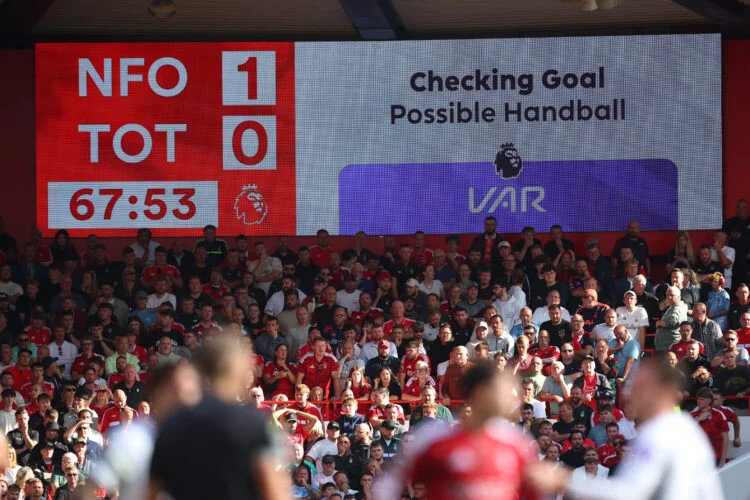
The post-match debate will rage on for weeks over Neco Williams’ controversial disallowed goal against Spurs, with former referee Mark Clattenburg publicly insisting that the strike should have stood based on the clear and obvious evidence available to VAR official Peter Bankes. But the damage is already done. Fans are being actively robbed of genuine, organic moments of sporting ecstasy by an officiating apparatus that seems hell-bent on suffocating the life out of the game.
When the highlight of attending a live Premier League match is no longer the football itself, but simply sinking a few pints with your mates before kickoff, something has fundamentally broken. Football should be about entertainment, goals, and pure emotion—not turnstile queues and microscopic VAR reviews. Until the authorities wake up and fix the fan experience, that nagging feeling that the modern game is completely rubbish will only continue to grow.