The San Antonio Spurs are no longer viewed merely as an exciting young squad waiting for Victor Wembanyama to blossom into a global superstar. That developmental phase is firmly in the rearview mirror following a stellar 62–20 campaign that saw them capture the second seed in the Western Conference and push all the way to the NBA Finals.
Going from a -2.8 net rating in 2024–25 to an elite +8.4 last season, the Spurs established themselves as legitimate championship contenders. With head coach Mitch Johnson returning virtually the entire core—bolstered by the smart addition of veteran forward Tobias Harris and the continued ascension of Wembanyama, Stephon Castle, and Dylan Harper—San Antonio’s ceiling is sky-high. However, their five-game Finals loss to the New York Knicks exposed vulnerabilities that must be addressed if they want to hoist the Larry O’Brien Trophy in 2027.
Major Strengths
1. Victor Wembanyama is a Literal Cheat Code
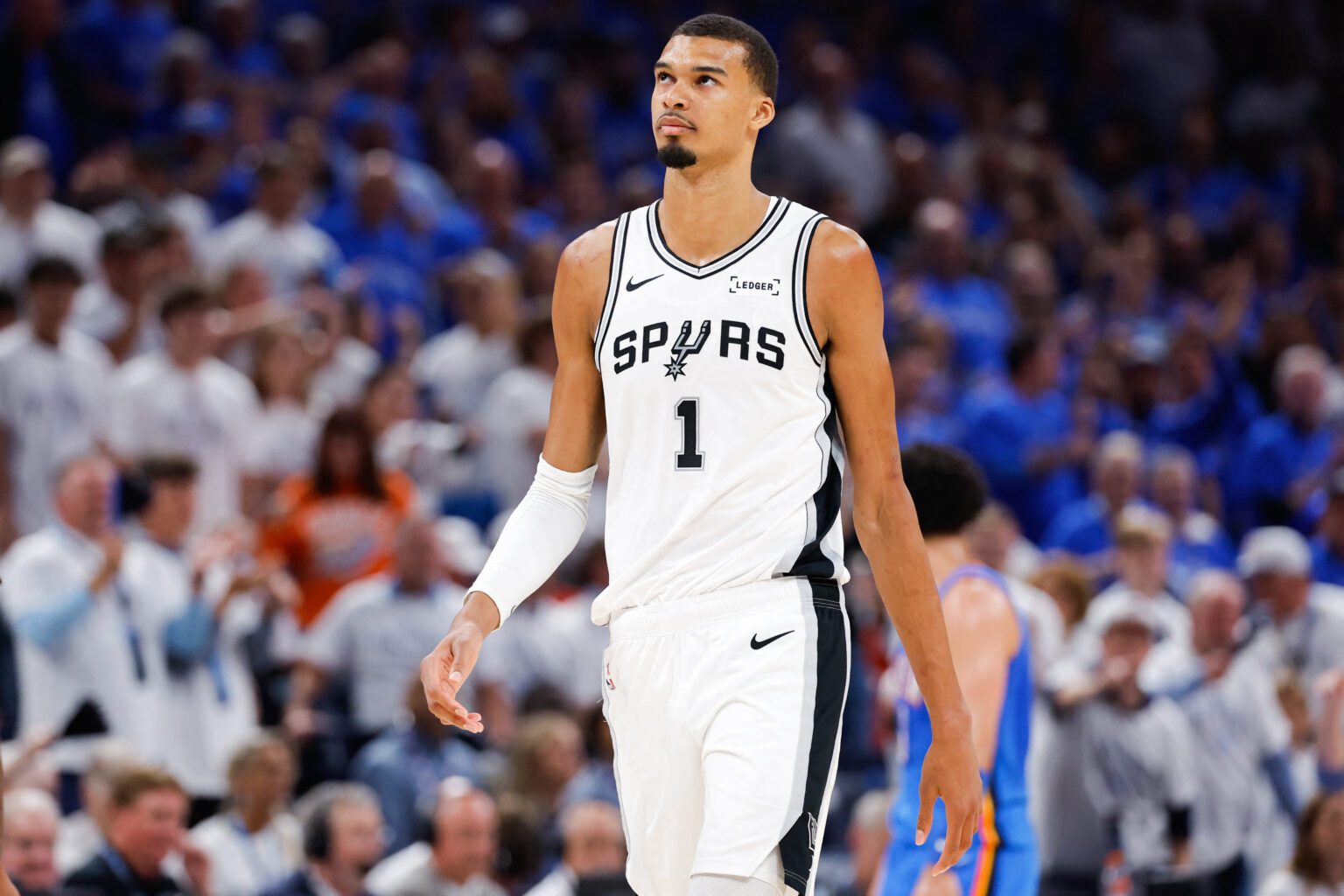
It is impossible to discuss the Spurs without starting with the reigning, unanimous Defensive Player of the Year. Wembanyama stuffed the stat sheet last season, averaging 25.0 points, 11.5 rebounds, 3.1 assists, 1.0 steals, and a league-leading 3.1 blocks per game on an elite 62.6% true shooting percentage.
His on/off metrics are staggering: San Antonio outscored opponents by 17.0 points per 100 possessions with Wembanyama on the floor, compared to just +0.6 when he sat. Defensively, opponents shot a meager 44.9% at the rim against him, anchoring a unit that completely suffocated opponents through the first three rounds of the playoffs. Offensively, his ability to stretch the floor from 30 feet, attack closeouts, and create mismatches gives defenses virtually no correct answers.
2. An Abundantly Loaded Guard Rotation
San Antonio boasts an enviable mix of backcourt playmakers who bring size, speed, and distinct skill sets. Stephon Castle took a massive leap in his second year, averaging 16.7 points and 7.4 assists while forming a lethal, high-efficiency two-man connection with Wembanyama. Alongside him, De’Aaron Fox provides elite change-of-pace speed and veteran poise, putting up 18.6 points and 6.2 assists per night.
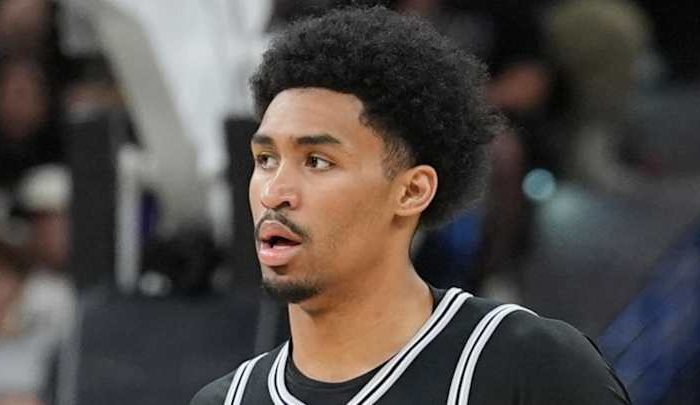
Adding to the mix is 20-year-old dynamo Dylan Harper, who flashed tremendous upside as a rookie—highlighted by a stellar 25-point performance in Game 5 of the Finals. When Castle, Fox, and Harper share the floor or rotate through waves, opposing defenses are subjected to relentless downhill pressure.
3. Exceptional Roster Continuity and Depth
Retaining 94% of last season’s minutes—the highest continuity rate in the entire NBA—gives the Spurs a massive head start. The acquisition of Tobias Harris adds a reliable 6-foot-8 veteran presence who can attack mismatches, hit open perimeter shots, and stabilize the second unit. Combined with floor-spacers like Devin Vassell, Harrison Barnes, and Julian Champagnie, the Spurs possess immense lineup flexibility to match up against any opponent.
Glaring Weaknesses
1. Perimeter Shooting Lacks Elite Consistency
While the Spurs hit acceptable marks during the regular season, their three-point shooting (35.9%) ranked a mediocre 15th in the league. More concerningly, their primary ball-handlers—Castle, Fox, and Harper—all hovered around the 33% to 34% mark from beyond the arc. This allowed playoff defenses, particularly the Knicks in the Finals, to clog driving lanes and shade help toward Wembanyama. If San Antonio hopes to unlock its absolute offensive ceiling against elite defenses, at least one of their dynamic guards must evolve into a feared perimeter shooter.
2. De’Aaron Fox Must Elevate in Clutch Playoff Moments
While Fox remains a stellar talent, his postseason output took a jarring dip last year. He managed just 15.6 points and 6.0 assists per game in the playoffs, shooting a porous 41.4% from the field and 29.4 from deep. In the half-court grind of the NBA Finals, the Spurs desperately needed a secondary scorer to take pressure off Wembanyama when possessions stalled. Entering the first year of his massive extension, Fox needs to reclaim his vintage takeover form to solidify San Antonio’s late-game execution.
3. Extreme Dependency on Wembanyama
The +16.4 on/off swing with Wembanyama highlights just how heavily the Spurs rely on their generational center. Beyond his offensive gravity, the entire defensive scheme relies on his unprecedented ability to erase mistakes at the rim. With veteran frontcourt depth like Bismack Biyombo and Mason Plumlee departing, the backup center minutes now rest on unproven young rookies. If Wembanyama is forced to miss extended time, the structural integrity of both sides of the ball faces an immense stress test.
Final Verdict
The San Antonio Spurs enter the 2026–27 season as rightful favorites to contend for the Western Conference crown. With youthful brilliance, tactical continuity, and a transcendent superstar in Wembanyama, their trajectory points straight back to the championship stage. If their young guards can improve their perimeter accuracy and find a reliable secondary scoring punch behind their centerpiece, the rest of the NBA will have a nearly impossible task trying to stop them.