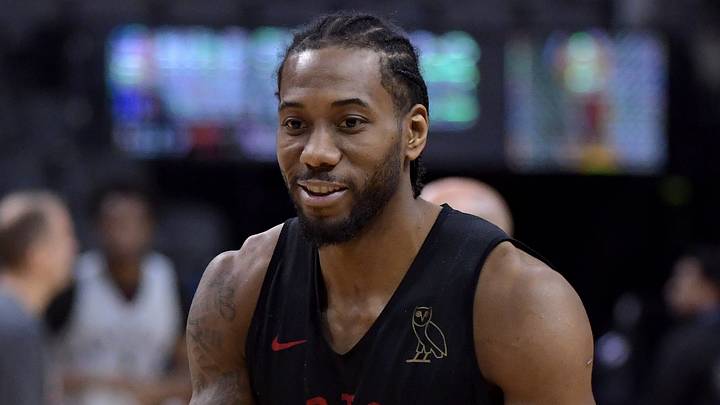
The blockbuster trade that sends Kawhi Leonard back to the Toronto Raptors is officially finalized, sending shockwaves across the entire basketball landscape. While much of the early media coverage has naturally focused on what the former Finals MVP brings to the offensive end of the floor, an equally compelling storyline is taking shape on the other side of the ball.
Replacing Brandon Ingram with a two-time NBA champion who also happens to be one of the greatest two-way wings in basketball history does more than just elevate Toronto’s scoring ceiling—it directly addresses the very few defensive vulnerabilities that held the team back last season.
Fixing the Flaws of a Top-Five Defense
Make no mistake, Darko Rajakovic’s squad already boasted an elite defensive identity last year, finishing the regular season with the fifth-best defensive rating in the entire NBA. However, deep-dive analytical breakdowns highlighted two persistent weak spots that routinely plagued the team against elite competition: struggling to contain the league’s premier offenses and a recurring habit of sending opponents to the charity stripe.
According to NBA.com’s John Schuhmann, the Raptors ranked a modest 12th defensively—allowing 117.3 points per 100 possessions—when squaring off against the top 10 offenses in the league. Compounding that issue was a dismal 23rd-place finish in opponent free throw rate, a vulnerability that only worsened under the intense microscope of the playoffs.
Enter Kawhi Leonard.
While Ingram was a respectable enough defender, he lacked the disruptive defensive playmaking that turns stops into fast-break transition points. Leonard, on the other hand, remains a masterclass in disciplined, high-IQ defense. Despite logging heavy minutes and carrying massive offensive burdens, the veteran forward averaged a staggering career mark of 1.7 steals per game while famously committing fewer personal fouls than almost anyone in the league.
Schuhmann highlighted this remarkable discipline in his breakdown of the trade for NBA.com, noting: “This past season, Leonard had 122 steals, 27 blocks and just 78 personal fouls, with his ratio of blocks and steals per foul being the highest (by a wide margin) among 378 players who played at least 500 minutes.”
Building a Switchable, Versatile Fortress
By swapping Ingram for Leonard, the Raptors have effectively eliminated any glaring defensive liabilities in their primary rotations. When Jakob Poeltl heads to the bench for a breather, Toronto possesses the personnel to deploy devastatingly switchable small-ball lineups.
The combination of Leonard, Scottie Barnes, and Collin Murray-Boyles provides an elite mix of length, lateral quickness, and physical strength, allowing the Raptors to suffocate opposing ball-handlers across multiple positions. If Rajakovic chooses to surround that ferocious frontcourt trio with perimeter pests like Jamal Shead and Ja’Kobe Walter, Toronto suddenly unlocks a legitimate “death lineup” capable of locking down any offensive unit in the association.
Of course, maintaining this elite defensive standard will require smart minutes management and internal growth from backup center options like Nate Bittle, Trayce Jackson-Davis, and Trey Jemison III to anchor the paint when Poeltl rests. But with Leonard back in the fold, the ceiling for this defense has skyrocketed.
As the Eastern Conference arms race heats up, the rest of the league is waking up to the reality that the Toronto Raptors are no longer just a fun, ascending darkhorse. With Kawhi Leonard returning north to cement his legacy, Toronto’s defense is about to become an absolute nightmare for every opponent unfortunate enough to step onto the court with them.