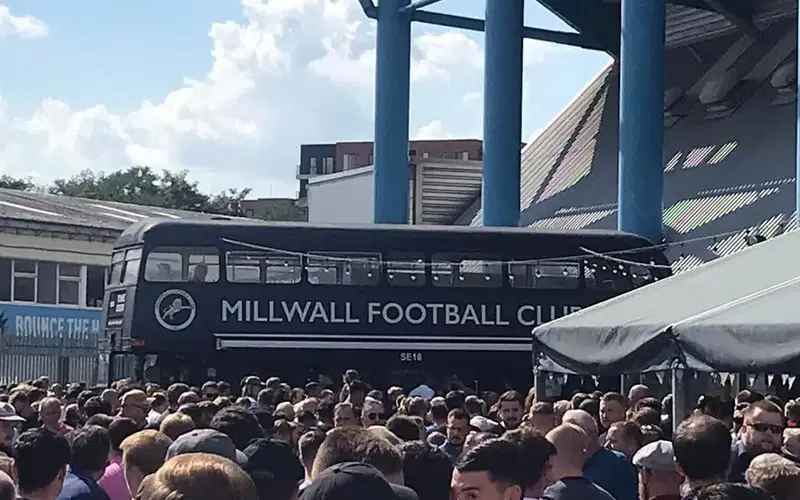
As West Ham prepares for a historic Saturday lunchtime trip to face Millwall at The Den—marking nearly fifteen years since the Hammers last visited their fierce rivals—the media spotlight has once again turned to one of English football’s most volatile fixtures. With the match broadcast live on terrestrial television, fans and casual observers alike are asking a fundamental question: why is the hatred between West Ham and Millwall so intense?
Industrial Roots: Same Docks, Same Workforce, Same Rivalry
The origins of the infamous Dockers Derby stretch all the way back to the late 19th century, long before either club became a established professional football institution. Back then, both teams were essentially works sides born out of intense industrial competition on the River Thames.
Millwall originated on the Isle of Dogs, founded by factory workers at J.T. Morton’s, while West Ham emerged from the Thames Ironworks shipbuilding company. Operating in the same industry, sharing the same docks, and drawing from the same working-class pride, competition was inevitable.
In the beginning, the rivalry had nothing to do with football. It was about jobs, contracts, and survival. When the docks went quiet, local families suffered; when one company undercut another, livelihoods were immediately put on the line. That economic tension naturally spilled over onto the football pitch, creating a bitter animosity that has endured for generations. Over the decades, as both clubs evolved, the rivalry morphed into something darker and more infamous, frequently amplified by popular culture and cinematic depictions.
Shared Crossover Icons and Head-to-Head Stats
Despite the fierce hostility, there has been a surprising amount of player and managerial crossover between the two clubs over the years. Millwall cult hero and Hall of Famer Terry Hurlock actually began his career in West Ham’s youth ranks. Meanwhile, Hammers legend Billy Bonds crossed the divide to manage the South London side during the 1997-98 campaign, followed later by Steve Lomas taking the managerial hotseat in 2013.
Players like Tony Cottee, Clive Allen, and goalkeeper David Martin all spent time representing both sides of the divide. Above all, Teddy Sheringham left an indelible mark on both clubs, netting 93 goals in 220 appearances for Millwall before later adding 28 goals during a two-season stint with West Ham.
On the pitch, the head-to-head statistics shatter any casual assumptions about the matchup. While West Ham supporters generally view themselves as representing the bigger club on paper, Millwall holds the historical advantage across 99 total meetings:
- Total Games Played: 99
- West Ham Wins: 34
- Millwall Wins: 38
- Draws: 27
For Millwall, beating West Ham is treated like winning major silverware, whereas for the Hammers, it is a fixture driven by the simple, absolute necessity of avoiding the unthinkable fate of losing to their fiercest local enemy.
Heading Back to The Den
As the two sides lock horns once again this weekend, current league form will likely go completely out the window. West Ham may occupy the upper reaches of the table, but the Dockers Derby has a notorious habit of ignoring logic. Millwall always raise their game for the occasion, and the team has already been warned to expect a heavily policed, intensely hostile atmosphere at a sold-out Den.
With so much history, passion, and tribal pride packed into 90 minutes, the football world will be watching closely to see who emerges victorious in the return of London’s most explosive derby.