Managing a championship-caliber roster in the modern NBA is an intricate chess match of finances, particularly when a franchise is blessed with a generational core. For the San Antonio Spurs, the front office is staring down a future filled with lucrative rookie extensions and massive salary commitments. However, a recent major move by a Western Conference rival has provided San Antonio with a masterclass on how to navigate these turbulent financial waters.
The Wembanyama Extension and Future Cap Realities
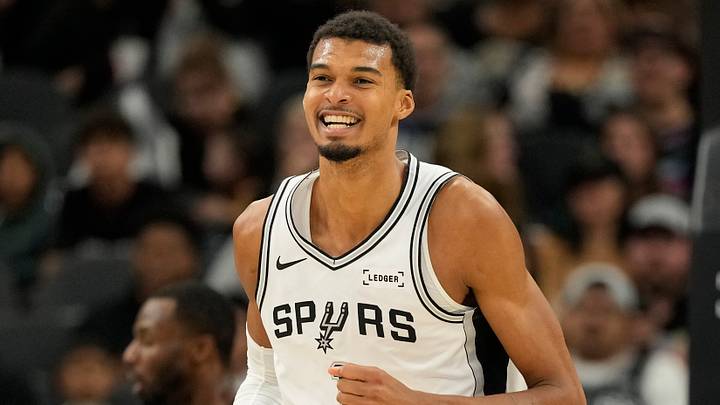
The Spurs made the definitive best move of the NBA offseason by securing superstar phenom Victor Wembanyama to a five-year, $252 million rookie contract extension. Had the generational big man insisted upon exercising his full supermax eligibility, the Spurs would have been on the hook for well over $300 million across those five seasons, severely handcuffing the franchise’s financial flexibility moving forward.
While Wembanyama is unquestionably worth every single penny, his decision to accept slightly less than the maximum allowable supermax gives San Antonio vital breathing room. Even with this financial relief, the Spurs still face a daunting ledger. Between De’Aaron Fox’s maximum contract and the inevitable, high-dollar extensions looming for rising stars Stephon Castle and Dylan Harper, general manager Brian Wright will have to pinch every penny to keep their young nucleus intact.
Fortunately, the Utah Jazz just laid out a blueprint showing exactly how it can be done.
The Utah Jazz Blueprint: Keyonte George’s Extension
On Friday, guard Keyonte George and the Utah Jazz agreed to a massive five-year, $157.5 million rookie extension. Selected 16th overall in the 2023 draft, George is coming off a breakout campaign where he poured in 23.6 points and dished out 6.1 assists per game on career-high efficiency—so much so that Utah occasionally had to manage his minutes downward during their strategic tanking efforts.
For a player of his caliber and offensive upside, $157 million represents exceptional value. The Jazz, sitting roughly three seasons away from true championship contention, are building a powerhouse around young assets like Ace Bailey and Darryn Peterson. Locking up George below a max slot allows them to maintain the flexibility needed to surround their young stars with a functional supporting cast.
Applying the Utah Model in San Antonio
The Spurs would be wise to take a page straight out of Utah’s playbook. Both Stephon Castle and Dylan Harper are projected to command lucrative deals when their respective windows open, but George’s extension proves that winning, ambitious players are frequently willing to take slightly less to stay part of a stable, winning culture.
If a player of Castle’s caliber were to ink a similar team-friendly contract to George’s, it would completely change the math in San Antonio. While the Spurs would likely still need to maneuver around De’Aaron Fox’s max slot—potentially exploring a trade down the road before locking in Harper—a scaled rookie extension would preserve the financial bandwidth required to field a deep, competitive supporting cast. Crucially, it would also leave room to eventually reward vital role players and contributors like Julian Champagnie, Devin Vassell, and Carter Bryant.
As the Spurs prepare for an exciting new chapter of competitive basketball, balancing elite talent with smart cap management is paramount. By monitoring how small-market and rebuilding teams structure their future investments, San Antonio has a clear, actionable roadmap to sustain long-term contention without sacrificing roster depth.