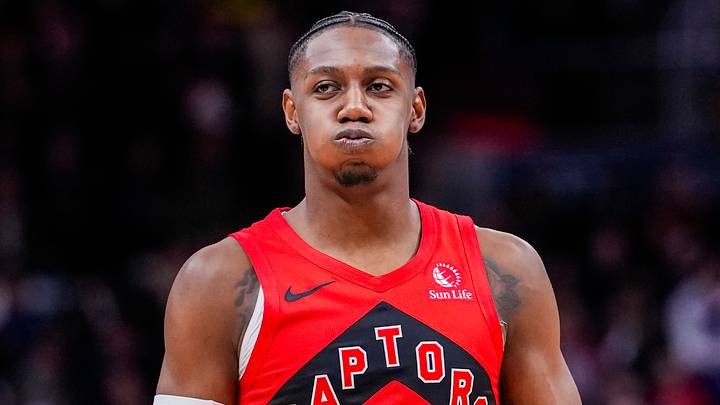
Ever since the blockbuster acquisition of Kawhi Leonard officially brought the superstar back to the Toronto Raptors, a loud section of the fan base and media has been busy packing RJ Barrett’s bags. The narrative is as swift as it is predictable: with Leonard and Scottie Barnes steering the franchise toward championship contention, how much room is really left for the hometown wing?
It is a fair question, but it is one that demands patience rather than panic. Rushing to push Barrett out the door makes little sense for a front office with legitimate title aspirations. Unless the organization is entirely convinced that the fit is fundamentally broken from day one, Toronto can—and should—play this out and defer any major roster overhaul until the 2027 NBA trade deadline.
Why Barrett’s Fit Alongside Kawhi Leonard Might Surprise Skeptics
The primary argument against keeping Barrett usually boils down to offensive overlap and a lackluster 3-point percentage. Critics point to his 33.9 percent shooting clip from beyond the arc last season—alongside a sluggish 34.7 percent on catch-and-shoot looks—as evidence that he clogs the floor next to primary stars.
However, that assessment overlooks how gravity and personnel shifts work in the modern NBA. Unlike Brandon Ingram, whose offensive style often required heavy ball dominance, Kawhi Leonard is an elite, adaptable scorer whose gravitational pull on defenses is immense.
With Leonard drawing double-teams and commanding defensive attention, Barrett should find himself operating with far more room to breathe. Last season, when left completely open with his closest defender six or more feet away, Barrett converted a very respectable 36.9 percent of his triples. If Leonard’s presence creates more of those clean looks, Barrett could prove far more lethal as an off-ball threat than initial projections suggest.
Furthermore, Barrett’s relentless downhill driving and sheer physical aggression can serve as a vital release valve. Instead of overworking Barnes and Leonard to constantly collapse opposing defenses, Barrett’s ability to attack the basket keeps the offense moving and takes the pressure off his co-stars.
The Wisdom of Waiting Until the 2027 Trade Deadline
None of this is to say that trading Barrett should be completely ruled out. Entering a contract year without a long-term extension in place is a quiet acknowledgment that the Raptors’ front office still has lingering questions about his fit moving forward.
Yet, pulling the trigger on a trade before collecting a proper sample size is a massive gamble. The front office needs to see how this newly constructed roster functions under game-day pressure before evaluating whether Barrett fits into their long-term championship vision.
If Toronto does ultimately decide to shop Barrett closer to the February trade deadline, any return package must unequivocally push them closer to a title—whether that means acquiring a superior tactical starter or shoring up vital bench depth.
Right now, trading Barrett is merely a speculative hypothetical. The Raptors have earned the right to let the season breathe, evaluate the data, and make an informed decision when the stakes are highest.