The summer of 2024 felt like a pivotal turning point for the Toronto Raptors and Immanuel Quickley. Locking the then-25-year-old guard into a massive five-year, $162.5 million contract committing him to the franchise through 2029 was universally viewed as a high-stakes gamble. At the time, Quickley was still largely unproven as a full-time starter, having spent the bulk of his early career thriving in a sparkplug sixth-man role with the New York Knicks. Yet, Toronto’s front office bet heavily that his electric scoring and playmaking would blossom alongside star forward Scottie Barnes.
Two years later, that financial commitment is looking increasingly difficult to defend—and a fresh deal signed across the league has only magnified the optics of Toronto’s gamble.
The Utah Jazz Set a New Benchmark
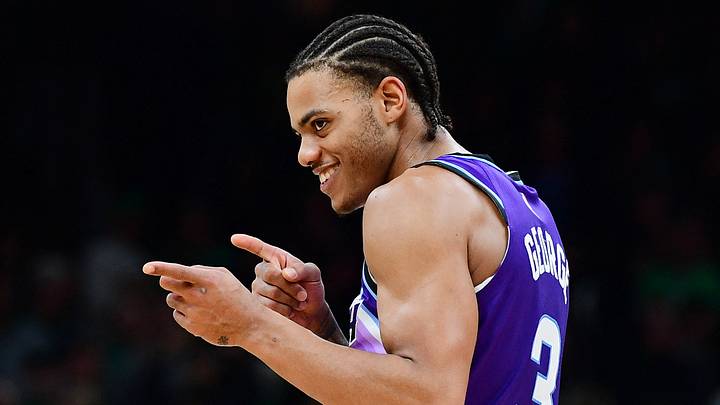
As NBA front offices dive headfirst into the rookie extension window, the Utah Jazz have firmly locked in their backcourt of the future by inking Keyonte George to a lucrative five-year contract extension. George’s new deal guarantees him $157.5 million, carrying an average annual value (AAV) of $31.5 million per season.
For Toronto fans, the math stings. The Jazz successfully secured their younger, ascending franchise point guard to a cheaper overall deal than the one the Raptors handed to Quickley two summers ago, which carries a higher AAV of $32.5 million.
When factoring in the broader macroeconomic landscape of the NBA, the comparison becomes even more glaring. Over the past two years, the league’s salary cap has skyrocketed by nearly 18 percent, jumping roughly $25 million. Somehow, despite the rapidly inflating financial ecosystem, Utah managed to lock down a younger star-caliber guard for less money than Toronto paid during the previous cap cycle.
Comparing Production and Trajectory
It is entirely fair to acknowledge that direct player comparisons require context. George commands a significantly higher usage rate in Utah, operating as the undisputed offensive focal point on a rebuilding squad. Last season, George flirted with All-Star consideration by putting up stellar averages of 23.6 points, 3.7 rebounds, and 6.1 assists per game while shooting 37.1 percent from beyond the arc.
In contrast, Quickley’s numbers over the same stretch sat at 16.4 points, 4.0 rebounds, and 5.9 assists per game with a 37.5 percent clip from deep. While Quickley’s lower production can be attributed to sharing the floor with other offensive options in Toronto, his trajectory has also been hampered by back-to-back injury-riddled seasons.
Both guards share strikingly similar profiles: elite high-volume scoring capabilities, strong passing visions to run an offense, and glaring defensive liabilities. Yet, the Jazz are paying a lesser price for a player who is not only younger but currently tracking toward a higher offensive ceiling.
As an extra twist of irony for Raptors fans, the sting cuts a little deeper when recalling the 2023 NBA Draft, where Toronto opted for sharpshooter Gradey Dick at No. 13 instead of selecting George.
Looking Ahead for Toronto
No contract in the NBA exists in a vacuum, and hindsight is always twenty-twenty. When Toronto handed Quickley his bag in 2024, they were paying for projected upside and stability at the point guard position.
However, as the salary cap continues to climb and younger guards around the league sign more team-friendly or comparable extensions, the pressure is mounting on Quickley to justify his hefty price tag. If the Raptors are going to cement themselves as elite contenders in a rugged Eastern Conference, Quickley will need to shake off his recent injury struggles and prove that his max-level investment was worth every penny.