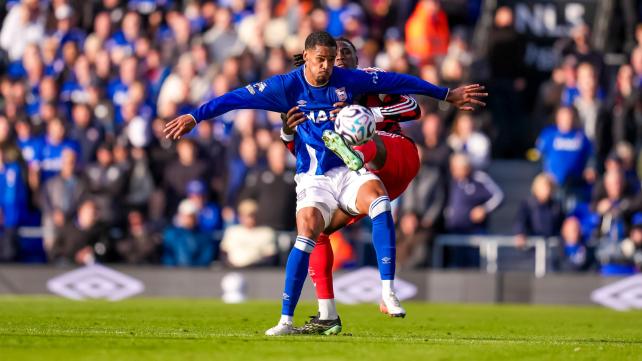
Ipswich Town’s dramatic 2-1 victory over Fulham at Portman Road didn’t just deliver three massive Premier League points—it signaled a fundamental shift in the club’s top-flight trajectory. Two years on from a painful relegation campaign, the Tractor Boys are proving that they are no longer mere top-flight tourists.
Sitting on three victories from their opening six fixtures—with two secured in thrilling style on home turf—Gary O’Neil’s side is currently three points ahead of par in the race for the magic 40-point safety barrier. Far from relying on luck, a deep analysis of Ipswich’s transformation reveals six compelling reasons why the Suffolk outfit is primed to secure long-term Premier League survival.
1. A £259m Squad Upgrade Delivering Unrivaled Bench Strength
The most stark contrast to Ipswich’s previous top-flight stint lies in squad investment. Going into their 2024/25 campaign, Ipswich’s 27-man squad cost a combined £116 million. Four transfer windows later, that figure has skyrocketed by 123 per cent to approximately £259 million.
The financial injection has completely solved previous issues regarding athleticism and top-tier experience. Against Fulham, O’Neil named a bench worth £111 million—nearly matching the entire cost of the 2024 squad. Being able to introduce World Cup winner Exequiel Palacios, last season’s 16-goal top scorer Jack Clarke, and 11-goal striker Zian Flemming off the bench allows Town to overpower opponents in the final 20 minutes.
2. Tactical Flexibility Under Gary O’Neil
Unlike the rigid 4-2-3-1 setup under Kieran McKenna, Gary O’Neil has introduced ruthless tactical pragmatism. O’Neil’s willingness to tweak systems mid-match—switching to a flat five-man defense at Old Trafford or deploying dual strikers in Flemming and Chuba Akpom against Fulham—has transformed Ipswich into a late-game juggernaut. O’Neil’s “no regrets” attacking mindset when chasing tight games is consistently turning single points into three.
3. A Weaker, European-Fatigued Division
The Premier League landscape in 2026/27 offers far more vulnerabilities for newly elevated sides to exploit. With nine English clubs competing in congested European schedules—including Crystal Palace, Bournemouth, Sunderland, and Brighton—opponents are increasingly jaded during domestic fixtures. Coupled with widespread managerial turnover and severe squad rebuilds across clubs like Aston Villa, Newcastle, and Fulham, the middle class of the division is vastly more beatable.
4. The Manchester City Financial Rule Looming
In addition to pitch performance, external legal proceedings could dramatically alter the relegation fight. With an independent commission finding Manchester City guilty of 114 financial breaches, an impending points deduction—potentially in the region of 60+ points—could virtually guarantee one relegation spot. Bookmakers now list City alongside Coventry and Hull among the drop favorites, lowering the survival bar for clubs like Ipswich.
5. Masterclass in Counter-Attacking Metrics
Data backs up Ipswich’s early-season success. According to Opta, Town’s expected points (7.9 xPTS vs. 9 actual) confirm they are value for their league position, with Opta rating their relegation risk at just 21 per cent—lower than Fulham, Forest, Tottenham, and Bournemouth. Furthermore, in an era where fast-break transitions dominate, Ipswich ranks alongside Arsenal and Chelsea as one of the top three deadliest counter-attacking sides in the league, fueled by the explosive running of Abdul Fatawu and Daizen Maeda.
6. The 90th-Minute “Good Vibes” Factor
Football is built on belief, and Ipswich have turned late-game chaos into a science. Scoring three 90th-minute winners in six games is no fluke—it equals the full-season Premier League record with 32 games still to play. The connection between the touchline and the Portman Road terraces has created an impenetrable fortress culture, providing players with the mental fortitude required to navigate top-flight adversity.