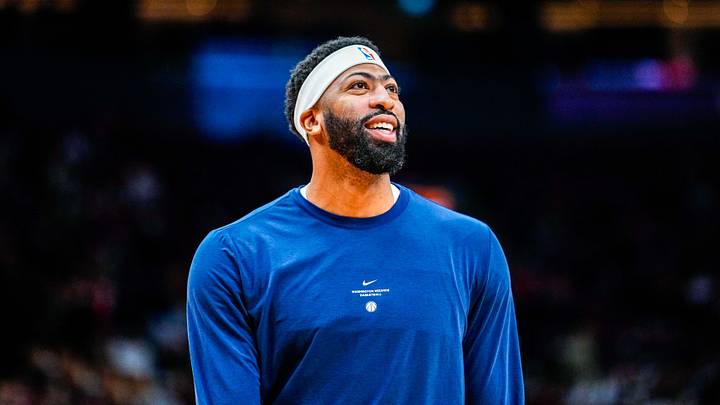
The Toronto Raptors could have a golden opportunity to transform their future by pursuing Anthony Davis, but there is one important condition that could determine whether the blockbuster move becomes a success or an expensive mistake.
If Toronto decides to trade for the 10-time NBA All-Star, he must be prepared to play centre.
Davis has once again become a major talking point among Raptors supporters, with the possibility of bringing him to Toronto generating plenty of excitement. Adding a player of his calibre alongside Scottie Barnes and Kawhi Leonard would give the franchise a formidable collection of talent and potentially make it one of the most dangerous teams in the Eastern Conference.
However, acquiring Davis would not automatically solve every problem.
One issue that has followed him throughout his career is his preference for playing power forward rather than centre. Davis has regularly explained that he is more comfortable operating alongside another big man, allowing him to showcase his offensive abilities while avoiding some of the physical demands associated with being the team’s primary centre.
There are understandable reasons behind that preference.
But if general manager Bobby Webster seriously considers bringing him to Toronto, the Raptors must make it clear that their best possible lineup requires Davis to embrace the five position.
Why playing Davis alongside Jakob Poeltl could become a serious mistake
Consider two possible lineups.
One would feature Davis alongside Jakob Poeltl, Scottie Barnes and Kawhi Leonard. The alternative would have Davis operating as the starting centre, with Poeltl providing valuable minutes from the bench.
The second option appears considerably more attractive.
There is no denying that playing Davis and Poeltl together would give Toronto an imposing frontcourt. Their combined size could create problems for opponents around the basket, particularly against teams that struggle to match up physically.
However, basketball is not simply about putting the biggest players on the floor.
Spacing is essential in the modern NBA, and combining two traditional big men could make life extremely difficult for Toronto’s offence.
Poeltl is most effective when operating around the basket, while Davis also does considerable damage inside. Putting both players in the same lineup could crowd the paint, reduce driving opportunities for Barnes and make it easier for opposing defences to protect the rim.
That would be particularly problematic for a team hoping to maximise the talents of several star players.
With Davis playing centre, Toronto would have greater freedom to surround him with versatile forwards and perimeter threats. The offence could become more fluid, allowing Barnes and Leonard to attack space without constantly encountering additional defenders.
The numbers raise another question about Davis’ preferred position
There is also a statistical argument for changing Davis’ role.
During the current season, Washington’s defence has reportedly performed significantly worse when Davis shares the court with Alex Sarr than when Davis operates without him, according to Databallr.
That is an important detail for Toronto to consider.
While having another big man alongside Davis can provide additional physical support, it does not necessarily mean the combination produces the best results.
When Davis operates as the primary centre, the floor can become more open offensively, while the defensive structure has greater flexibility.
The Raptors would need to examine those differences carefully before deciding how to use him.
If the evidence suggests that Davis is more effective as a standalone centre, Toronto should not sacrifice its overall team balance simply to accommodate his preference for playing power forward.
Toronto has the defensive personnel to make life easier for Davis
Perhaps the strongest argument in favour of Davis playing centre is the defensive talent already available in Toronto.
One reason Davis has sometimes preferred playing alongside another big man is the responsibility that comes with being the team’s primary rim protector.
When he operates as the only centre, he is expected to defend the paint, challenge shots, control the defensive glass and provide protection whenever opponents penetrate the perimeter.
That is a demanding assignment, particularly over an entire NBA season.
However, Toronto could offer him a different situation.
Barnes has developed into an outstanding defender with the versatility to guard multiple positions. Collin Murray-Boyles also provides impressive defensive energy and has the potential to offer valuable rim protection despite his smaller size.
Leonard brings another layer of defensive experience and quality when available.
This would allow head coach Darko Rajaković to create defensive combinations that prevent Davis from having to shoulder every responsibility himself.
He would still be expected to protect the basket, but he would have capable teammates helping him.
That could make the centre position much more manageable than some of his previous experiences.
Poeltl could still have an important role
Asking Davis to start at centre does not mean Toronto should suddenly make Poeltl irrelevant.
The Austrian big man could remain an important part of the rotation, particularly in matchups where the Raptors need additional size and physicality.
There could also be opportunities to use both players together in certain situations.
For example, when Barnes, Leonard or Murray-Boyles are unavailable, Poeltl could return to the frontcourt alongside Davis to provide additional defensive support.
The key is flexibility.
Toronto should be able to adjust its lineups depending on the opponent rather than committing to a two-big starting combination that could restrict the team’s offensive potential.
Davis should be the starting centre, while Poeltl remains a valuable alternative who gives Rajaković different tactical options.
Bobby Webster must establish the conditions before making the trade
A potential Davis acquisition would be a major investment, and Toronto cannot afford to make such a decision without understanding exactly what it is getting.
The Raptors would be acquiring a superstar with the ability to change their competitive outlook, but they would also be accepting the responsibility of building a system that maximises his strengths.
That requires compromise from both sides.
Davis would need to accept that playing centre is the best option for the team, while the coaching staff would have to ensure he receives sufficient defensive support and is not unnecessarily overburdened.
Championship ambitions demand sacrifices. Even the most talented players must sometimes adjust their preferred roles to give their teams the best chance of winning.
Toronto’s potential combination of Davis, Barnes and Leonard is exciting, but the success of that group would depend heavily on how the pieces fit together.
Ultimately, the Raptors should not pursue Davis simply because he is a superstar. They should pursue him because he can make their team better.
And that means one condition must be clear from the beginning: if Anthony Davis wants to become the centrepiece of Toronto’s championship ambitions, he must be willing to embrace playing centre.
If he is unwilling to make that adjustment, the Raptors may be better off looking elsewhere rather than sacrificing their team balance for a blockbuster name.