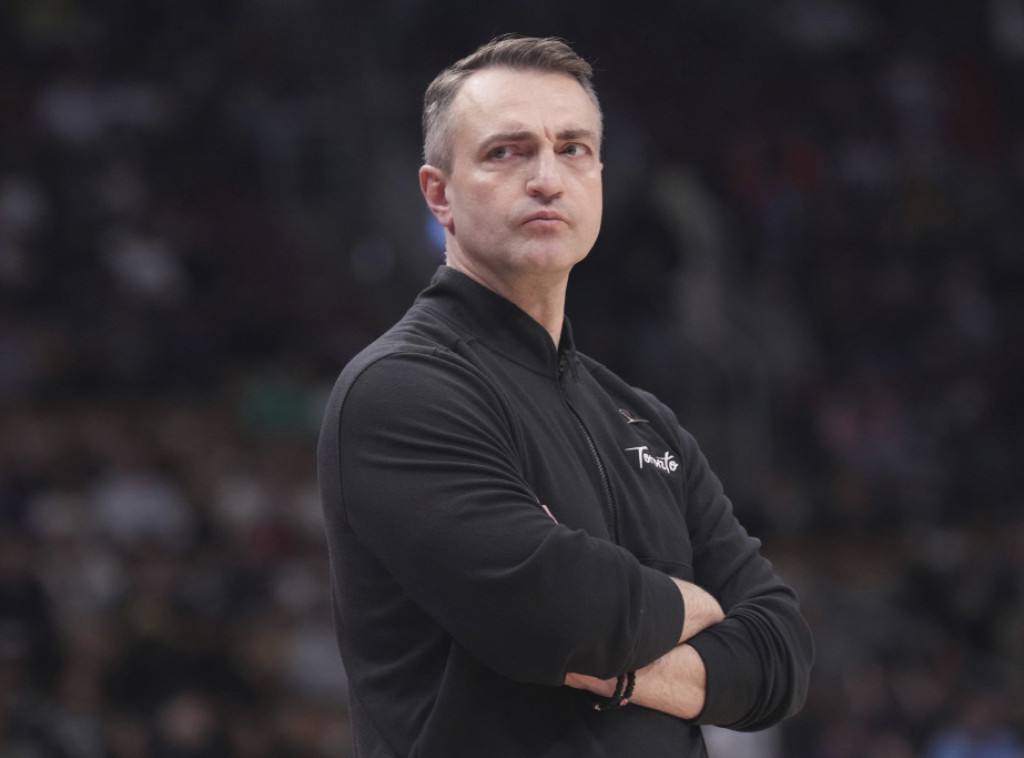
With March Madness reaching its climax, the Toronto Raptors are already turning their attention to the future—and the NCAA Final Four could hold the key to their next big move.
As the franchise looks to retool and build a more competitive roster, scouts are closely monitoring several standout prospects from Michigan, UConn, Illinois, and Arizona. Each brings a unique skill set that could address key needs for a Raptors team searching for consistency and identity.
One name rapidly rising up draft boards is Michigan forward Yaxel Lendeborg. The Big Ten Player of the Year has emerged as one of the most complete players in college basketball, combining size, versatility, and elite defensive instincts. Standing at 6-foot-9 with an impressive wingspan, Lendeborg’s ability to guard multiple positions and contribute offensively makes him an ideal modern NBA forward. His recent performances in the tournament—where he’s delivered big scoring and rebounding numbers—have only strengthened his case as a first-round pick.
Meanwhile, UConn guard Braylon Mullins offers something the Raptors desperately need: floor spacing. Known for his high-volume three-point shooting and off-ball movement, Mullins has drawn comparisons to some of the NBA’s best perimeter shooters. While his efficiency from deep still has room for improvement, his confidence and ability to impact games without dominating the ball make him an intriguing option for Toronto’s offense.
Illinois guard Keaton Wagler is another prospect generating serious buzz. A sharpshooter with strong playmaking ability, Wagler has the tools to become a dynamic offensive weapon at the next level. His clutch scoring and high basketball IQ stand out, especially for a player so young. In a Raptors system that values ball movement and half-court execution, Wagler’s skill set could fit seamlessly—though his rising stock may force Toronto to consider trading up in the draft.
Rounding out the list is Arizona forward Koa Peat, a versatile playmaker who embodies the positionless basketball philosophy the Raptors have embraced in recent years. With the ability to handle the ball, facilitate offense, and battle physically inside, Peat brings a unique blend of guard-like vision and forward strength. His rebounding and transition play could also help address one of Toronto’s lingering weaknesses.
As the Final Four unfolds, these prospects have a golden opportunity to elevate their draft stock even further. For the Raptors, it’s more than just scouting—it’s about identifying players who can contribute immediately while fitting into a long-term vision.
With the offseason approaching, Toronto’s front office appears locked in. The next franchise cornerstone might just be taking the court on college basketball’s biggest stage.